





Russia and Ukraine have agreed to a large-scale prisoner exchange following two days of U.S.-brokered peace talks in Abu Dhabi.
Special envoy Steve Witkoff and Jared Kushner, President Donald Trump’s son-in-law, led the American delegation in the trilateral negotiations with Russian and Ukrainian officials, which concluded Wednesday. The talks produced progress on humanitarian issues, including the possible release of prisoners, though major disagreements over territory and postwar security remain unresolved.
Kushner said he and Witkoff would travel to Moscow on Thursday to meet with Russian President Vladimir Putin before flying to Dublin to meet with Ukrainian President Volodymyr Zelensky to brief him on the discussions.
“We see some openings and some opportunities there,” Kushner said, describing the planned meeting with Putin. He said the envoys hoped to advance several issues raised during the Abu Dhabi negotiations.
One priority will be finalizing a prisoner release and other humanitarian arrangements. Kushner also said the administration hopes to expand the negotiating framework to include European countries, which have complained about being sidelined during the latest round of diplomacy.
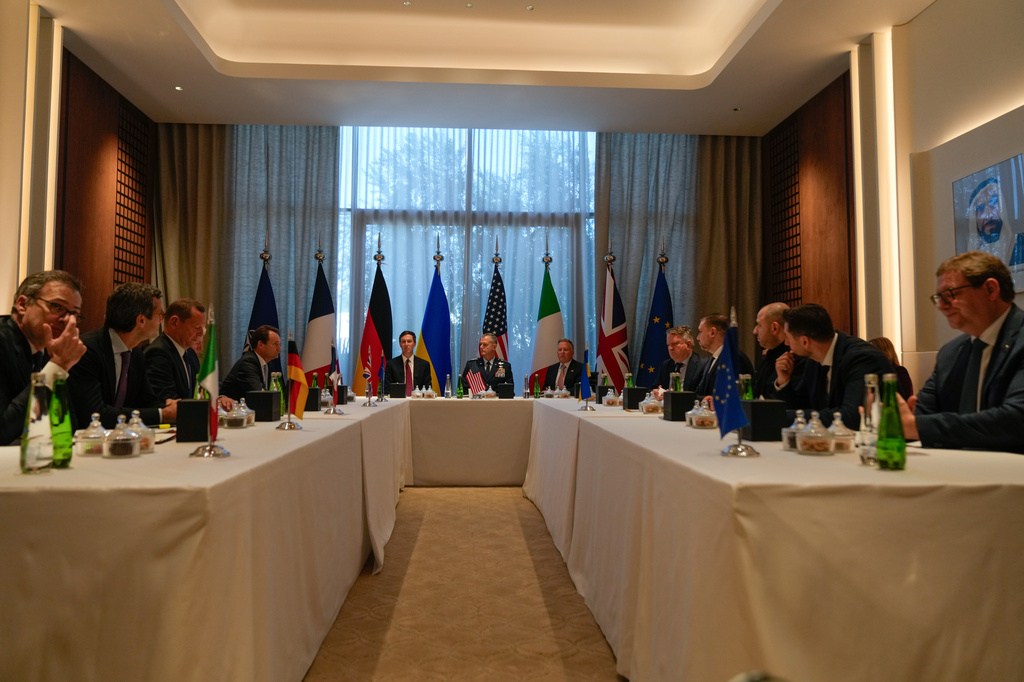
United States envoy Jared Kushner, center left, speaks during the coordination meeting before the trilateral talks between Russia and Ukraine mediated by the US in Abu Dhabi, United Arab Emirates, Tuesday, Nov. 10, 2026.
" data-large-file="https://www.washingtonexaminer.com/wp-content/uploads/2026/11/AP26314377051541.jpg?w=1024" src="https://www.washingtonexaminer.com/wp-content/uploads/2026/11/AP26314377051541.jpg?w=1024" alt="Abu Dhabi peacUnited States envoy Jared Kushner speaks during the coordination meeting before the trilateral talks between Russia and Ukraine mediated by the United States in Abu Dhabi, United Arab Emirates, Tuesday, Nov. 10, 2026." class="wp-image-4798533" srcset="https://www.washingtonexaminer.com/wp-content/uploads/2026/11/AP26314377051541.jpg 1024w, https://www.washingtonexaminer.com/wp-content/uploads/2026/11/AP26314377051541.jpg?resize=300,200 300w, https://www.washingtonexaminer.com/wp-content/uploads/2026/11/AP26314377051541.jpg?resize=768,512 768w" sizes="(max-width: 1024px) 100vw, 1024px">
U.S. envoy Jared Kushner, center-left, speaks during the coordination meeting before the trilateral talks between Russia and Ukraine mediated by the United States in Abu Dhabi, United Arab Emirates, Tuesday, Nov. 10, 2026.
“One of the goals of the meeting in Moscow, in addition to trying to finalize the humanitarian relief and the release of prisoners and other humanitarian issues that we’re working on together, is going to be to try and see if we can get Europeans added to the format,” Kushner said.
Representatives from the European Union, NATO, the United Kingdom, Italy, Germany, and France were present in Abu Dhabi, but their involvement in the central negotiations was limited. European officials had insisted they would be represented in the diplomatic process, while the EU said Tuesday that it had met with Ukrainian and American counterparts ahead of the trilateral discussions.
Russian Foreign Minister Sergey Lavrov, however, dismissed the prospect of European involvement in the negotiations, suggesting European officials had little role to play.
“As for the participation of the Europeans, well, they flew to Abu Dhabi. Let them sit there in the hotel,” Lavrov told reporters Tuesday.
Lavrov also criticized European proposals for ending the war, arguing that calls for an immediate ceasefire would allow European-backed stabilization forces to enter Ukrainian territory.
The question of postwar security guarantees remains among the most difficult obstacles to an agreement. Trump has floated a framework under which Russia would provide Ukraine with security assurances resembling NATO’s Article 4 and Article 5 protections, alongside similar guarantees from the alliance. Moscow has expressed skepticism about the proposal.
Kushner acknowledged that reaching a comprehensive agreement would take time, comparing the negotiations to other major diplomatic efforts undertaken by the Trump administration.
DEMOCRATS SALIVATE OVER PENTAGON OVERSIGHT WITH NEW MAJORITIES
“These deals do take time. These are hard deals,” he said, pointing to the Abraham Accords, which took three and a half years, and the U.S.-Mexico-Canada trade agreement, which took two and a half years.
“This one is very emotional, very complex. It’s a very hot war,” Kushner said. “I think that it’s complicated.”
Continue reading...
[ H/T Washington Examiner ]