




A Book Review of Samuel A. Alito Jr.’s “So Ordered: An Originalist’s View of the Constitution, the Court, and Our Country (2026)”
***
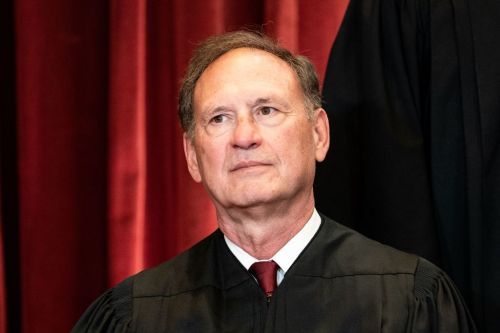
Justice Samuel A. Alito Jr.’s new book on the Constitution, the Supreme Court, and our nation catapults him into the same category once held by Justice Antonin Scalia as a leading public intellectual on the Supreme Court. In his book, Justice Alito shares his thoughts about such subjects as originalism, textualism in statutory interpretation, the Catholic intellectual tradition, the role of judges in the United States and increasingly around the world, religious liberty in the United States, threats to the Constitution, and much more. Although there is a great deal else to be said, several things leapt out at me.
First, it is clear that while Justice Alito is deeply attuned to precedent and Supreme Court case law, this will not get in the way of his originalism and what he sees as bad law which must be overturned. Hence his vote to overrule Roe v. Wade after 49 years, Humphrey’s Executor after 91 years, or even a 128-year-old, long settled Supreme Court precedent like United States v. Wong Kim Ark, which would have ended birthright citizenship. (In saying this, I take no position myself on the birthright citizenship case – a debate I stayed out of.)
But Justice Alito is not simply an originalist. He also rejects the view of Professor James Bradley Thayer, and of Justices Oliver Wendell Holmes, Felix Frankfurter, William H. Rehnquist, and even at times of Justice Scalia that the Supreme Court should be judicially restrained and defer blindly to the political process. Justice Alito recognizes that judicial restraint where the Supreme Court has wrongly deferred to the political process is unconstitutional under Article III and has produced tragic results in cases like Plessy v. Ferguson, in which the court ratified Jim Crow race discrimination by the political branches of the government, or Korematsu v. United States, in which the court ratified President Franklin D. Roosevelt’s internment of over 100,000 innocent Japanese American citizens. In those cases the Supreme Court erred by not enforcing the Constitution. Yet at other times it has erred by being judicially activist as in Dred Scott v. Sanford or Lochner v. New York or Roe v. Wade. As Justice Alito teaches us, the Supreme Court should be neither judicially activist nor judicially restrained. It should uphold constitutional laws and strike down unconstitutional laws. This is what the rule of law is all about.
Justice Alito is equally and rightly skeptical of the notion that judges should be Dworkinian natural rights theorists, progressive constitutionalists like Chief Justice Earl Warren, or implementers of Catholic natural law as is argued by Harvard Law School Professor Adrian Vermeule. Indeed, Justice Alito devotes a whole chapter of his book to rejecting the idea that Supreme Court justices should implement natural law. This is because Justice Alito is profoundly aware that the American people during the 237 years from 1789 to 2026 have more knowledge and are thus wiser than is one individual Supreme Court, Supreme Court justice, or academic theorist. Although he does not say this outright, Alito appears to believe that originalist judges should be guided by the four cardinal virtues: 1) practical wisdom; 2) justice; 3) courage; and 4) temperance.
At the same time, Justice Alito is very much a Burkean. What does this mean? It calls to mind one of my favorite works of political philosophy, Friedrich Hayek’s volumes 1, 2, and 3 of Law, Legislation, and Liberty. In that masterpiece, Hayek identifies two forms of social order: planned systems of order like a firm or a military platoon, and spontaneous systems of social order like a language, the free market, or a culture of following the rule of law. No one has ever successfully planned a language, but languages have rules of grammar and a fixed meaning of words, and so a language forms what Hayek calls a spontaneous system of social order.
The Constitution and its amendments are a planned system of order, the words of which are so short and abstract that they have given rise to spontaneous systems of order around them. Thus, the freedom of speech and of the press protects thoughts in a private diary or a letter to a friend even though they are not vocal utterances or made with a printing press. Those words also protect freedom of expression in new technologies like movies, radio, television, or the internet, and they even protect expressive conduct that is not vocal at all like burning the American flag contemptuously at a protest rally.
The advantage of a spontaneous system of order like a language, the free market, or constitutional caselaw is that it harnesses the wisdom of many individuals who are always wiser than is one judge or academic theorist. But the countervailing advantage of the Constitution being a planned system of order is that if constitutional case law drifts too far away from the wonderful Novus Ordo Seclorum plan of the framers, the Supreme Court may overrule such caselaw – even after a century of it having been decided. The bottom line is that in figuring out when to follow the planned order of the Constitution or the spontaneous order of constitutional case law and precedents, a justice must further draw on the four cardinal virtues mentioned earlier – practical wisdom, justice, courage, and temperance.
More controversially, Alito argues that one factor in a good constitutional or statutory interpretation is that it produces good consequences. This is contrary to what Justice Scalia used to tell me when I was his law clerk, which is that if a text he is interpreting coming in is garbage, then the decision going out will also be garbage. Justice Scalia insisted it was not his job to make the law better. This differed from the approach which Judge Robert H. Bork, who I clerked for on the D.C. Circuit, followed. Judge Bork would not rewrite the Constitution or statutes to produce good results, but if there were two equally plausible readings of legal language, Judge Bork, like Justice Alito, would go with the one that produced the best outcomes in his view. I would do the same thing.
Nevertheless, in discussing Supreme Court precedents that he thinks were wrongly decided, Justice Alito can sometimes be too timid (in my opinion) in his criticisms. Perhaps that is because as a Supreme Court justice, he feels constrained in calling for the overruling of clearly incorrect precedents. For example, he criticizes Justice Scalia’s opinion in 2012’s United States v. Jones, in which the court held evidence should be suppressed which was obtained from illegally placing a GPS tracking device on a drug dealer’s car. But in his own dissent in that case Justice Alito failed to call for overruling the exclusionary rule cases on which that decision was based, even though his former boss, Attorney General Ed Meese, had publicly called for the overruling of the exclusionary rule in the 1980’s, and even though Congress passed a federal statute overruling it in the context of Miranda v. Arizona in 1968.
Justice Alito also complains rightly about the banning of religion from the public square, but he concedes in his book that as a justice he had failed to join a Scalia dissent, which called for the complete overruling of Flast v. Cohen, an absurd standing precedent of the Warren court which gave taxpayer standing to ACLU litigants who were offended by local government Christmas and Hannukah displays or displays of the Ten Commandments. And Justice Alito quite rightly criticizes Justice Scalia’s decision weakening the free exercise clause case in Employment Division v. Smith, but he does not call for overruling it. He should do so with pride.
The argument for originalism in constitutional interpretation is the same as the argument Justice Alito makes for textualism in statutory interpretation. Legal texts, be they constitutions, statutes, contracts, wills, or Supreme Court opinions should be given their original public meaning. A judge who interpreted a Supreme Court opinion or a contract according to natural law would be violating the fundamental norms of our legal system. Originalist justices can and should follow non-originalist precedents where not doing so would be disruptive to our legal system. I thus agree with Justice Alito that the Supreme Court should follow, for example, its dormant commerce clause precedents.
There is one final area where I and Justice Alito respectfully disagree. Readers of this site, and of Justice Alito’s book, know that we have different views on same-sex marriage and Obergefell v. Hodges. In his book, Justice Alito responds to me by pointing out, among other things, that same-sex marriage was unheard of for 40,000 years of human history.
I will only add here that 250 years ago, on July 4, 1776, nearly every country in the world had slavery, feudalism was widely practiced, there was a caste system in India, racism and religious persecutions were the norm, women’s rights were suppressed, and the public was adamantly opposed to LGTBQ+ rights. Gordon Wood, the famous historian of the American Founding argued in his Pulitzer Prize winning book, The Radicalism of the American Revolution that July 4, 1776 was the most important day in all of human history (other than the days of the birth and death of Jesus) because the Declaration of Independence launched a “New Order of the Ages,” which helped bring millennia of human inequality to an end in Western democracies.
It is true that same-sex civil marriage is a very new idea, but so too, in the historical scale of things, is the end or attempted end of slavery, feudalism, the Hindu caste system, racism, religious persecution, and sexism. I think the sudden rise of same-sex marriage stems from the same American Revolution that began 250 years ago on July 4, 1776.
In any event, Justice Alito is to be commended for writing an exceptionally intellectual and provocative new book. The book fills the shoes of the late Justice Scalia, and I would recommend it to everyone – whether they agree with Justice Alito’s jurisprudence or not.
Continue reading...
[ H/T SCOTUSblog ]