







Via The Wellness Company
Nobody wants to hear the word cancer.
Yet it has become harder to ignore.
Cancer rates have increased in many parts of the world, especially among younger adults. Researchers are asking an important question:
One area receiving growing attention is the environment.
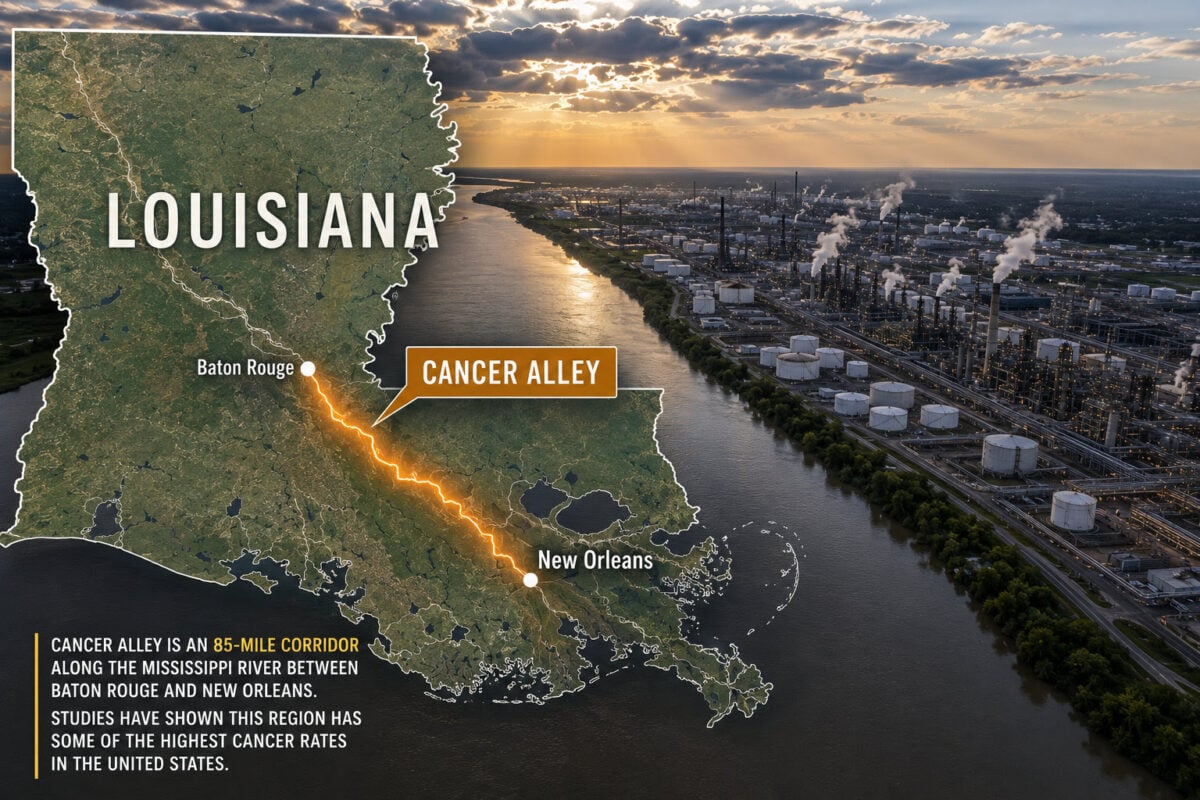
Dr. Zach Bush believes long-term environmental exposures deserve much closer study. Speaking about the stretch of the Mississippi River between Baton Rouge and New Orleans—often called “Cancer Alley”—he said:
Whether environmental factors explain part of the trend remains under investigation. But scientists agree that understanding cancer will likely require examining many possible contributors—not just one.
The environment is only one piece of the puzzle.
Researchers are also investigating whether some long-established medicines may have applications beyond their original purpose. Two of the most studied are Ivermectin and Mebendazole.
Laboratory studies suggest mebendazole may disrupt the tiny structures cancer cells use to divide.*
Other laboratory research suggests ivermectin may influence several pathways involved in cancer cell growth.*
Researchers continue studying both as they work to better understand where these medications may fit in cancer care.*
One recent observational study (conducted by The Wellness Company) followed 197 people using a compounded combination of Ivermectin and Mebendazole alongside conventional cancer treatment.
Because nearly all participants also received standard cancer treatment, the authors emphasized that the study cannot determine whether the medications caused the observed outcomes. Larger randomized clinical trials are still needed.*
Among the 122 participants who completed six months of follow-up:
 Research is evolving rapidly — and so is interest in integrative approaches that support better outcomes.
While no conclusions can yet be made about cancer treatment efficacy, many patients are seeking physician-guided, pharmacy-compounded options they can trust.
That’s why every order is reviewed by a licensed U.S. provider and compounded by a 50-state-licensed pharmacy committed to quality, safety, and consistency.
Continue reading...
[ H/T The Burning Platform ]
Cancer Rates Are Rising. Scientists Want Answers.
Nobody wants to hear the word cancer.
Yet it has become harder to ignore.
Cancer rates have increased in many parts of the world, especially among younger adults. Researchers are asking an important question:
What has changed?
One area receiving growing attention is the environment.
Dr. Zach Bush believes long-term environmental exposures deserve much closer study. Speaking about the stretch of the Mississippi River between Baton Rouge and New Orleans—often called “Cancer Alley”—he said:
“In 20 short years, we created the epicenter of cancer death in the world…”
Whether environmental factors explain part of the trend remains under investigation. But scientists agree that understanding cancer will likely require examining many possible contributors—not just one.
A New Look at Old Medications
The environment is only one piece of the puzzle.
Researchers are also investigating whether some long-established medicines may have applications beyond their original purpose. Two of the most studied are Ivermectin and Mebendazole.
Laboratory studies suggest mebendazole may disrupt the tiny structures cancer cells use to divide.*
Other laboratory research suggests ivermectin may influence several pathways involved in cancer cell growth.*
Researchers continue studying both as they work to better understand where these medications may fit in cancer care.*
What the Research Shows
One recent observational study (conducted by The Wellness Company) followed 197 people using a compounded combination of Ivermectin and Mebendazole alongside conventional cancer treatment.
Because nearly all participants also received standard cancer treatment, the authors emphasized that the study cannot determine whether the medications caused the observed outcomes. Larger randomized clinical trials are still needed.*
Among the 122 participants who completed six months of follow-up:
- 84.4% reported clinical benefit
- 48.4% reported tumor shrinkage or no current evidence of disease
- 36.1% reported stable disease
- 15.6% reported disease progression
Research is evolving rapidly — and so is interest in integrative approaches that support better outcomes.While no conclusions can yet be made about cancer treatment efficacy, many patients are seeking physician-guided, pharmacy-compounded options they can trust.
That’s why every order is reviewed by a licensed U.S. provider and compounded by a 50-state-licensed pharmacy committed to quality, safety, and consistency.
Tweet
Continue reading...
[ H/T The Burning Platform ]