




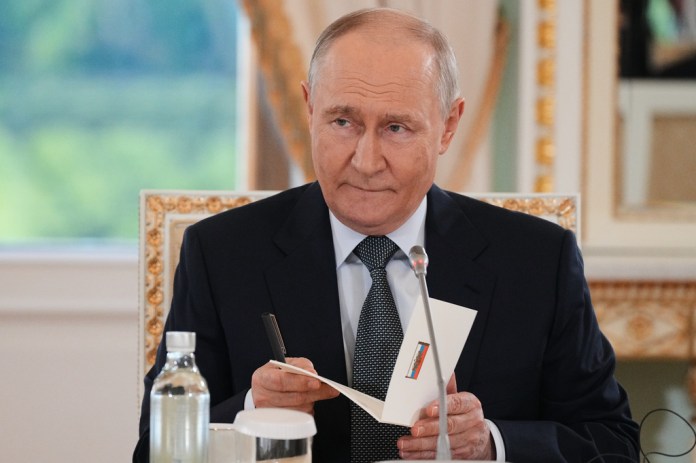
Addressing the Valdai conference in Moscow on Thursday, Russian President Vladimir Putin engaged in one of his favored refrains. Offering a litany of historical (and mostly ahistorical) grievances, Putin falsely blamed the West for escalating against Russia. And ignoring the grave defeat such action would impose upon his nation, Putin resurrected his nuclear threats.
Putin’s rationale here is simple.
As Russia fails to progress in its war on Ukraine, as the death toll of 500,000 Russian soldiers keeps rising, and as Russia’s economy further disintegrates, Putin is desperate to end Western support for Ukraine. As I predicted back in June, Putin is now escalating his campaign of terrorism across Europe and the United States. He wants NATO populations to so fear a military showdown with Russia that they force their governments to appease Moscow rather than keep supporting Kyiv. To that end, the former KGB officer painted us a fictional world on Thursday in which NATO exercises in the Baltic Sea threaten Russia’s Kaliningrad exclave. Kaliningrad sits along the Baltic coast and is wedged between Poland and Lithuania.
As Putin put it, “If it comes to a direct attack on the Russian Federation — in this case, we are referring to Kaliningrad, and perhaps other territories as well — the question of [Russia] deploying all the weapons at our country’s disposal will, of course, inevitably and immediately be on the agenda. This is inevitable.” In a clear effort to foster European doubts over American commitment to NATO, Putin added, “France and [the United Kingdom] are nuclear powers — we understand that perfectly well and are fully aware of it. But no one else possesses the kind of weapons that Russia has today. That is our competitive advantage … Can we be certain that [nuclear] weapons will never be used? Well, of course not.”
Putin is doing what any good KGB officer does best: He’s playing mind games.
While NATO’s Baltic Sea exercises are designed to isolate Kaliningrad during any future war with Russia, no blockade of Kaliningrad is being considered. NATO has no interest in a blockade that would start a war. Putin knows this. But he also knows that nuclear rhetoric makes news and that Western populations don’t want to die in a thermonuclear holocaust. In turn, he wants to foster a common European belief that if their governments keep supporting Ukraine, armageddon might follow. Putin’s intimidation strategy faces two key obstacles, however.
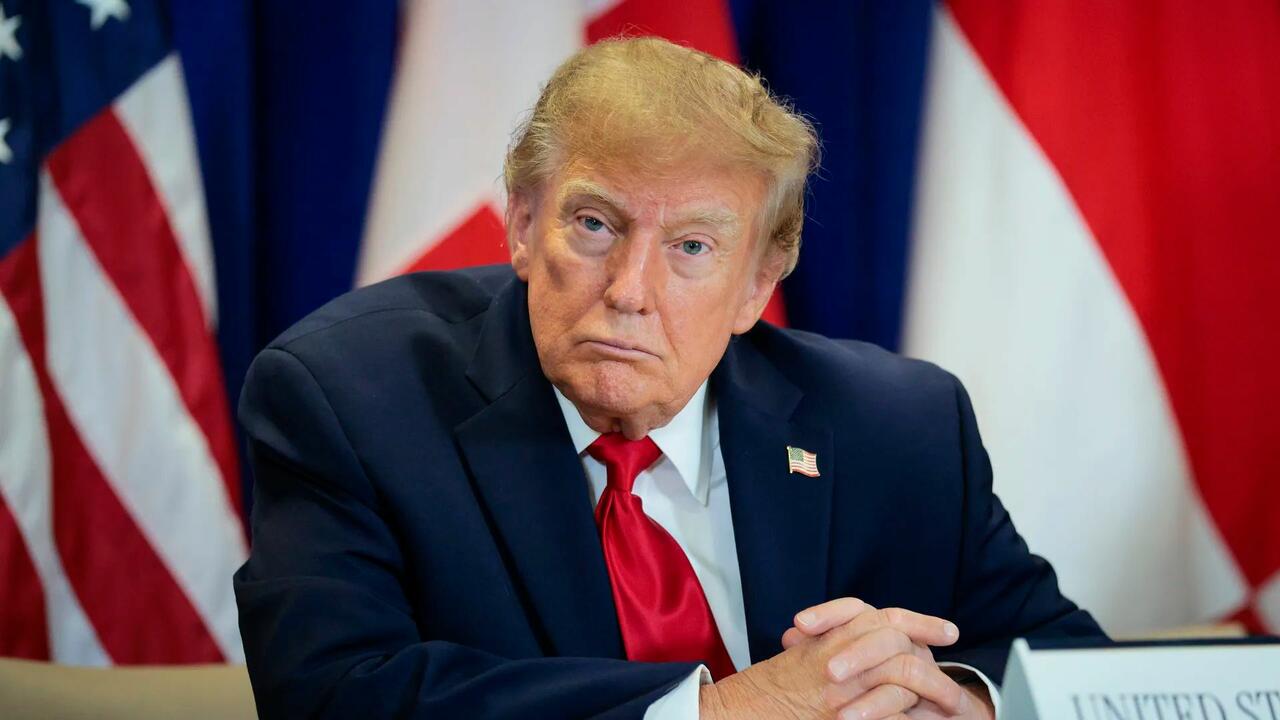
First, his counterproductive Greenland antics notwithstanding, President Donald Trump has been far more resolute in facing Russian nuclear threats than Joe Biden or Barack Obama. Second, Russian nuclear forces are manifestly inferior to U.S. nuclear forces. As an extension, Russia would almost certainly fail to eliminate British or French nuclear forces before they could launch their weapons in a war.
WITH G-20 INVITE, PUTIN IS CAUGHT BETWEEN INTERNATIONAL EMBARRASSMENT AND TRUMP’S EGO
This might seem like casual rhetoric about the terrible calamity that any nuclear exchange would necessarily entail. Still, these strategic realities matter because they demand living space in Putin’s brain. The Russian leader is no idiot. His rhetoric aside, Putin knows he is particularly outmatched by U.S. Air Force and Navy nuclear forces. He also knows that any use of nuclear weapons in relation to Kaliningrad would almost certainly result in the nuclear annihilation of Russian forces in Kaliningrad. Indeed, Trump has given the military lower-yield tactical nuclear weapons that are explicitly designed to deny Russia the hope of using its own tactical nuclear weapons without riposte.
NATO should thus keep calm and carry on. If Putin wants to self-destruct Russian territory, that is his prerogative. NATO should focus on facing Putin’s threats with a military fortress and a mentality to match.
Continue reading...
[ H/T Washington Examiner ]