





Trump Says Inflation Will Pay Off The $40 Trillion Debt "Very Rapidly"
President Trump thinks 'certain levels' of inflation could take care of the $40 trillion national debt.

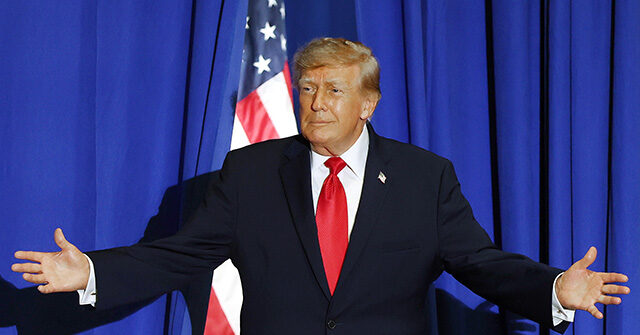
President Donald Trump appears at the United Nations General Assembly in New York. (Photo by Chip Somodevilla/Getty Images)
"You know, inflation. Certain levels of inflation will also pay off that debt very rapidly. Very rapidly," he told TIME in an interview published Thursday, after the outlet pointed out has grown by about $11 trillion over his five years in office. In response, Trump first blamed Joe Biden, then the Fed, then hinted at a plan he wouldn't share.
"I know I'm the best in the world," Trump said. "The best - I don't want to tell you what those means are, but you can pay off the debt through other means. But the one thing that you can do is pay it off through growth, and we've never had growth like this."
Later he circled back, saying "the growth is going to pay off the debt" and that the Fed's hikes were "hurting our country more than inflation is hurting our country."
He didn't say what level of inflation he had in mind, or whether he wants the Fed to tolerate more of it. Earlier in the same interview, though, he blamed Biden for "the biggest inflation in history" and said he "inherited the greatest inflation in history," adding that "the only thing I have to get down now is the gas."
Headline CPI rose 3.4% in the 12 months through August, with core at 2.4%, according to the BLS. On Sept. 16 the Fed raised rates for the first time since July 2023 - a unanimous quarter-point hike to 3.75%-4% that included Trump's own pick for chair, Kevin Warsh - and penciled in another before year-end. Trump told TIME he "probably would have voted against the board" if he were Warsh, and has called for rates of 1% "or less."
On Thursday, the day TIME published the interview, the 10-year Treasury yield touched 5.34%, its highest since 2002. It closed at 5.24%.
None of this is new for the self-described "king of debt." In May 2016 he told CNBC the US could buy back its own bonds at a discount if rates went up. That was widely read as a default threat, so a few days later he went on CNN to walk it back. "You never have to default because you print the money, I hate to tell you, OK?" he said.
A month before that, he told the Washington Post he could wipe out what was then a $19 trillion debt "over a period of eight years" - a debt that has since more than doubled.
Buybacks are back, too. After the debt crossed $40 trillion and long-dated yields kept climbing, Treasury Secretary Scott Bessent tripled the cap on the first expanded buyback to $6 billion. As we noted at the time, yields surged anyway, since $6 billion barely registers against more than $2 trillion in gross issuance a year.
Bessent, for his part, prefers to talk about growth. In June 2025 he told CBS's Margaret Brennan that "everything has been alarmist" on inflation and that the US would never default. And the day after Treasury reported the $40 trillion milestone, he went on CNBC to say there was "nothing magic" about the number and "we can grow our way out of that."
Last year we ran a piece arguing Bessent was effectively putting the national debt on an adjustable-rate mortgage by leaning on floating-rate financing, which also projected the debt would top $40 trillion by the end of fiscal 2026 - it got there in mid-August, about six weeks ahead of schedule.
Back in April 2025, Bloomberg's Simon White made the case that higher inflation and a weaker dollar - where US policy seemed to be headed - were consistent with a falling debt burden. But he warned that unlike Britain's post-WWII "beautiful deleveraging," erratic policymaking could wreck trust in the dollar system, spark capital flight and end up adding to the debt.
Nick Giambruno spelled out the mechanics in July: financial repression, where the government keeps interest rates below inflation and the difference quietly moves wealth from savers to the Treasury. With 9% inflation and 4% rates, he noted, that's a 5% transfer every year, and it compounds.
It has worked before. A 2011 BIS paper estimated negative real rates wiped out debt worth 2-3% of GDP a year in the US and UK between the late 1940s and the 1970s. But that was under Bretton Woods, with interest-rate caps, captive domestic buyers and capital controls - and the paper found financial repression works best "when accompanied by a steady dose of inflation."
The catch is that it only works if the Treasury can borrow below the inflation rate. Right now it can't: the 10-year yields nearly two points more than headline CPI, interest on the debt already runs over $1 trillion a year, and everything that matures gets rolled at today's rates.
Getting real yields back below zero would take a Fed willing to cut into rising prices - the 1% "or less" Trump keeps asking for - or something like the rate caps and captive buyers of the 1940s. Trump didn't say whether either one is among the "other means" he wouldn't name.
Tyler Durden Fri, 10/02/2026 - 14:15
Continue reading...
[ H/T ZeroHedge ]
President Trump thinks 'certain levels' of inflation could take care of the $40 trillion national debt.
President Donald Trump appears at the United Nations General Assembly in New York. (Photo by Chip Somodevilla/Getty Images)
"You know, inflation. Certain levels of inflation will also pay off that debt very rapidly. Very rapidly," he told TIME in an interview published Thursday, after the outlet pointed out has grown by about $11 trillion over his five years in office. In response, Trump first blamed Joe Biden, then the Fed, then hinted at a plan he wouldn't share.
"I know I'm the best in the world," Trump said. "The best - I don't want to tell you what those means are, but you can pay off the debt through other means. But the one thing that you can do is pay it off through growth, and we've never had growth like this."
Later he circled back, saying "the growth is going to pay off the debt" and that the Fed's hikes were "hurting our country more than inflation is hurting our country."
He didn't say what level of inflation he had in mind, or whether he wants the Fed to tolerate more of it. Earlier in the same interview, though, he blamed Biden for "the biggest inflation in history" and said he "inherited the greatest inflation in history," adding that "the only thing I have to get down now is the gas."
Headline CPI rose 3.4% in the 12 months through August, with core at 2.4%, according to the BLS. On Sept. 16 the Fed raised rates for the first time since July 2023 - a unanimous quarter-point hike to 3.75%-4% that included Trump's own pick for chair, Kevin Warsh - and penciled in another before year-end. Trump told TIME he "probably would have voted against the board" if he were Warsh, and has called for rates of 1% "or less."
On Thursday, the day TIME published the interview, the 10-year Treasury yield touched 5.34%, its highest since 2002. It closed at 5.24%.
He's Floated This Before
None of this is new for the self-described "king of debt." In May 2016 he told CNBC the US could buy back its own bonds at a discount if rates went up. That was widely read as a default threat, so a few days later he went on CNN to walk it back. "You never have to default because you print the money, I hate to tell you, OK?" he said.
A month before that, he told the Washington Post he could wipe out what was then a $19 trillion debt "over a period of eight years" - a debt that has since more than doubled.
Buybacks are back, too. After the debt crossed $40 trillion and long-dated yields kept climbing, Treasury Secretary Scott Bessent tripled the cap on the first expanded buyback to $6 billion. As we noted at the time, yields surged anyway, since $6 billion barely registers against more than $2 trillion in gross issuance a year.
Bessent, for his part, prefers to talk about growth. In June 2025 he told CBS's Margaret Brennan that "everything has been alarmist" on inflation and that the US would never default. And the day after Treasury reported the $40 trillion milestone, he went on CNBC to say there was "nothing magic" about the number and "we can grow our way out of that."
The Part He Left Out
Last year we ran a piece arguing Bessent was effectively putting the national debt on an adjustable-rate mortgage by leaning on floating-rate financing, which also projected the debt would top $40 trillion by the end of fiscal 2026 - it got there in mid-August, about six weeks ahead of schedule.
Back in April 2025, Bloomberg's Simon White made the case that higher inflation and a weaker dollar - where US policy seemed to be headed - were consistent with a falling debt burden. But he warned that unlike Britain's post-WWII "beautiful deleveraging," erratic policymaking could wreck trust in the dollar system, spark capital flight and end up adding to the debt.
Nick Giambruno spelled out the mechanics in July: financial repression, where the government keeps interest rates below inflation and the difference quietly moves wealth from savers to the Treasury. With 9% inflation and 4% rates, he noted, that's a 5% transfer every year, and it compounds.
It has worked before. A 2011 BIS paper estimated negative real rates wiped out debt worth 2-3% of GDP a year in the US and UK between the late 1940s and the 1970s. But that was under Bretton Woods, with interest-rate caps, captive domestic buyers and capital controls - and the paper found financial repression works best "when accompanied by a steady dose of inflation."
The catch is that it only works if the Treasury can borrow below the inflation rate. Right now it can't: the 10-year yields nearly two points more than headline CPI, interest on the debt already runs over $1 trillion a year, and everything that matures gets rolled at today's rates.
Getting real yields back below zero would take a Fed willing to cut into rising prices - the 1% "or less" Trump keeps asking for - or something like the rate caps and captive buyers of the 1940s. Trump didn't say whether either one is among the "other means" he wouldn't name.
Tyler Durden Fri, 10/02/2026 - 14:15
Continue reading...
[ H/T ZeroHedge ]