




People have every right to be upset about gasoline prices. They also deserve to know that the economy underneath those prices is booming. Both things can be said at once, though almost nobody says them together.
Start with the numbers. Real gross domestic product grew at a 1.5% annualized rate in the second quarter, on top of 2.1% in the first. More to the point for actual households, real median household income hit $87,460 in 2025 — the highest figure the Census Bureau has recorded. After taxes and credits, it climbed another 3.1%. Women’s earnings are now higher than ever, and the wage gap between men and women is now lower than at any time in history.
As economist Stephen Moore put it, “The Trump Economy has delivered record-low poverty rates AND big increases in incomes.”
The poverty numbers back him up, and they deserve more attention than they’re getting. The poverty rate fell to 10.2% in 2025, the lowest level in the Census Bureau’s historical series, marking the second consecutive annual drop. That left about 34.5 million people below the poverty line — down from 35.9 million in 2024, roughly 1.4 million fewer people in poverty in a single year. Child poverty fell to a historic low of 13.4%, and Hispanic poverty dropped to a record low of 13.9%.
There’s also a physical dimension to this growth that’s easy to miss from a spreadsheet. As Moore has noted, “We have a construction boom going on in America thanks to AI and data centers.” That’s not an abstraction. It’s cranes, concrete, and paychecks for blue-collar communities that haven’t seen this kind of investment in years.
So, why does everyone feel so lousy about it?
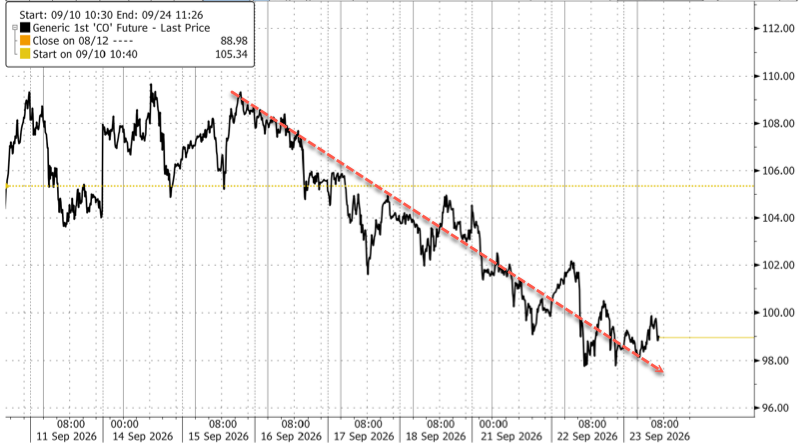
The University of Michigan’s consumer sentiment index just fell to 47.8 from 51.7 in August, for an obvious reason: gas prices are climbing, and people expect worse inflation ahead. One-year inflation expectations jumped from 4.0% to 4.6% in a single month. Moore’s diagnosis is exactly right: “There’s just one big sore thumb in the economy: high oil prices.” It’s a narrow problem, but a visible one, and visibility is what drives sentiment.
That’s the paradox Republicans are walking into for the midterm election. The data is genuinely good. The mood is genuinely bad.
Some of that gap is just how people experience an economy. Nobody feels GDP. They feel the checkout line, the gas pump, and the rent check. Living through the worst inflation in 40 years during former President Joe Biden’s administration doesn’t get undone just because inflation has since “slowed.”
Part of the blame belongs to how badly this story gets told. News coverage skews hard toward what’s going wrong and barely registers what’s going right. Still, the effect is the same: people miss what’s actually changing.
As former National Economic Council Director Larry Kudlow recently put it: “President Trump and the GOP could use a better loudspeaker for all this good economic news.” And the debate shouldn’t be framed against some imagined perfect economy. It should be measured against what Republicans have actually delivered: tax cuts for families, businesses, workers, and even newborns through tax-advantaged Trump Accounts that have helped buoy growth. And it should be measured against what Democrats are actually offering: a return to big-government socialism, dressed in the language of fairness but built, as always, on higher taxes, sweeping mandates, and bureaucratic control over decisions that belong to businesses and families.
That model has a track record, and it isn’t a good one. Higher corporate and investment taxes don’t punish abstractions — they punish hiring, wages, and living standards. Mandate after mandate on employers gets passed straight to the paycheck and the price tag. This is the same command-and-control instinct that has hollowed out growth everywhere it’s been tried at scale, from Western Europe’s stagnant decades to blue-state economies bleeding residents to lower-tax states right now.
The contrast is direct. Lower taxes, deregulation, expanded domestic energy production, and a lighter regulatory hand are the reasons growth, construction, and household income are moving in the right direction. Trading that for the Democrats’ big-government socialism wouldn’t ease the affordability crisis voters feel. It would create a worse one.
BIDEN’S WEAKNESS COST YOU $3,000 — TRUMP’S STRENGTH IS SAVING YOU $2,500
This is exactly the context in which President Donald Trump’s proposed $5,000 tariff dividend deserves real enthusiasm, not a reflexive shrug. Tariffs generated by leveling the playing field for American workers and manufacturers get returned directly to the households that make the economy run, instead of disappearing into the federal budget. It’s the clearest possible example of the difference between a tax and a rebate — between government keeping the money and government handing it back.
The choice ahead isn’t between a flawed present and a flawless alternative. It’s between a model that gives money back and one that would take more of it in the first place.
Cesar Conda, Secretary of State Marco Rubio’s first chief of staff when he served in the U.S. Senate, is a founding partner of Navigators Global and an economic policy board member of Unleash Prosperity Now.
Continue reading...
[ H/T Washington Examiner ]