





The race for artificial intelligence may sound like a contest over chips, code and algorithms.
Underneath all of it is a much more physical question: where will the electricity come from?
President Trump’s administration just put a remarkably concrete answer on federal land in South Carolina.
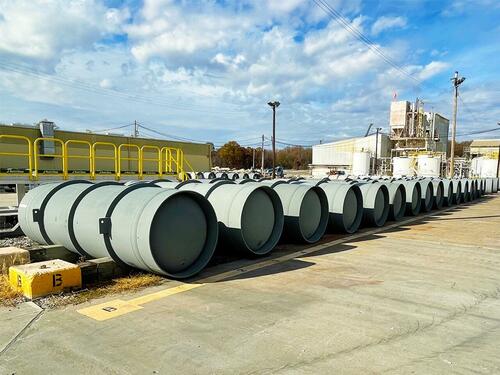
The National Nuclear Security Administration selected Amentum to negotiate a phased lease at the Savannah River Site for a 1-gigawatt AI data center backed by approximately 2 gigawatts of dedicated on-site power generation.
The proposed energy system would begin with natural gas and bridge to nuclear power.
The NNSA announcement says the plan is designed to do three things at once: expand domestic AI computing, add reliable generation and make productive use of federal property without pushing the project’s electricity costs onto existing utility customers.
That last promise is not a footnote.
Communities across the country are watching enormous data centers arrive with equally enormous power demands. The political backlash writes itself when ordinary families are asked to pay higher utility bills so the world’s wealthiest technology companies can feed their servers.
This project is supposed to take a different route. Its power would be built with the data center, not quietly pulled from a strained grid and billed back to everyone else.
NNSA says the on-site generation should meet the project’s load while also increasing the amount of electricity available to the wider grid.
That is the kind of bargain Americans can understand: if a private project needs industrial-scale power, it should help create industrial-scale power.
The proposal also shows why President Trump has tied AI policy to energy policy from the beginning. No country wins the next computing era by rationing electricity, closing reliable plants and hoping software can run on press releases.
America needs more generation, faster permitting, secure infrastructure and enough capacity to grow without forcing families to compete with server farms for power.
Amentum’s announcement says the project would be one of the nation’s largest integrated AI-and-energy infrastructure developments if the lease is finalized.
The company points to its decades of work at Savannah River and its experience in nuclear operations, infrastructure development and high-security government projects. That background matters at a site whose mission is inseparable from national security.
Artificial intelligence infrastructure is no longer just a commercial issue. The same computing capacity that powers consumer tools also shapes defense systems, scientific research, intelligence analysis and the industrial competition with China.
Placing a large project on a federal nuclear-security site raises the bar for safety and security. It also creates a rare chance to plan the data center and its energy source as one system instead of bolting a massive new customer onto infrastructure built for another era.
The Savannah River proposal did not appear from nowhere.
In April 2025, the Energy Department identified 16 federal locations that could support AI data centers and related power infrastructure. Savannah River and three other sites later advanced to private-sector development efforts.
The administration’s Ratepayer Protection Pledge established the central rule: technology companies driving the data-center boom should provide new generation, strengthen the grid and avoid shifting their costs to American households.
The White House says rapid growth in AI and domestic manufacturing is creating a surge in electricity demand at a time when large parts of the grid already face capacity pressure. The pledge is meant to turn new data centers into a reason to add power instead of a new claim on a limited supply.
President Trump launched America’s AI Action Plan in July 2025 with permitting reform, grid expansion and more domestic generation at its core. The administration has also moved to keep reliable power plants online and accelerate advanced nuclear reactors that can serve large computing sites.
In other words, the Savannah River plan is not an isolated real-estate deal. It is a test of whether the country can build the computing infrastructure and the energy infrastructure together—without handing the bill to families who never asked for a data center next door.
What are your thoughts?
TAP HERE TO ADD YOUR VOTE
There is still a long road between selection and construction.
NNSA is explicit that Amentum has been chosen to enter negotiations. A final lease has not been awarded.
Any agreement remains subject to successful negotiations, permits, safety and security evaluations and other federal approvals. Timelines, financing details and the final nuclear technology have not been announced.
That caution makes the announcement more credible, not less. The government is defining the project’s direction without pretending every engineering and regulatory question has already been solved.
The direction is the real story.
For years, Washington treated energy, computing and federal land as separate policy silos. President Trump is putting them on the same map: use American land, build American power, protect American ratepayers and keep the infrastructure that will shape the future inside the United States.
AI may be digital. Winning the race will require steel, turbines, reactors, pipelines, transmission and people who know how to build.
At Savannah River, America may finally be preparing all of it together.
The post President Trump’s AI Push Just Found a New Home — And It Comes With Its Own Power Plant appeared first on 100PercentFedUp.com.
Continue reading...
[H/T 100PercentFedUp]