


Summary
- The Republican Study Committee celebrates its 53rd anniversary this week.
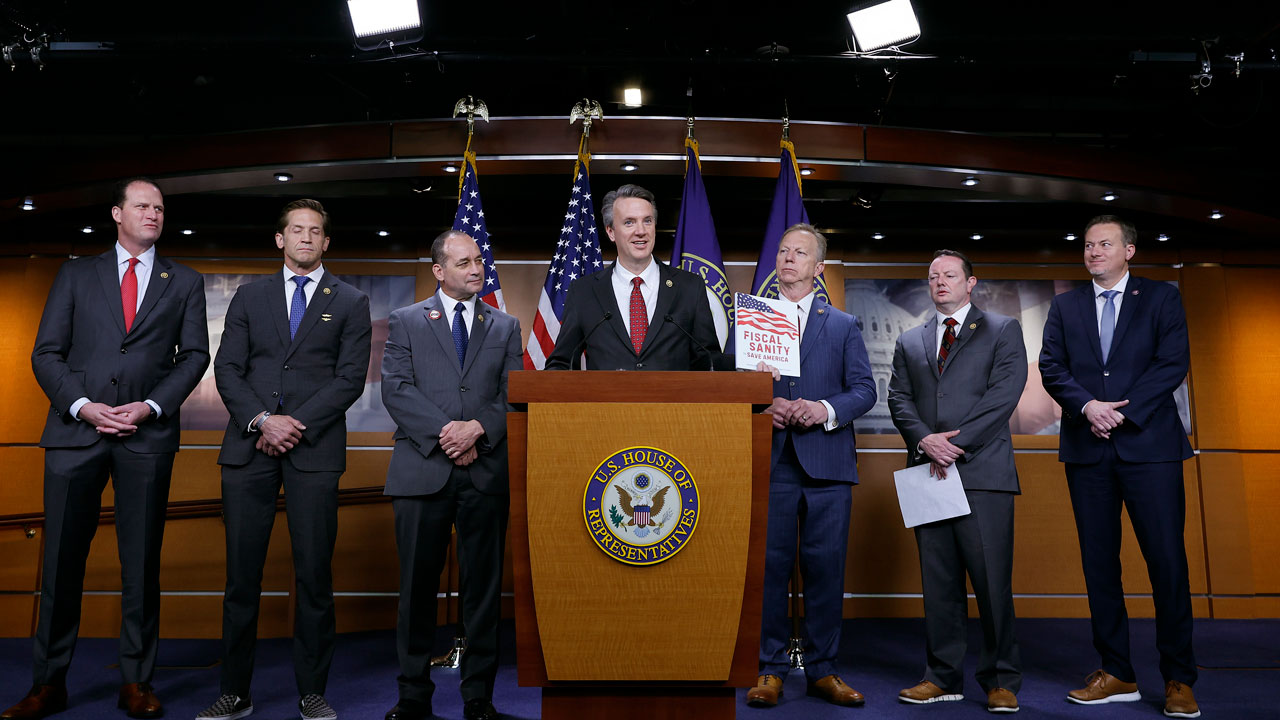
- Chairman August Pfluger told the Daily Signal how the committee has transformed into a powerful force to turn conservative ideas into law.
- It also touts its role as the “driver of many wins” in the One Big Beautiful Bill.
The Republican Study Committee, now the largest caucus on Capitol Hill, is celebrating 53 years in Congress this week. The 190 Republican members are currently led by Chairman August Pfluger of Texas and have helped lead some of the monumental efforts of the 119th Congress codifying President Donald Trump’s agenda.
“For 53 years, the Republican Study Committee has stood as the conservative conscience of the House, and it has been a profound privilege to carry forward the work of the distinguished leaders who held this gavel before me,” Pfluger told the Daily Signal.
“This Congress, our members redefined what the RSC can be, transforming it into a governing force that turns conservative ideas into law while being the leading voices of the Republican message across America,” he continued.
“From the Working Families Tax Cuts Act to historic border security and accountability for taxpayers, our members delivered. Serving alongside them has been the honor of my life, and I am confident the RSC will remain a steadfast voice for the American people for generations to come,” he concluded.
One of the most notable Republican Study Committee contributions to the 119th Congress was the establishment of the first New Media Row in 2025. The recurring event brings together new media hosts and Republican members to deliver their “conservative message straight to the American people without the legacy media bias,” according to the RSC.
The caucus regularly hosts creators, influencers, and conservative personalities for the event. Participants have included Sean Spicer, Scott Jennings, Tim Young, Bannon’s War Room, The Daily Wire, Benny Johnson, The Daily Caller, the Washington Reporter, and the Daily Signal.
The Republican Study Committee was founded in 1973 by Rep. Phil Crane of Illinois and members of the 93rd Congress. Since its founding, the caucus has been chaired by many who went on to serve in leadership, including current Speaker of the House Mike Johnson, current Majority Leader Steve Scalise, current Judiciary Committee Chairman Jim Jordan, former Vice President Mike Pence, and Sen. Jim Banks.
Current Vice Chair Ben Cline of Virginia will likely serve as the next chairman in the 120th Congress, as he has been endorsed by Chairman Pfluger.
“I am proud to celebrate the Republican Study Committee’s legacy of conservative leadership and its commitment to advancing the American Dream. Since its founding in 1973, the RSC has worked to advance policies that strengthen our nation, expand opportunity, and put America first,” Cline said in a statement to the Daily Signal.
“I am proud to stand alongside my colleagues in championing the common-sense conservative principles that make our country stronger. Congratulations to the Republican Study Committee on its 53rd anniversary, and I look forward to continuing this important work for years to come,” Cline’s statement continued.
The Republican Study Committee says it was the “driver of many wins” in the One Big Beautiful Bill, including establishing work requirements for Medicaid and SNAP and including border security funding.
The caucus also says it has been at the forefront of the fight against waste, fraud, and abuse across federal programs as it proposed a framework aimed at codifying the Trump administration’s anti-fraud efforts. Earlier this month, its members were among the first to take Vice President JD Vance’s pledge to protect Americans from fraud.
The committee also launched the Rescissions Working Group, a team of members who worked on codifying President Donald Trump’s $9 billion rescissions package, one of the first Department of Government Efficiency initiatives. The package cut more than $1 billion in taxpayer funding appropriated for public broadcasting amid claims of political bias and the argument that the government should not fund media organizations. Nearly $8 billion in foreign aid was cut from international programs, including refugee assistance and humanitarian assistance from the U.S. Agency for International Development.
Congress passed the bill in July 2025.
Continue reading...
[ H/T The Daily Signal ]