

School girls kidnapped by Muslim terrorists in Nigeria
Even amidst tragic news that at least 18 Christians in Nigeria’s Middle Belt state of Plateau were killed by Fulani jihadists over the past week, there is reason for hope: The nation’s government has finally bowed to pressure and taken concrete action against the plague of anti-Christian violence.
Because of pressure started by President Donald Trump’s campaign to stop the persecution of Christians, the government of Nigeria finally responded with commensurate force to stop these latest attacks in the Middle Belt from turning into something much worse, likely saving hundreds of Christians’ lives.
In the middle of September, local reporters covering persecution in Nigeria—like Masara Kim with Truth Nigeria—began documenting a massive build-up of Fulani jihadists in central Plateau state, one of the epicenters of persecution against Christians in the country. This was not another routine gathering of dozens of attackers, but nearly a thousand armed fighters amassing in the area, coming from all different regions in Nigeria.
The rationale for this terrorist build-up is murky, but it could have been related to reports that a major Fulani militant leader had just been arrested by local forces, or to general attempts to destabilize the country during a presidential election season. Whatever the reason, it appeared that the largest attack on this community in years would be launched imminently.
For context, the last time a coordinated attack of such magnitude occurred was on Christmas Eve 2023, when militias devastated 25 villages, leaving almost 200 Christians dead, with pastors beheaded and churches burned to the ground. Over the following months, more than a thousand were killed as the communities were left to fend for themselves, effectively defenseless.
The suspected attack, seemingly being planned for September, looked to be even bigger. Bigger also than the Yelewata Massacre of June 2025 in nearby Benue State that killed another 200 Christians.
As someone who has dedicated much of my work to combating persecution in Nigeria—and has visited and worshipped with these same communities—there were nights last week when I thought I would wake up to the news of hundreds of Christians killed.
But what happened instead could be a turning point in the fight against persecution.
The U.S. has been pushing for the Nigerian government to devote more resources to the Middle Belt for the past year. After becoming aware of the rapidly growing Fulani militant presence and recent sporadic firefights in Plateau, American officials began applying intense pressure to the government of Nigeria, which finally responded.
Last week, beginning the evening of Sept. 20, Nigerian forces surged into the Barkin Ladi area in a show of force unlike anything seen before in the Middle Belt, even using air support for the first time and establishing a local curfew. The additional forces were able to beat back the militants in most areas, and they deterred any large-scale attack from occurring.
The U.S. correctly commended Nigeria’s government for stepping up, responding to early warnings, and deploying security that could meet the scale of the attacks from the jihadists.
Not every attack was stopped. We mourn for every single one of those Christians killed last week. The lives lost stand as a testament to the ferocity of attacks that these communities face constantly. It is also terrible that so many of the attackers were able to get away. But still, for the first time, the government of Nigeria began to acknowledge and act to counter the true scale of the problem facing Christians in the Middle Belt.
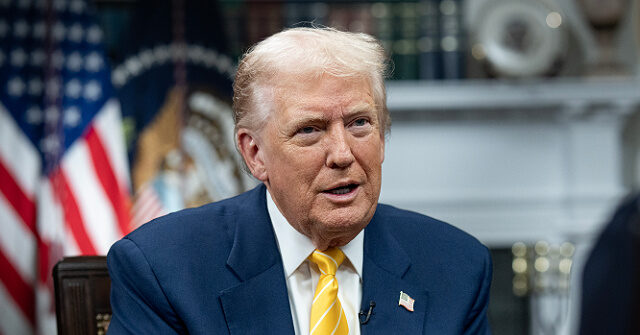
None of this would have happened if not for Trump’s attention to the persecution of Christians in Nigeria, particularly since he designated Nigeria as a Country of Particular Concern nearly one year ago on Oct. 31, 2025.
Despite initial heavy resistance from the Nigerian government, the U.S. was able to bring Nigerian officials to the table in a Working Group that formed in January and was tasked with stopping the persecution. The initial focus of this engagement was on targeting Islamic State-affiliated groups in the Northeast and Northwest, but within months following successful strikes, the U.S.’s attention turned towards the Middle Belt, where most of the persecution against Christians in Nigeria takes place.
Trump has a long history of personal concern over the persecution of Christians in Nigeria. He raised the issue directly with the former president of Nigeria in a White House meeting in 2018. He designated Nigeria a Country of Particular Concern in 2020, before President Joe Biden inexplicably removed the designation the following year.
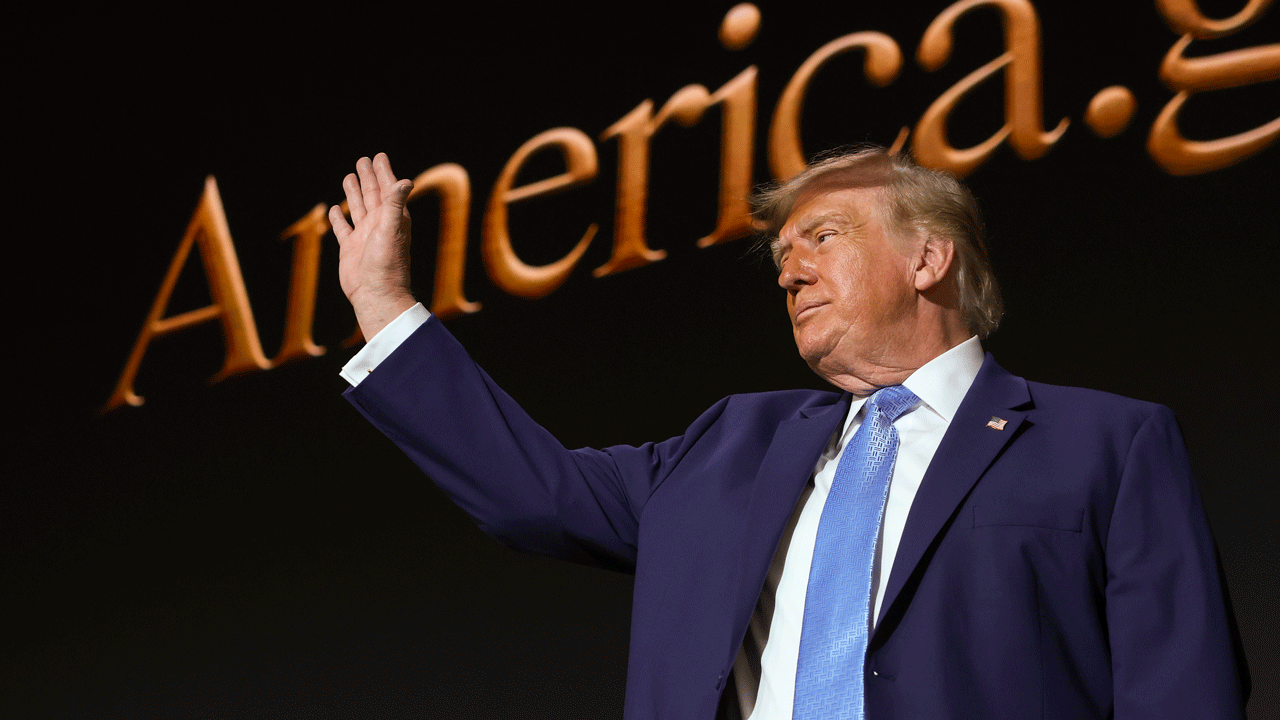
And at the U.N. General Assembly this year, the president went off script to emphasize the point after condemning global governments who ignore the persecution of Christians: “Christians are being persecuted all over the world, it’s not even believable, I never thought I’d say it, but it’s been happening for a long time.”
The president and his administration have now saved hundreds of Christians’ lives in Nigeria in just the past two weeks.
But this fact should not encourage complacency. Without sustained U.S. pressure, Christians in Nigeria will once again be left on their own. And so far, the security force coordination seen in Plateau State has not been implemented elsewhere in the Middle Belt. Nigeria still has radical clerics wanting to dominate Christians, and it still enforces horrible laws that call for the death penalty for blasphemy against Islam.
But if U.S. pressure can continue, and if the government of Nigeria is willing to listen, the momentum from this past week, applied across the Middle Belt, will have real results. And one day, hopefully soon, we will have reports of thousands of Christians saved in Nigeria and able to live out their faith freely.
[Editor’s note: This story originally was published by The Daily Signal.]
Continue reading...
[ H/T WorldNetDaily ]


