







Give the Department of Government Efficiency its due. They did what many hoped. They took the federal bureaucracy head-on, a bane to the average American. DOGE identified the problem, zeroed in on a few particularly egregious federal offices, and proved there is an appetite for a smaller, cheaper federal government.
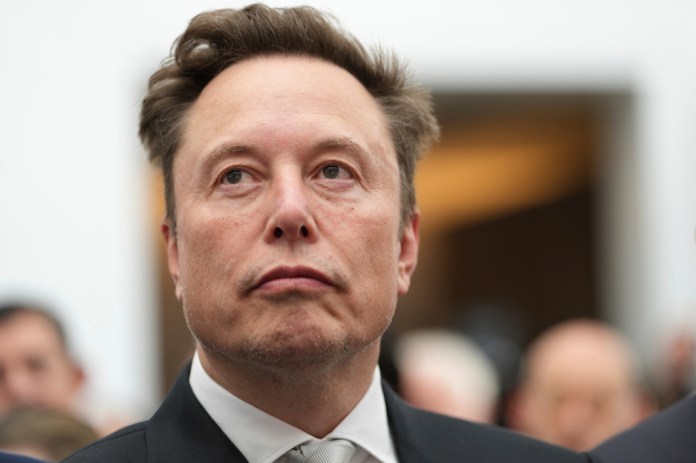
I commend Elon Musk and all who worked with him at DOGE. I also commend Niccolo Machiavelli for seeing the world as it is. In The Prince, he wrote: “The reformer has enemies in all those who profit by the old order, and only lukewarm defenders in all those who would profit by the new.”
The faces, places, and technology have changed since Machiavelli’s time, but little else, especially the desire to reform. Consider this: the Budget and Accounting Act of 1921 tried to impose discipline; Reagan’s Grace Commission cataloged the waste in a report delivered in January 1984 and watched most of its recommendations die on a shelf; Clinton and Gore “reinvented government” in 1993, trimmed the hedges, and left the root system intact.
Then Musk and DOGE stepped up to the challenge. They swung hard. DOGE cut USAID to a shadow. It shrank the Department of Education, Health and Human Services, the Internal Revenue Service, and others. Roughly 144,000 federal workers took the deferred-resignation offer. There was much rejoicing among Americans who understand that a bigger government means a smaller citizen. For that alone, Musk should be awarded the Presidential Medal of Freedom because, more than Russia, China, or Iran, the massive federal bureaucracy is the enemy of the common American. Large corporations, those who want to make a legacy, and think tanks tend to identify such countries as great threats. But it is the federal bureaucracy, backed by coercion, that bewilders many Americans and sucks the paychecks and profits dry as its tentacles grow. DOGE fought what the common man views as the enemy.
Then DOGE ran into the Federal Emergency Management Agency.
FEMA is a hard target. The agency wraps itself in the flag and the funeral. Cut FEMA and you are vilified for letting grandma drown, or at least that is what those at FEMA contend. Sitting atop the fattest cow in the DHS herd, FEMA’s fiscal 2025 request was $33.1 billion, set against a Department of Homeland Security discretionary request of $62.2 billion. As I point out in my book, Texas Flood 4 July 2025, FEMA’s mission is helping people before, during, and after disasters. The word helping is purposely used to obfuscate the expenditure of funds through contracts. DOGE faced a hurdle when it began to identify which help it was to cut and discovered help could be used to justify any expenditure in a budget of that size.
DOGE began its efforts at FEMA by looking at contracts. A reasonable place to start if time and resources are unlimited.
DOGE flagged tens of millions in FEMA money flowing to New York City hotels, real waste reflecting FEMA’s brazen disdain for the average person. DHS fired four officials responsible, including the chief financial officer. An army of lawyers got involved. New York City sued to recover the money. The clock ran out on DOGE. The limited special-government-employee appointments expired, and FEMA began returning to normal behavior, exposed but not defeated.
In their valiant effort, I suggest DOGE picked the wrong aiming point at FEMA. They chose contracts. They should have focused on the law to trim the obese agency to a healthy size.
When Musk’s colleague Steve Davis and the DOGE team came to my office at 500 C Street, where my team was planning the drastic reduction in size or even the elimination of FEMA within six months, I did not hand him a hit list of contracts as exhibits of my plan. Why? Because there are thousands of them. Instead, I showed them a list of the laws that govern FEMA and the associated specified tasks held therein. “Start there,” I explained, “then eliminate any contract or sub-office that does not trace to law. Apply your judgment there; FEMA can be gone or transformed in a few months by doing that.” Davis approved of my approach, in part because I had just been successful setting up DHS’s Countering Weapons of Mass Destruction Office for shutdown without any of DOGE’s help. Start with the law and cut every associated contract, and every box on the organization chart that the statute does not specify. I showed Davis the agency’s headquarters as I found it, about 6,100 full-time employees, and then the fewer than 2,000, as a straight reading of the statutes will support. I explained that left about 4,000 in a federal jobs program. Those 4,000 would be more successful at Dairy Queen or the DMV.
Like the United States, which got mired in state capacity building in Afghanistan rather than killing an enemy, DOGE got caught in the time trap of culling through contracts and arguing with FEMA, whose bureaucrats did indeed often remind me of the illiterate Afghan tribesmen I dealt with in a futile war to change their culture. As a nation, we watched the American effort in Afghanistan implode. The paper military and government we helped build fell within a week of the ignominious pullout. Due to the sheer number of contracts and the size of its budget, and like certain Afghans who understood the U.S. effort was doomed, FEMA bureaucrats understood DOGE lacked the time and the numbers to withstand a litany of petty arguments, obfuscation, and the game of contract hide-and-seek. The statutes are the place to begin. They tell you what the agency is required to do. Subtract from that all offices, personnel, and contracts that do not tie directly to the law.
Programs that wander into compensation for family heirlooms, faith-based initiatives, and lawyers and clerks hired to defend federal employees from each other can be chopped back to whatever the statute actually requires. The Individual Assistance program, intended to help people hit by disasters, could be cut to a handful of personnel offering up-to-date technology. Instead, FEMA pays contractors to staff call centers, four of them across the country, with up to 1,200 seats of phones and headsets and a stack of 18 documents to fill out. That is 20th-century telethon technology, the equivalent of the dial phone. The only people benefiting are those profiting from the disaster industry, a revolving door for the people who fill the top slots at FEMA.
ELON MUSK BUILT THE ROCKETS. WASHINGTON FORGOT TO BUILD THE ROADS
So, who will act on FEMA? Nobody. Congress is beholden to FEMA’s $30 billion. The flow of money to large disaster-industry companies helps sponsor campaigns. It is that simple. Of course, there are those in Congress who do understand FEMA is part of a rotten system, but it is better to leave the rotten apple cart alone, lest the cart full of good apples not favor you. FEMA insiders have no incentive to change FEMA. The people who run FEMA rotate back to the disaster industry with a keen sense of how to access the $30 billion, and they cash in on favors. The inertia is there to maintain an agency that ill serves the people, just as Afghans resisted American efforts to change their culture. Machiavelli saw it five centuries ago: the people who profit from the old order fight like cornered animals, and the people who would benefit from the new one, the taxpayers, are distant, distracted, and silent.
DOGE was the great hope. Unlike RG3, I foresee a version of DOGE returning with a handful of lessons learned, so at last, an agency as ineffective and wasteful as FEMA can be corrected.
David Richardson served as the senior official performing the duties of administrator of FEMA. He is the author of Texas Flood: Power, Money, Politics, History, Bureaucracy and Tragedy.
Continue reading...
[ H/T Washington Examiner ]