


Ninth Circuit Upholds Block On Trump's Federalization Of California National Guard, Rejecting "Rebellion" Claim
The U.S. 9th Circuit Court of Appeals on October 23 affirmed a district court order blocking President Donald Trump's June 2025 federalization of 4,000 California National Guard troops for Los Angeles, ruling 2-1 that neither statute the administration relied on covered it. Sung's opinion, filed October 23, says the order "exceeded the President's statutory authority and encroached on Congress's calling forth power," which made it "ultra vires and unconstitutional."
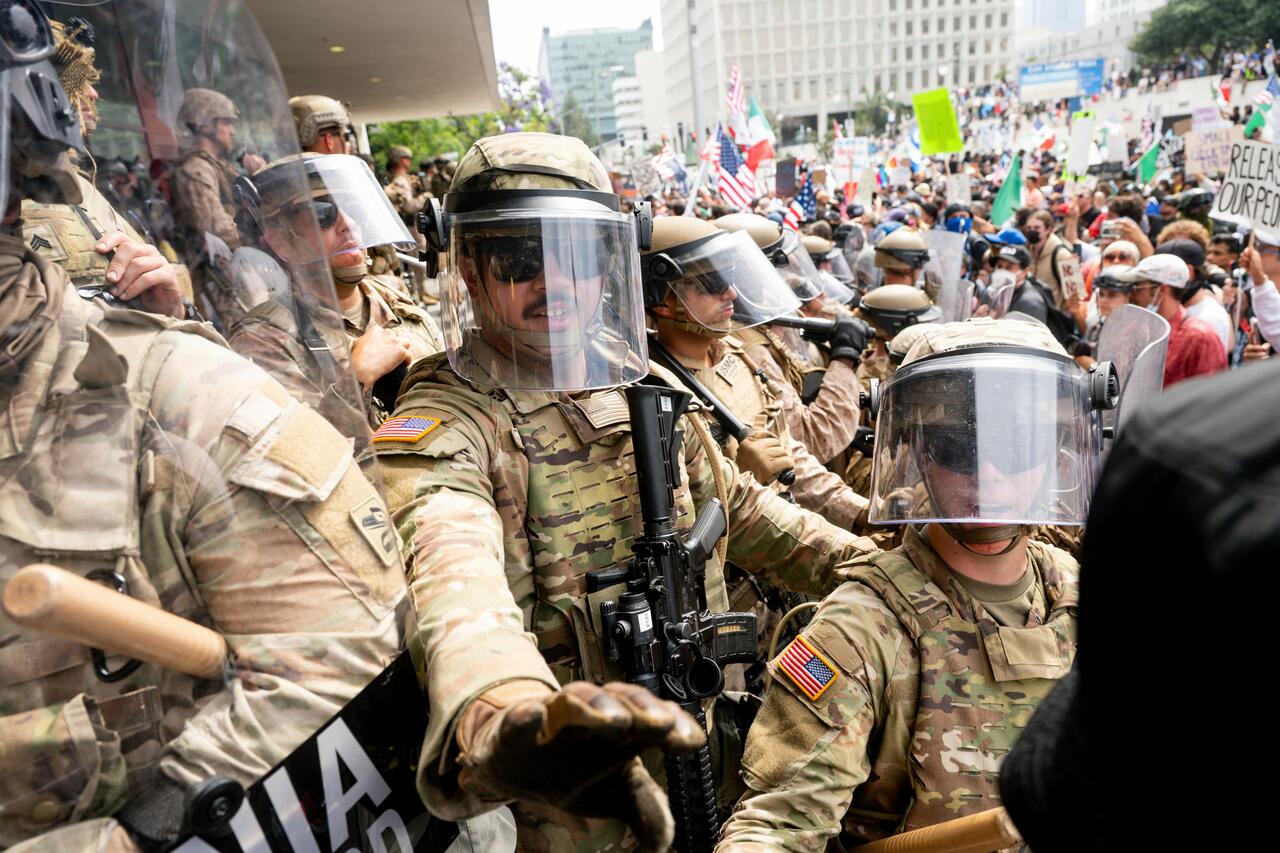
California National Guard members and Marines hold back demonstrators during a protest June 14, 2025, in Los Angeles.
Sung, a Biden appointee, was joined by Judge Eric Miller, a Trump appointee, who wrote separately only to say the government forfeited its argument that no cause of action exists. Judge Mark Bennett, also a Trump nominee, dissented. Military.com reported that the Justice Department did not respond to its request for comment.
The panel's own June 2025 stay order had found Trump likely acted within 10 U.S.C. § 12406(3), which lets a president federalize the Guard when he is "unable with the regular forces to execute the laws." That changed after the Supreme Court's December ruling in Trump v. Illinois, decided over dissents from Justices Samuel Alito, Clarence Thomas and Neil Gorsuch. Under that ruling, a president must first show he has authority to use the regular military to execute the laws, and that he is unable to with those forces. The panel held the administration made neither showing.
That left the administration's fallback, § 12406(2), which covers "a rebellion or danger of a rebellion against the authority of the Government of the United States." Relying on dictionaries from when the statute was written, the court read rebellion as "a violent, armed, organized, open and avowed uprising against the government as a whole," not opposition to a single law or policy. It noted that an 1897 dictionary set rebellion apart from insurrection, which it said may be "a rising in opposition to a particular act or law."
The panel did not wave away the violence. It cited the district court's findings that on June 6 about 800 protesters gathered at two sites, with some throwing concrete chunks and bottles at federal officers, and that on June 7 protesters in Paramount and Compton set a vehicle on fire, looted a gas station and threw a Molotov cocktail. About 11 people were arrested that night. By June 8 the crowd had grown to about 3,500, and at least 42 were arrested.
Even so, the court found "no evidence of organized, as apart from sporadic or impromptu, violence" and no evidence, as of the June 12 hearing, "of any protesters carrying firearms." Hundreds of civilian law enforcement officers, including a team trained for civil unrest, had brought the early clashes under control. Quoting the district court, the panel said the protesters "gathered to protest a single issue - the immigration raids." A rebellion finding on that record, it concluded, fell outside a "range of honest judgment."
Bennett's dissent is mostly procedural. After the Supreme Court acted, the administration moved on January 23 to dismiss its own appeal; the panel denied that motion in a separate order. Bennett argued the court should have granted it and instead relied on "outdated briefs prepared amid a shifting legal landscape." He also warned that the published opinion "will bind future three-judge panels, absent intervening precedent from the Supreme Court or an en banc panel," and said California's Tenth Amendment claim, which the parties "barely briefed," is unlikely to succeed.
The ruling matters mainly as precedent, because the troops are already home. California's attorney general says that after the Supreme Court's decision the administration let the district court's order take effect, returning command to Gov. Gavin Newsom. Two other pieces of the fight are on separate appeals: Judge Charles Breyer's September 2025 permanent injunction under the Posse Comitatus Act, which followed a bench trial, and his December 10, 2025 injunction against the extensions of the federalization.
Newsom called it "a crucial day for the rule of law," and Attorney General Rob Bonta called the deployment "a clear example of federal overreach," in statements Military.com carried and Bonta's office published.
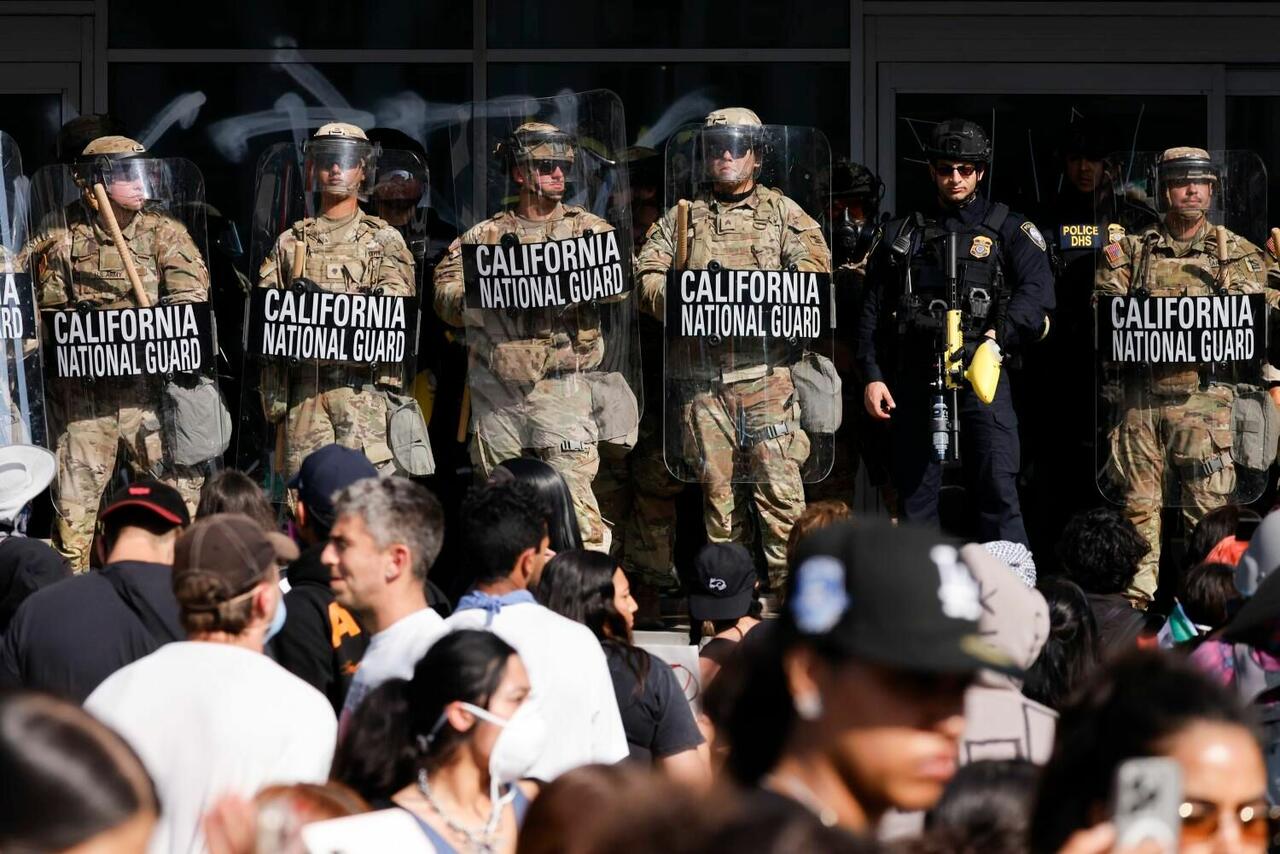
The California National Guard holds a line in front of anti-ICE protesters in front of the Federal Building on Monday, June 9, 2025, in Los Angeles.
Tyler Durden Mon, 10/26/2026 - 22:10
Continue reading...
[ H/T ZeroHedge ]
The U.S. 9th Circuit Court of Appeals on October 23 affirmed a district court order blocking President Donald Trump's June 2025 federalization of 4,000 California National Guard troops for Los Angeles, ruling 2-1 that neither statute the administration relied on covered it. Sung's opinion, filed October 23, says the order "exceeded the President's statutory authority and encroached on Congress's calling forth power," which made it "ultra vires and unconstitutional."
California National Guard members and Marines hold back demonstrators during a protest June 14, 2025, in Los Angeles.
Sung, a Biden appointee, was joined by Judge Eric Miller, a Trump appointee, who wrote separately only to say the government forfeited its argument that no cause of action exists. Judge Mark Bennett, also a Trump nominee, dissented. Military.com reported that the Justice Department did not respond to its request for comment.
The panel's own June 2025 stay order had found Trump likely acted within 10 U.S.C. § 12406(3), which lets a president federalize the Guard when he is "unable with the regular forces to execute the laws." That changed after the Supreme Court's December ruling in Trump v. Illinois, decided over dissents from Justices Samuel Alito, Clarence Thomas and Neil Gorsuch. Under that ruling, a president must first show he has authority to use the regular military to execute the laws, and that he is unable to with those forces. The panel held the administration made neither showing.
That left the administration's fallback, § 12406(2), which covers "a rebellion or danger of a rebellion against the authority of the Government of the United States." Relying on dictionaries from when the statute was written, the court read rebellion as "a violent, armed, organized, open and avowed uprising against the government as a whole," not opposition to a single law or policy. It noted that an 1897 dictionary set rebellion apart from insurrection, which it said may be "a rising in opposition to a particular act or law."
The panel did not wave away the violence. It cited the district court's findings that on June 6 about 800 protesters gathered at two sites, with some throwing concrete chunks and bottles at federal officers, and that on June 7 protesters in Paramount and Compton set a vehicle on fire, looted a gas station and threw a Molotov cocktail. About 11 people were arrested that night. By June 8 the crowd had grown to about 3,500, and at least 42 were arrested.
Even so, the court found "no evidence of organized, as apart from sporadic or impromptu, violence" and no evidence, as of the June 12 hearing, "of any protesters carrying firearms." Hundreds of civilian law enforcement officers, including a team trained for civil unrest, had brought the early clashes under control. Quoting the district court, the panel said the protesters "gathered to protest a single issue - the immigration raids." A rebellion finding on that record, it concluded, fell outside a "range of honest judgment."
Bennett's dissent is mostly procedural. After the Supreme Court acted, the administration moved on January 23 to dismiss its own appeal; the panel denied that motion in a separate order. Bennett argued the court should have granted it and instead relied on "outdated briefs prepared amid a shifting legal landscape." He also warned that the published opinion "will bind future three-judge panels, absent intervening precedent from the Supreme Court or an en banc panel," and said California's Tenth Amendment claim, which the parties "barely briefed," is unlikely to succeed.
The ruling matters mainly as precedent, because the troops are already home. California's attorney general says that after the Supreme Court's decision the administration let the district court's order take effect, returning command to Gov. Gavin Newsom. Two other pieces of the fight are on separate appeals: Judge Charles Breyer's September 2025 permanent injunction under the Posse Comitatus Act, which followed a bench trial, and his December 10, 2025 injunction against the extensions of the federalization.
Newsom called it "a crucial day for the rule of law," and Attorney General Rob Bonta called the deployment "a clear example of federal overreach," in statements Military.com carried and Bonta's office published.
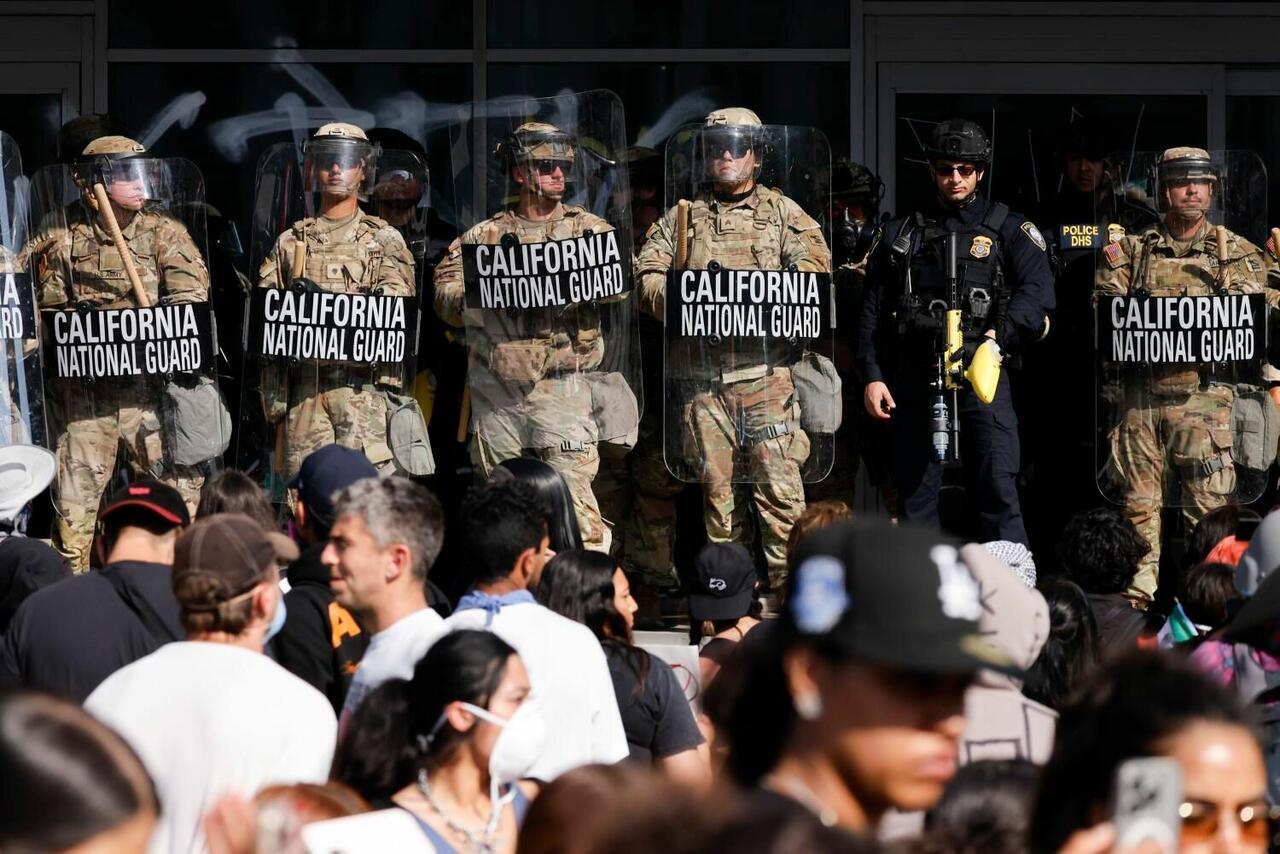
The California National Guard holds a line in front of anti-ICE protesters in front of the Federal Building on Monday, June 9, 2025, in Los Angeles.
Tyler Durden Mon, 10/26/2026 - 22:10
Continue reading...
[ H/T ZeroHedge ]