


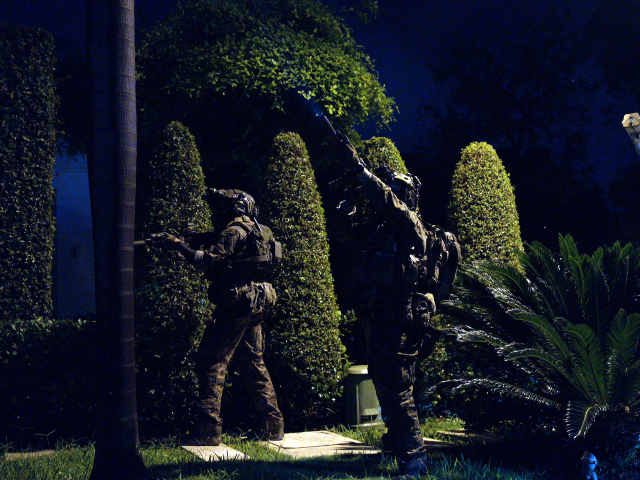


NATO member France is deploying military assets to protect a key oil port in the Red Sea.
French President Macron announced the decision this week in a prime-time interview from his Élysée Presidential Palace in Paris after returning from the UN General Assembly in NYC.
And why would France suddenly deploy troops and equipment to protect a Saudi oil port?
Funny you should ask! And the most obvious answer is very straightforward.
It gets cold in France during the winter, and Macron is highly motivated to keep the fuel energy flowing from one of the primary hubs that keeps Europe warm.
It just so happens this news come right on the heels of a visit to Paris by the Saudi Crown Prince, barely a month ago.
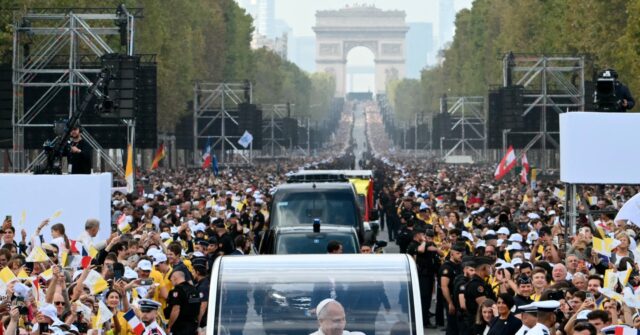
The Wall Street Journal even used a photo op from that trip for their coverage of this story:
Could it be that the Saudi Crown Prince and Macron hatched this plan weeks in advance as a way to push back against the stranglehold of attacks from the Iranian-backed Houthis?
That’s what I’m going with.
Macron promised his countrymen that the purpose isn’t to get France involved in a conflict.
But rather, to simply protect this one strategic location, as reported by Fox News:
But let’s go back to that timely (and rare — the Saudi Crown Prince doesn’t generally travel out of the Saudi Kingdom) visit by the Saudi leader to Paris a few weeks before this announcement.
A look back at reporting from the state-owned French coverage of that visit highlighted Macron’s hopes of cashing in on Saudi investment opportunities.
Check out this clip for another bit of insight into why Macron was willing to pull the military trigger to protect a Saudi port:
Those economic incentives have surely played a role in bringing France alongside the Saudi interests.
Even though France generally is more cozy with the UAE — a Saudi oil competitor.
But recent gains by the Houthis and strikes by Iran on the eastern side of the Saudi Kingdom (and on the UAE) have upped the importance of more westerly ports, according to the state-owned French News station out of Paris, France 24:
And even that western port of Yanbu on the Red Sea has been on Iran and the Houthi’s radar.
So much so that the United Kingdom — similarly concerned about it’s ability to keep the fuel energy flowing for the coming winter — offered up a more limited degree of military support to the Saudi’s, as well:
That puts several NATO members in a position of having to directly deal with the Iranian and Houthi threat.
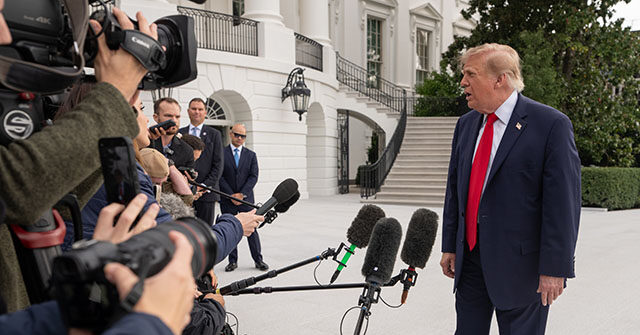
Oddly enough, President Trump (as covered in the above report from France 24) called a halt to strikes on the Houthis, even though they were targeting Saudi oil facilities.
Is it coincidence that European NATO members are now on the hook for helping to secure their own fuel oil from Iranian and Houthi attacks?
Coincidence, or strategic powerplay by an America First President — you be the judge.
Here’s an overview explaining graphically the motivation for Macron’s decision, summed up in a way to give you a good picture of the situation France, and most of Europe, now finds itself in:
On some level, even the ‘Green energy’ folks in Macron’s government have to come to the terms with this stubborn fact.
Oil still matters. A lot.
And although the complicated nature of ANY situation involving oil and the Middle East is a given…
It’s nice to see that, just maybe, Europe is starting to realize the world looks a little different when the US has a President that isn’t going to continue carrying our ‘friends’ burdens, with nothing to show for it.
Continue reading...
[ H/T WLT Report ]


