Intro: The Risk Nobody Takes
And I was asking, am I supposed to be doing this? Is this really, you know, am I am I supposed to be a songwriter? Am I supposed to be a musician? Is this what I’m supposed to do with my life? I kept asking.
Most people spend their whole lives avoiding the things that might hurt them, playing it safe, flocking to certainty out of fear of the unknown. But every once in a while, someone comes along and does the opposite, who sees the risk clearly and chooses it anyway.
This is a story about someone who has forever and gives it up for something that might not last at all. It’s about a decision to move past what feels safe to feel something real. That’s what the song Iris by the Goo Goo Dolls is built on. And what’s extraordinary is the man who wrote it was wrestling with the exact same fight.
Chapter 1: The Movie That Started It All
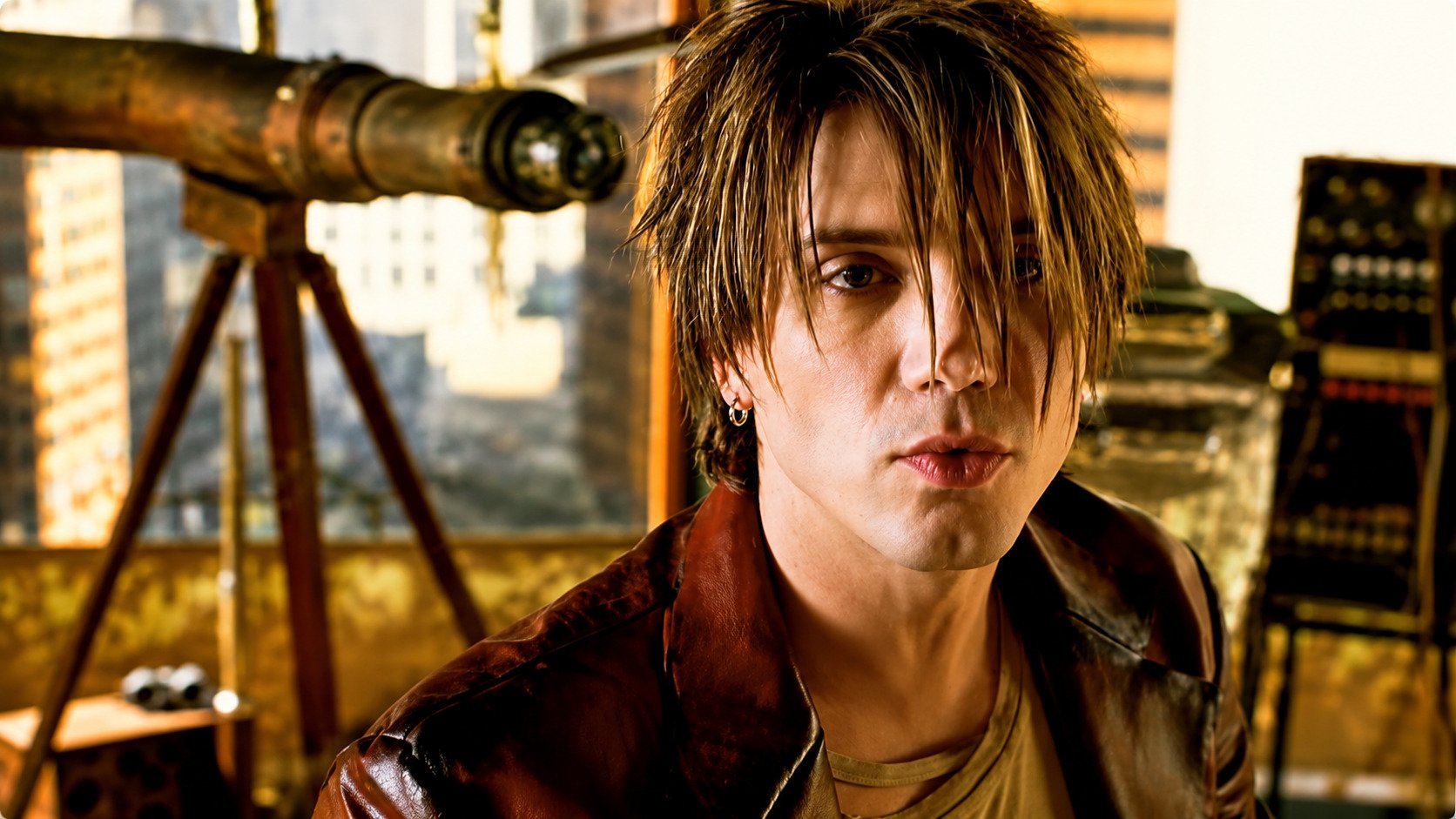
It’s 1997 and John Rzeznik is living all alone in a hotel room in West Hollywood. His marriage had just fallen apart, his career in question, and all that’s in front of him is a guitar with four strings because he’d snapped the other two. Then his manager calls talking about a movie in production called City of Angels.
“So, I was watching it and then there’s one particular scene, ‘We want you to write something for this scene.'”
“I would rather have had one breath of her hair.” This guy is an angel. He’s immortal. He’s willing to give up that immortality because he’s never felt one touch of her hand, then an eternity without it.
The idea is simple. Nicolas Cage’s character is an angel. He already has forever. Yet, he’s choosing to give it up for one moment with someone who might not even choose him back. That’s the risk at the center of the story. And the only way a song written for this scene works is if the person writing it already knows what that risk feels like. As it turns out, at that point in his life, John was exactly that person.
Chapter 2: Before The Leap
“First of all, how did you guys all meet each other? Were you guys lifelong friends, which it seems like you are? And did you guys start out as a cover band?”
“No, just foolish college kids. You know, we played a lot of covers when we first started because we didn’t have enough material to do a whole set.”
To understand why this call hit John the way it did, you have to go back a little further. The Goo Goo Dolls were not the kind of band you’d expect to be writing a song like this. They came up as punk rockers in Buffalo, New York. They were rough around the edges and struggled finding an identity in their sound.
Now we’re grown up and never knew their names. “You don’t belong.” In ’95, they had a hit with Name. But that didn’t make things easier. If anything, it increased the pressure. After kicking out their drummer and legal battles over a horrible record deal, John fell into a writer’s block, a depression that made him question everything.
“And I was asking, am I supposed to be doing this? Is this really, you know, am I am I supposed to be a songwriter? Am I supposed to be a musician? Is this what I’m supposed to do with my life? I kept asking.”
After a year, the band got him to come out of seclusion and come back to Buffalo to work on new material. The ironic thing about writer’s block is that you write the whole time, you know. You just think everything sucks.
John wasn’t sure if he could catch lightning in a bottle again. And then a movie about an angel who had to give up everything just to feel something landed in front of a man who was facing that exact question. John had to decide if he’d push through. Months pass, but Buffalo doesn’t unlock anything. So, he heads back to LA, back to that hotel room, and then the call comes. One question, one movie scene.
“I really had been kicking myself trying to find the perfect piece of music to really sum up this sort of intimate quest of Nick Cage’s in the picture, which is to dare to make the leap into the unknown and to dare to hope that Meg Ryan’s going to open the door for him.”
An angel watching someone he loves, fully aware that she can’t see or hear him, and deciding whether to give that all up just to be with her. Instead of trying to write a song about that, John puts himself in the character’s shoes.
“And then I just thought to myself, like, if I was that guy, yeah, what would I say to that girl?”
He isn’t describing love. He’s describing what it costs, what it actually feels like when you decide to get real. Moment of truth in your life.
Because once you make that decision, you don’t get to stay protected anymore. You feel everything that comes with it, whether you’re ready or not. And I think it’s the flaws in life that make it beautiful. It’s the kind of beauty that isn’t done with good lighting and that kind of thing. It’s something visceral or humbling in a way, and it could kill you.
In the movie, he has to jump. In the song, he already has.
When everything, all he wants is to be seen for one moment by someone who actually knows who he is. It’s a feeling built into the song, but not just the words—the sound carries it, too. That same instinct shows up in how the song was actually built. And it starts with guitar before anything else.
Chapter 3: The Sound Of Risk
“Technically, for the sake of argument, this is a B, a D, a D, a D. Whoa.”
“And another D. Four Ds. Jesus.”
That’s not how a guitar is usually tuned. Most movie songs are constructed to feel clean, big, and controlled. Everything resolves the way you’d expect it to. Well, this one doesn’t. The notes ring into each other, and it creates this tension that never fully settles.
It’s another risk, letting the foundation of the song feel a little unstable, but in the end, it feels more real. Now that the base of the song is established, pieces are starting to fall in place. But instead of copying and pasting that foundational acoustic riff into the intro, they went for something more unconventional.
“Well, really, you killed it because as soon as you did that descending line…”
It doesn’t come in aggressively, big, or familiar. It starts with something softer and more exposed. That mandolin part isn’t the obvious choice, but its fragility invites you in. And that’s the first risk: letting the song open in a way that feels quieter and more vulnerable. But that doesn’t mean everything stays that subtle.
“My favorite part of the song is the slide guitar solo, which I wanted to play. We were lucky enough to work with a guy named Tim Pierce. When I did it, it sounded like a bunch of cats fighting. And when he did it, it was just this gorgeous, lush thing.”
“You know, the solo comes and we go, ‘Well, why don’t you try the solo, right?’ And then I think you had the idea of putting a slide on it…”
No explosive solo. It almost aches like the rest of the song. Like it’s reaching for something and not quite touching it.
The foundation was there: the riff, the mandolin, the solo, but there was still an empty space to fill in the middle.
“We knelt down on the floor in front of the window and we watched this 16-piece orchestra start sawing away. I looked at Robbie and I’m like, ‘We ain’t going back.'”
They knew what it sounded like. It wasn’t underground, nowhere near alternative, and definitely not cool. But they did it anyway, chasing something they could feel over something that was safe. That’s what the whole song is built upon.
Chapter 4: When It Hit
And then the City of Angels thing blew up out of control. And then, you know, Iris remained a hit for a long time. When the song came out, it didn’t just perform well, it completely took over. 19 weeks at number one, four Grammy nominations, and the anti-mainstream band was everywhere.
“I was really, really excited to get it on the soundtrack because U2 and Peter Gabriel and Alanis Morissette, amongst others, were on this album, and it’s weird because we turned out to be the dark horse and won that race.”
They weren’t supposed to be the standout, but the song that connected with people the most was the one from a punk band from Buffalo. They leaned into something more vulnerable, and it connected, even if the song’s title didn’t mean anything.
John was flipping through a copy of LA Weekly, saw that a country singer named Iris DeMent was playing in town, and thought that the name was beautiful. That’s it. No deeper meaning. Ironic for a song about wanting to be known to be named after a woman who had no idea it existed.
“Who wrote these songs?”
“I wrote the two. I write all the sappy songs.”
Suddenly they had to live with it. They chose the version of themselves that felt more exposed almost every day. “You know, Home Depot. I’m a god at Home Depot in Hollywood.” And once that song took off, they didn’t get to hide behind anything anymore. Not their sound, not their image, not even in their hometown.
Chapter 5: Why It Lasts
The culmination of Iris came a few years after its release, and they played it live in Buffalo in the rain. Not a light rain, a full-on storm. It was dangerous, chaotic, out of control, and nobody left.
“Tearing wires off of the… What was going on? Sewer covers and the gas was exploding, and manholes were flipping about 10 feet in the air. It was crazy. It was a crazy night, man.”
Thousands of people standing in the rain in a city that raised the band. It wasn’t controlled. It wasn’t perfect. And it was definitely uncomfortable, but it was a moment that felt like a reflection of the song itself.
Outro
“If you’d known this was going to happen, would you have done it?”
“It’s been an incredible gift, and you know, you never get sick of that one. How can you get sick of a gift?”
That’s really the question at the center of both the movie and the song. Would you risk something that feels safe just to feel something real? Even if only for a moment, Iris answers that pretty clearly.
“How’s that?”
“Perfect.”
In the movie, he gives up eternity just to feel one moment with her. In the hotel room in LA, John gave up the safe song he couldn’t write for the one that scared him. On stage in Buffalo, the band played through a storm they should have stopped for. Thousands of people stood in the rain and refused to leave. All choosing the same thing: to feel it. Even if it doesn’t last.