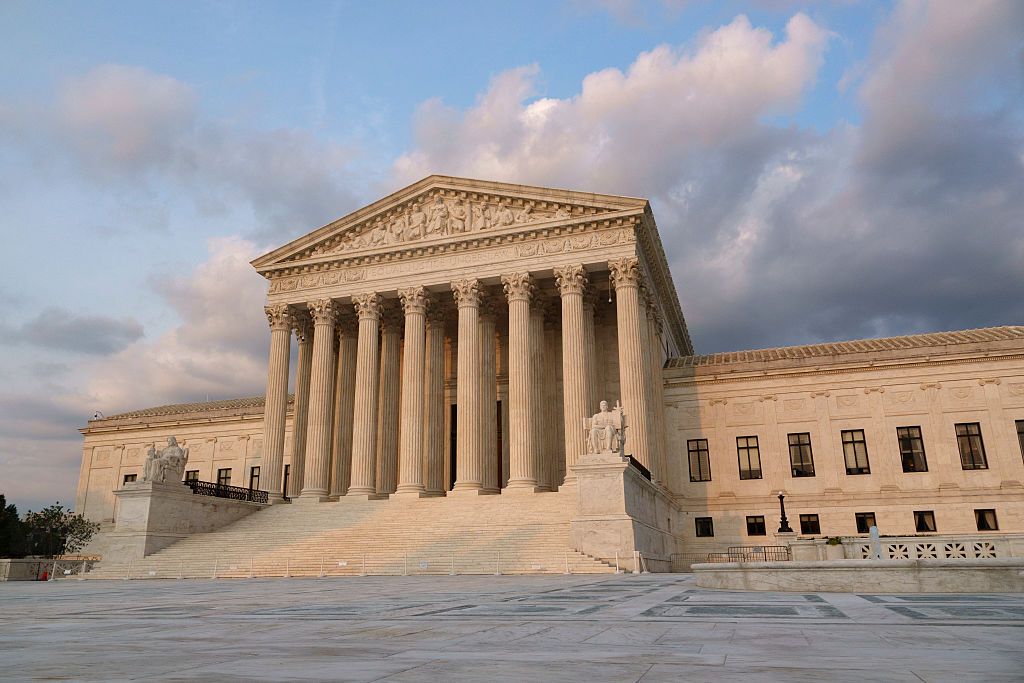






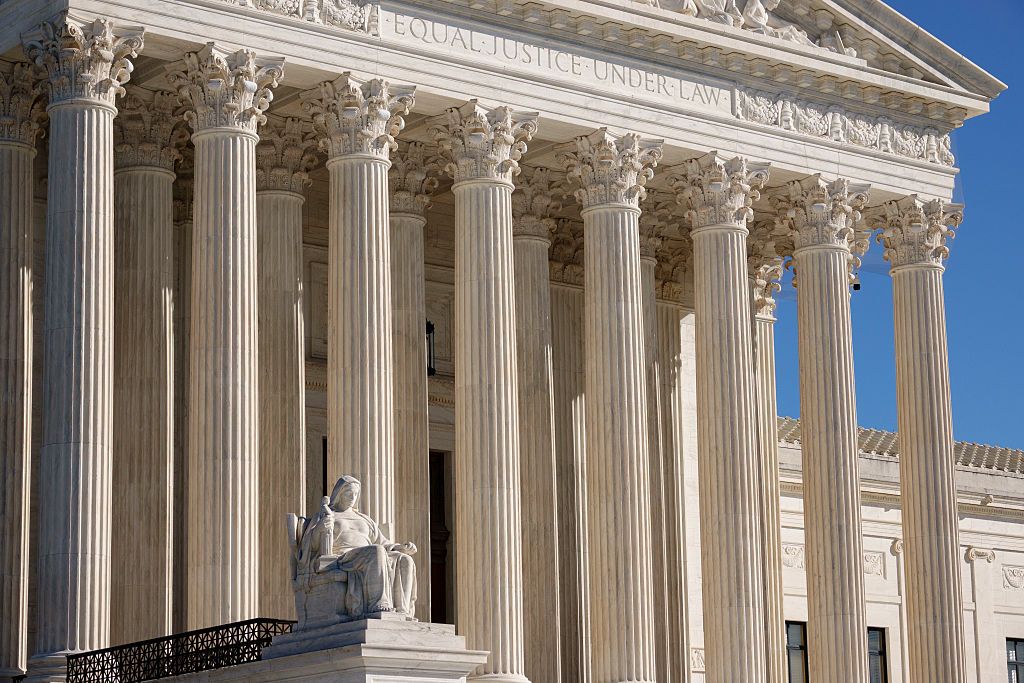
The Supreme Court on Monday appeared to side with a prison paramedic in a lawsuit brought by an inmate who contends that the paramedic’s failure to provide medical treatment violated his constitutional rights. During just over 80 minutes of oral argument in Nielsen v. Watanabe, a majority of the justices seemed poised to throw out the inmate’s lawsuit, even if it wasn’t clear whether they were ready to bar such lawsuits more broadly in the future.
The inmate, Kekai Watanabe, was seriously injured in a gang-related fight while he was in a federal detention center in Hawaii. He says that he told Francis Nielsen, a paramedic who treated him, that his pain was severe, but he received only over-the-counter pain medication and was put in solitary detention, where he remained for more than two months without seeing a specialist or going to a hospital. When Watanabe received an X-ray seven months later, it revealed that he had a fractured coccyx and that chips from the bone had penetrated the soft tissue in the area. He says that he continues to be in “tremendous pain.”
Watanabe filed a lawsuit in federal court in Honolulu, alleging that Nielsen violated his rights under the Eighth Amendment to be free of cruel and unusual punishment by being deliberately indifferent to his serious medical needs. He relied on two Supreme Court cases: the court’s 1971 decision in Bivens v. Six Unknown Named Agents of Federal Bureau of Narcotics, holding that a violation of an individual’s constitutional rights by a federal official can create a federal claim for damages; and its 1980 decision in Carlson v. Green, in which the court held that the estate of an inmate who died after having an asthma attack could bring a Bivens claim when prison officials had failed to provide adequate medical care for eight hours after the attack and did not send him to the hospital during that time.
The district court dismissed Watanabe’s claim. It held that Carlson did not apply because his claim was not sufficiently similar to the facts of that case.
The U.S. Court of Appeals for the 9th Circuit reversed. It acknowledged that the Supreme Court “has cautioned against extending Bivens remedies to new contexts,” but explained that, in its view, “Watanabe’s claim is identical to Carlson in all meaningful respects” and therefore can proceed. A deeply divided court of appeals declined to rehear the case.
Representing Nielsen, Lucas Walker told the justices on Monday that the Supreme Court “has repeatedly explained that Bivens claims are disfavored, that they strain the separation of powers, and that they cannot proceed if there is any reason to think that Congress might be better suited to weigh the costs and benefits of a damages remedy.”
But Watanabe’s “claim ... also fails under a straightforward application of this Court’s Bivens framework,” Walker continued. “There are at least three” “meaningful difference
Vivek Suri, an assistant to the U.S. solicitor general who argued on behalf of the federal government, told the justices that, in the view of the United States, there are “three ways in which this Court could resolve the case.” “First, it could apply its existing standards and recognize that Carlson is now obsolete. Second, it could ... explicitly overrule Carlson. And, third, it could distinguish Carlson on its facts.” He “respectfully urge[d]” the court to choose one of the first two options, “either of which would abrogate Carlson, fully resolve the” divisions among the courts of appeals “that it has created, and end the severe practical problems that it creates for prison administration.”
Representing Watanabe, Joshua Wesneski reiterated that “the Court’s consistent message for Bivens and Carlson over the past decade” has been “[t]his far and no further.” “‘No further,’ he said, “means we should not extend those precedents. But ‘this far’ means also that Carlson remains settled law within its core context and should not be reduced to a null set. We ask only that the Court adhere to that approach.” “Indeed,” he suggested, “to overrule Carlson now would disregard Congress’s measured judgment in this area and eliminate a crucial bulwark against the encroachment on the constitutional rights of some of society’s most vulnerable members.”
Neither Chief Justice John Roberts nor Justice Brett Kavanaugh seemed receptive to Walker’s suggestion that the court should go ahead and overrule both Bivens and Carlson.
Kavanaugh asked Walker how the court should handle the “fact ... that Congress has had 55 years since Bivens and 46 years since Carlson to do so and has not done so?” “It seems,” Kavanaugh continued, “like Congress, in fact, has left Bivens and Carlson where they stood ... and Congress has operated against that backdrop.”
Walker suggested that the Supreme Court “has not hesitated to overrule past decisions, especially those where the courts had overstepped the proper judicial role.”
In response to Walker’s assertion that overruling Bivens would “clear up the confusion and hand the accountability for all of this back to Congress, where it belongs,” Kavanaugh later asked whether “another way to provide clarity [would be] to simply say that courts should apply Bivens and Carlson but not extend them?” He compared such a scenario to what the Supreme Court has done in other areas of the law, such as with the Alien Tort Statute, “where we’ve had results or decisions under a methodology we wouldn’t use anymore, but we have not overruled the original three” causes of action under “the ATS, for example. We just haven’t extended them.”
Suri addressed this point during his time at the lectern, telling Kavanaugh that “[t]he problem ... as I see it ... is the Court’s decision” holding that “the PLRA itself gives rise to a new context,” as does “the availability of injunctive relief.” “So,” he continued, “if you’re going to honor that precedent, then this is a new context,” which would mean that “there are no viable Carlson claims anymore.”
For his part, Roberts noted that the federal government had “expressly” not asked the court to overrule Bivens, “and, of course, they have broad experience in this context. And I wonder,” he asked Walker, “if you have any insight into why or at least why shouldn’t we, on that question, defer to their expertise and experience on that question?”
Walker responded that “I think the answer is that this has been an area wrought with confusion where the lower courts have really called out for guidance.”
Roberts appeared unconvinced. “[O]n the other hand,” he countered, “it could be viewed as a cautious, incremental approach to such a fundamental question” to leave Bivens intact for now.
Several justices focused on whether, if a Carlson claim was not available, an inmate in Watanabe’s shoes would still have some remedy available to him. Justice Neil Gorsuch explored whether an inmate who was the victim of medical malpractice would still be able to obtain relief in a lawsuit against the United States (rather than the individual prison official) under Federal Tort Claims Act, a 1946 law that allows private citizens to sue the federal government for (among other things) injuries caused by a federal employee.
Gorsuch elicited from Suri that “n almost all the cases that” he had “encountered, ... there is an FTCA claim brought in parallel” with the claim under Carlson – in part, Suri suggested, because the standard for prevailing is lower, qualified immunity does not apply, and “[y]ou have a defendant who’s able to pay, the United States.” Suri suggested that when an inmate does not bring both kinds of claims, it may be out of a desire to harass an individual prison official or because the inmates do not have lawyers and are instead representing themselves “and are confused about how to proceed. If this Court says there are no more Carlson claims,” he concluded, “then I think it’s more likely that they will bring FTCA claims in these cases.”
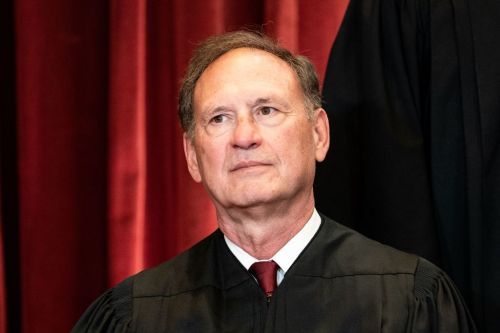
Justice Samuel Alito had a similar question, asking Suri “whether Bivens in this context provides anything ... of value that is not available based on other remedies.”
Suri responded that Carlson had rested on the idea that “the FTCA was insufficient” because it “does not provide for punitive damages.” In Bivens, he emphasized, the court faced a choice between “damages or nothing” for the plaintiff. But under the FTCA, he said, “you’re already getting damages.”
Wesneski pushed back on any suggestion that the FTCA, standing alone, would – as Kavanaugh put it – “provide some remedy in meritorious cases.” The “principal virtue” of the FTCA, he stressed, “is the deterrent effect on the individual officer.” And there would be other potential problems as well, he posited: for example, he said, “we know the plaintiff in Carlson v. Green would not have had a cause of action under the FTCA” under Indiana law.
Justice Amy Coney Barrett also expressed concern about what relief an inmate in a situation like Watanabe’s would be able to obtain. She first pressed Walker on the question of whether an inmate could obtain a court order instructing a prison official to do (or to refrain from doing) something, even if he could not obtain money damages for the official’s past conduct. “I want to make sure,” she said to Walker, “that, in your position, there’s no doubt that someone in a prisoner’s position like this would be able to get injunctive relief against a federal officer.”
And she later returned to a similar topic, asking Walker to “walk me through what happens in a case where a prisoner dies as a result of medical negligence and let’s say really horrific medical negligence. What recourse,” she enquired, “does that prisoner have? Is it the FTCA?”
Walker assured Barrett that, even if Carlson were overruled, claims like the one she described would generally be allowed to go forward.
Justices Sonia Sotomayor and Ketanji Brown Jackson appeared to be the most likely to side with Watanabe. Sotomayor contended that, “in the Westfall Act, Congress looked at Bivens and explicitly reserved those constitutional claims the Court had recognized” – specifically, “Bivens itself for unlawful entry ... without probable cause into private citizens’ homes when there was malfeasance in doing so, and in Carlson itself, which was a ... medical malpractice claim.”
Walker resisted Sotomayor’s characterization, telling Sotomayor that, “respectfully, I don’t think the Court has ever gone so far as to say that the Westfall Act ratified Bivens or Carlson. But what the Court has said is that it does not provide any reason to extend those cases further.”
Jackson seemed to regard Watanabe’s case as, “with respect to all major indicia of sameness,” identical to Carlson. “We have the same kind of alleged violation as in Carlson,” she told Walker. “We have the same constitutional right brought under the same legal framework by the same kind of defendant who’s housed in the same kind of federal institution.”
By contrast, Justice Elena Kagan suggested that, at the very least, Watanabe’s case involves “factual differences.” In addition to the fact that the inmate in Carlson died, she noted that “there was a view that the prison officials had actively contributed to the injury, and ... that the prison officials knew exactly what was happening while it was happening.” “[A] different way of saying the same thing,” she added a few minutes later, “is that this looks like a pretty standard medical malpractice case, bad but standard, where the factual circumstances in Carlson look like something a good deal more than that.”
A decision in the case is expected by late June or early July.
Continue reading...
[ H/T SCOTUSblog ]