


A federal judge grilled former FBI Director James Comey’s attorneys on Friday over whether their effort to dismiss the Justice Department’s latest criminal case could become “a great exercise in futility” if a grand jury returns an indictment alleging more recent conduct.
U.S. District Judge Trevor McFadden, an appointee of President Donald Trump, questioned why he should resolve Comey’s statute-of-limitations challenge now, when prosecutors are potentially presenting additional evidence that could support a later charging deadline.
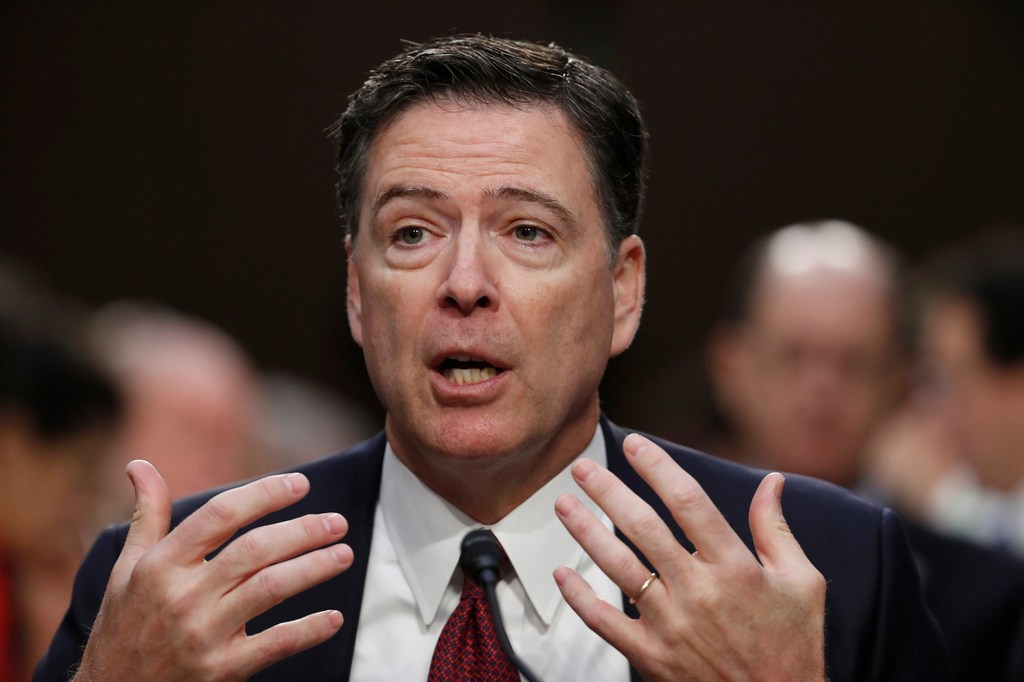
Former FBI Director James Comey speaks during a Senate Intelligence Committee hearing on Capitol Hill in Washington, June 8, 2017. (AP Photo/Andrew Harnik)
" data-large-file="https://www.washingtonexaminer.com/wp-content/uploads/2026/07/AP26208584153864_deea5d.jpg?w=1024" src="https://www.washingtonexaminer.com/wp-content/uploads/2026/07/AP26208584153864_deea5d.jpg?w=1024" alt="Former FBI Director James Comey speaks during a Senate Intelligence Committee hearing on Capitol Hill in Washington, June 8, 2017. (AP Photo/Andrew Harnik)" class="wp-image-4667421" srcset="https://www.washingtonexaminer.com/wp-content/uploads/2026/07/AP26208584153864_deea5d.jpg 1024w, https://www.washingtonexaminer.com/...07/AP26208584153864_deea5d.jpg?resize=300,200 300w, https://www.washingtonexaminer.com/...07/AP26208584153864_deea5d.jpg?resize=768,512 768w" sizes="(max-width: 1024px) 100vw, 1024px">
Former FBI Director James Comey speaks during a Senate Intelligence Committee hearing on Capitol Hill in Washington, June 8, 2017. (AP Photo/Andrew Harnik)
The details of the charges became public Monday after McFadden granted Comey’s legal team’s request to unseal details of the case. Prosecutors had filed a “criminal information” under seal on Oct. 5, accusing Comey of unlawfully disclosing national defense information a decade earlier.
“I got to be practical,” McFadden said Friday. “Why are we doing this if in two weeks we could get an indictment?”
“[It] seems to me that your friend is correct that whatever I do on the current information, if the grand jury finds an overt act, you know, a month later, that this has all been a great exercise in futility,” McFadden told Comey’s lawyer, Ephraim A. McDowell, referring to a government attorney speaking before the court, Dustin Farahnak.
Farahnak notably revealed for the first time a date range around April 2017 as a possible time that additional alleged conduct may have occurred, which prosecutors may soon cite, without identifying the underlying conduct or who allegedly carried it out. The government lawyer emphasized that grand jurors would decide whether the evidence supported charging over acts beyond the October 2016 conduct in the existing charging document.
“I want to put all my cards on the table,” Farahnak said, acknowledging that the current information relies on Oct. 5, 2016, as the date of alleged illegal conduct.
Comey’s lawyers argued prosecutors missed the applicable 10-year deadline because they failed to secure a grand jury indictment. An information does not require grand jury approval, but the government acknowledged it cannot prosecute Comey on that document without his waiver.
Prosecutors allege Comey directed FBI staff to disclose classified information to a New York Times reporter to correct reporting about about the internet platform Yahoo’s alleged assistance with government surveillance.
The government acknowledged that its filing was intended to toll, or stop, the limitations clock while it pursued an indictment.
Farahnak said investigators obtained evidence after former special counsel John Durham’s investigation concluded and encountered “a clock problem with a complex, important case.”
The government relied on United States v. Webster, a 2025 appeals court decision holding that an information filed without a defendant’s waiver of indictment could toll the general five-year limitations period. Government attorneys also invoked the 7th Circuit’s United States v. Burdix-Dana to defend the procedure.
Further into the hearing, Comey’s lawyer McDowell warned that prosecutors could repeatedly seek an indictment even after a grand jury rejected the charges.
“Turns out sandwiches are hard to indict these days,” McFadden replied, an apparent reference to recent Washington grand jury rejections and the colloquialism that grand juries are typically so amenable to indictments that they would approve one for a ham sandwich.
After the roughly 90-minute hearing, McFadden took Comey’s dismissal motion under advisement. He did not bar prosecutors from seeking an indictment in the meantime but said he would be “unhappy” if Comey were arrested in a “dawn raid.”
JAMES COMEY CHARGED WITH LEAKING NATIONAL DEFENSE INFORMATION
The case marks the third known effort to prosecute Comey since September 2025, when he was indicted on charges of false statement and obstruction stemming from his 2020 congressional testimony. He pleaded not guilty, and that case was dismissed because a judge said the prosecutor who brought it was improperly appointed.
Comey also faces a separate prosecution in North Carolina over an Instagram photo of seashells arranged as “86 47,” which prosecutors allege threatened Trump. Comey removed the post and said he had not understood the numbers could be associated with violence.
Continue reading...
[ H/T Washington Examiner ]