



"It's Getting Worse": HSBC Warns Commodities Face Squeeze As Chokepoint Chaos Spreads
The key takeaway heading into the weekend is that maritime chokepoint chaos has spread from the Strait of Hormuz to the Bab el-Mandeb Strait, while fighting across the Black Sea has intensified between Russia and Ukraine. The widening disruptions have prompted several institutional desks this week to warn that a potential squeeze on physical commodity markets could send prices from energy to agricultural goods higher.
"The Middle East conflict has escalated, putting a substantial squeeze back into commodity markets," Paul Bloxham, HSBC's chief economist for Australia, New Zealand and global commodities, wrote in a note on Friday morning.
Bloxham continued, "Traffic through Hormuz has almost stalled again, and the disruption has spread to the Bab el-Mandeb Strait, the key access point for the Red Sea, for Saudi oil going to Asia and Europe-Asia trade through the Suez Canal."
Bloxham warned that with Brent trading above $100 a barrel and strategic petroleum reserves being rapidly depleted worldwide, energy markets face a mounting risk of a "super-squeeze."
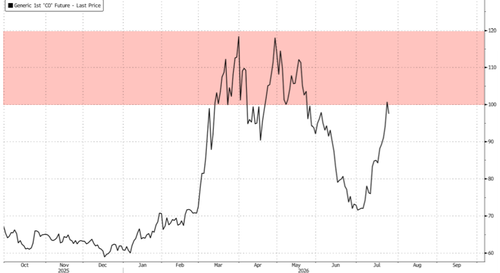
His message was blunt: "It's not over yet," adding, "Hormuz, Mandeb, oil at 100 ... it's getting worse. "
Here's more:
Bloxham also highlighted the market mechanics that prevented Brent from spiking even higher a few months back, including US strategic reserve releases and China's reduction of oil imports and SPR.
But he warned that these buffers are finite and can suppress the price shock for only so long:
A growing list of institutional commodity desks, including Goldman Sachs, RBC Capital Markets and JPMorgan, has warned that the expanding maritime chokepoint crisis is entering a more dangerous phase.
Helima Croft, RBC's head of global commodity strategy, cautioned that the "war enters a dangerous phase with the Red Sea and critical infrastructure at risk."
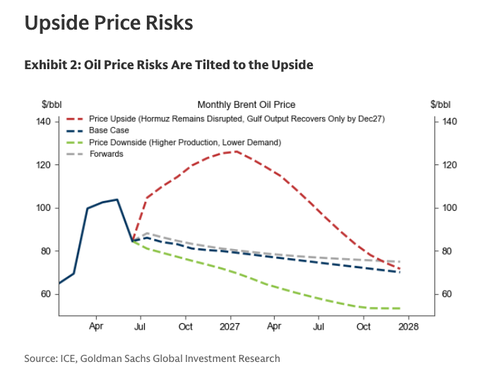
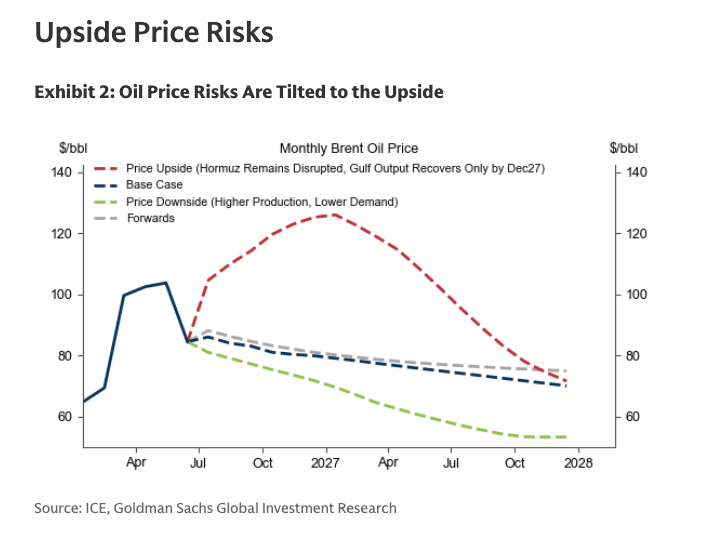
These desks have raised their near-term Brent forecasts as the disruption spreads. Goldman commodities strategist Daan Struyven warned that Brent could exceed $120 a barrel in the fourth quarter if the Hormuz crisis persists.
Related:
With the US national average for regular gasoline now above $4 a gallon, the energy shock has crossed a politically sensitive level (again), which could increase pressure on the Trump administration to pursue a diplomatic off-ramp.
Tyler Durden Fri, 07/24/2026 - 09:20
Continue reading...
[ H/T ZeroHedge ]
The key takeaway heading into the weekend is that maritime chokepoint chaos has spread from the Strait of Hormuz to the Bab el-Mandeb Strait, while fighting across the Black Sea has intensified between Russia and Ukraine. The widening disruptions have prompted several institutional desks this week to warn that a potential squeeze on physical commodity markets could send prices from energy to agricultural goods higher.
"The Middle East conflict has escalated, putting a substantial squeeze back into commodity markets," Paul Bloxham, HSBC's chief economist for Australia, New Zealand and global commodities, wrote in a note on Friday morning.
Bloxham continued, "Traffic through Hormuz has almost stalled again, and the disruption has spread to the Bab el-Mandeb Strait, the key access point for the Red Sea, for Saudi oil going to Asia and Europe-Asia trade through the Suez Canal."
Bloxham warned that with Brent trading above $100 a barrel and strategic petroleum reserves being rapidly depleted worldwide, energy markets face a mounting risk of a "super-squeeze."
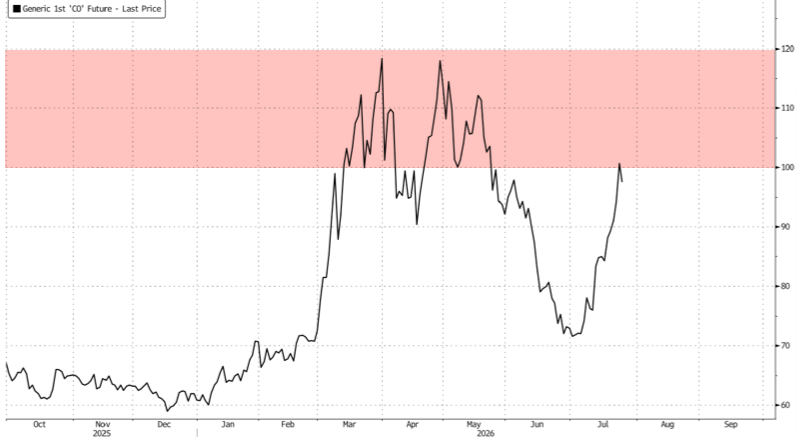
His message was blunt: "It's not over yet," adding, "Hormuz, Mandeb, oil at 100 ... it's getting worse. "
Here's more:
Bloxham also highlighted the market mechanics that prevented Brent from spiking even higher a few months back, including US strategic reserve releases and China's reduction of oil imports and SPR.
But he warned that these buffers are finite and can suppress the price shock for only so long:
A growing list of institutional commodity desks, including Goldman Sachs, RBC Capital Markets and JPMorgan, has warned that the expanding maritime chokepoint crisis is entering a more dangerous phase.
Helima Croft, RBC's head of global commodity strategy, cautioned that the "war enters a dangerous phase with the Red Sea and critical infrastructure at risk."
These desks have raised their near-term Brent forecasts as the disruption spreads. Goldman commodities strategist Daan Struyven warned that Brent could exceed $120 a barrel in the fourth quarter if the Hormuz crisis persists.
Related:
With the US national average for regular gasoline now above $4 a gallon, the energy shock has crossed a politically sensitive level (again), which could increase pressure on the Trump administration to pursue a diplomatic off-ramp.
Tyler Durden Fri, 07/24/2026 - 09:20
Continue reading...
[ H/T ZeroHedge ]