




Braggawatts, Cheap Chinese Compute, & Simple ROI
Authored by Peter Tchir via Academy Securities,
With weakness in chips and AI the prior week, that was a major topic of conversation, as was the escalation in Iran (please see Academy’s Geopolitical Analysis for the latest on Iran and geopolitics more broadly).
Two key themes from last weekend’s From Trinkets to Compute seem to be playing out:
Most importantly, the story of Cheap Chinese Compute is garnering staying power. While DeepSeek may have been a one-off, the story is increasingly about China delivering Cheap Compute. We have seen China flood/control markets in the past. I didn’t see it coming in compute (at least not yet), but it might be here?
Less important was my flipping from “earnings will matter” to “earnings might not matter.”
We don’t really spend a lot of time on single stock earnings. It isn’t our “thing” in general. But we do follow the earnings. What we can say so far on this front is that when the earnings and announcements hit the tape, they seem very strong. The instant reaction in the media (and social media) tends to support the strength of the results. Then the stocks seem to drift lower (in some cases worse than drift).
The earnings bar seems to be set incredibly high, so far.
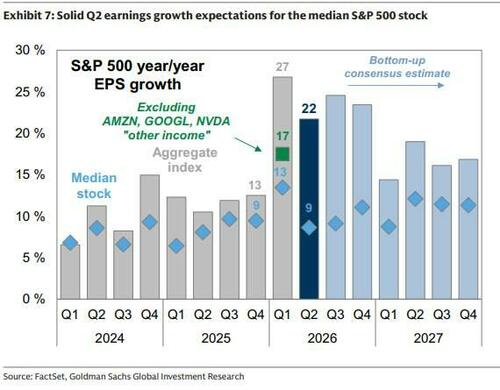
This is concerning when trying to determine the direction of the next leg.
I’m not sure how I missed the term Braggawatts, but it caught my attention when my friends at ZeroHedge sent out a tweet that used the term.
If braggawatts are real (we need to explore this more):
To a large degree, return on investment analysis surrounding AI and the AI spend has been minimal in my view.
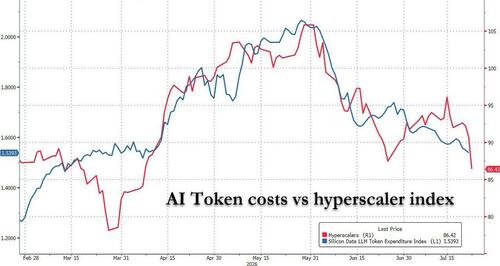
If I’m right and some of these forces connect, it could bring pressure to bear on the space. That is “fine and normal.” What concerns me is how much money has flown into passive vehicles in the space, and how many leveraged products there are in the space. Not just the very large SOXL (which is index based) but also a lot of individual stocks in this have leveraged ETFs.
I fear that this is a risk that can and will accentuate moves to the downside (just like it does on the upside).
The escalation in Iran is not good for my view on potential rate cuts. While my outlook on inflation wasn’t entirely dependent on the free flow of oil (including more oil that had previously been sanctioned), it helped a lot.
On the AI front, I’m positive on credit spreads, but remain vigilant on valuations. The recent reaction in markets to what seemed like strong earnings releases only accentuates that concern.
Tyler Durden Fri, 07/24/2026 - 09:00
Continue reading...
[ H/T ZeroHedge ]
Authored by Peter Tchir via Academy Securities,
With weakness in chips and AI the prior week, that was a major topic of conversation, as was the escalation in Iran (please see Academy’s Geopolitical Analysis for the latest on Iran and geopolitics more broadly).
Two key themes from last weekend’s From Trinkets to Compute seem to be playing out:
Cheap Chinese Compute
Most importantly, the story of Cheap Chinese Compute is garnering staying power. While DeepSeek may have been a one-off, the story is increasingly about China delivering Cheap Compute. We have seen China flood/control markets in the past. I didn’t see it coming in compute (at least not yet), but it might be here?
China doesn’t have to deal with NIMBY, but they do make a lot of chips (generally lower quality, but a lot), and have been ramping up all forms of electricity production and storage for years. The U.S. is finally getting on board with this ProSec™ theme, while the rest of the world is only starting to wake up to the need and potential opportunity that adopting a ProSec™ mindset delivers.
On the less “savory” side are “allegations” (and I’m being polite here) that a lot of the Chinese compute trains by “distilling” from existing models (inundating existing models with requests, to somewhat “copy” their answers) rather than training their models from scratch. It is a big cost advantage and time saving mechanism.
Earnings
Less important was my flipping from “earnings will matter” to “earnings might not matter.”
We don’t really spend a lot of time on single stock earnings. It isn’t our “thing” in general. But we do follow the earnings. What we can say so far on this front is that when the earnings and announcements hit the tape, they seem very strong. The instant reaction in the media (and social media) tends to support the strength of the results. Then the stocks seem to drift lower (in some cases worse than drift).
The earnings bar seems to be set incredibly high, so far.
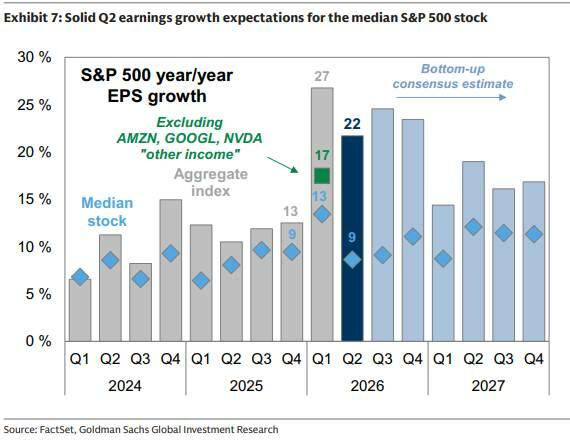
This is concerning when trying to determine the direction of the next leg.
Braggawatts
I’m not sure how I missed the term Braggawatts, but it caught my attention when my friends at ZeroHedge sent out a tweet that used the term.
Basically, braggawatts is a term used to express skepticism over how much in the data center and AI space can be physically constructed (i.e., in the real world) versus all the existing announcements and expectations of future announcements.
From access to chips, to water, to electricity, to getting all of the various state and local regulatory approvals, the argument is that a lot more compute has been announced than can be completed within the timeframe of the announcements.
This is consistent with some anecdotal evidence of cost and time overruns on projects (that is something we were hearing about more frequently than in the past).
If braggawatts are real (we need to explore this more):
This should be good for credit spreads in the sector. The logical conclusion would be to announce fewer new projects and prioritize existing projects.
Would be bad for the “picks and shovels” in the AI / Data Center industry.
Simple ROI.
To a large degree, return on investment analysis surrounding AI and the AI spend has been minimal in my view.
On the one side you have a “build it and they will come” mentality (often the “only” risk has been described as not building enough, fast enough – which hardly encourages traditional scrutiny of costs versus revenue).
On the other side, no CEO in their right mind would say anything other than that they were launching AI initiatives within their firm to capture efficiencies. The cost of compute has gone up. Actually, let me rephrase that, companies are being charged a cost of compute more in line with the cost of producing the compute than they were before. While the cost of providing compute seems to be increasing (shortages, etc.) part of what users are seeing is that the price that was subsidized to encourage use and to create moats (to the extent moats can be created and held) is being subsidized less. Increasing, and we’ve been writing about this for months, we are moving from “we have to try AI, or be left behind” to “we’ve been using AI, now let’s analyze the cost benefit of that.” Is that why some of the token utilization charts are showing declines from the peak?
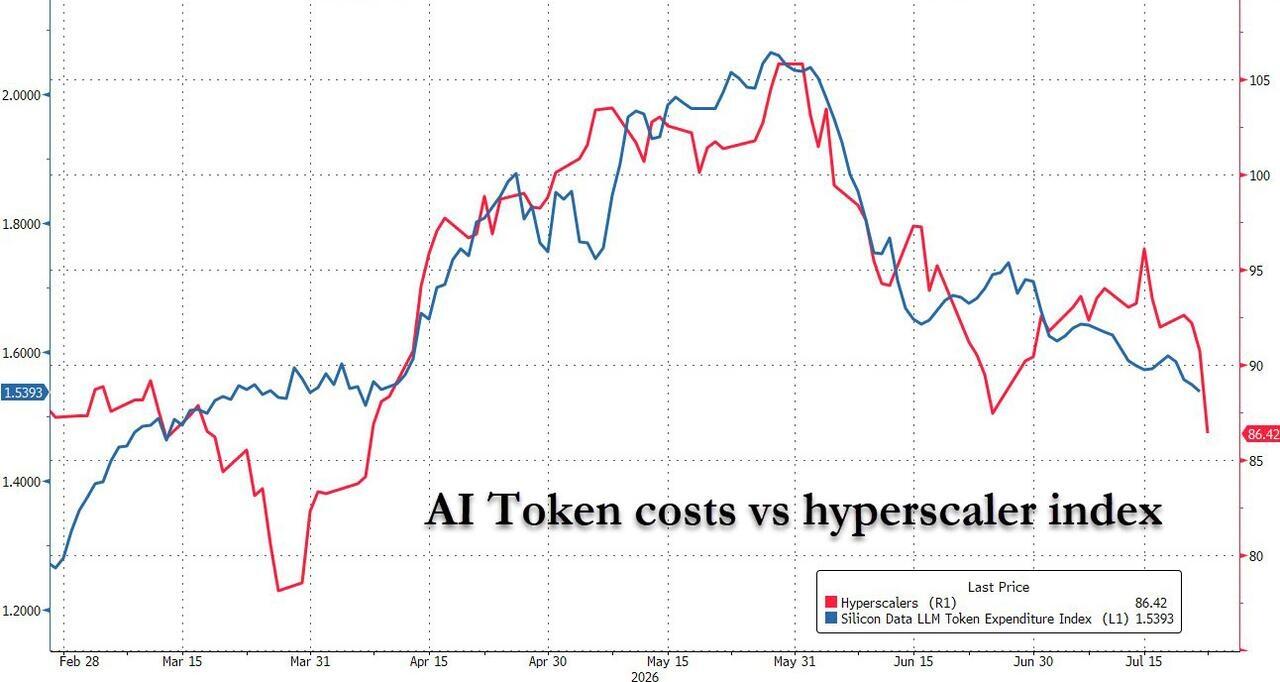
If I’m right and some of these forces connect, it could bring pressure to bear on the space. That is “fine and normal.” What concerns me is how much money has flown into passive vehicles in the space, and how many leveraged products there are in the space. Not just the very large SOXL (which is index based) but also a lot of individual stocks in this have leveraged ETFs.
I fear that this is a risk that can and will accentuate moves to the downside (just like it does on the upside).
Bottom Line
The escalation in Iran is not good for my view on potential rate cuts. While my outlook on inflation wasn’t entirely dependent on the free flow of oil (including more oil that had previously been sanctioned), it helped a lot.
On the AI front, I’m positive on credit spreads, but remain vigilant on valuations. The recent reaction in markets to what seemed like strong earnings releases only accentuates that concern.
Tyler Durden Fri, 07/24/2026 - 09:00
Continue reading...
[ H/T ZeroHedge ]