






Iran Hormuz Attack Spree Starts Choking Oil Flows (Again), UBS Warns
A surge in Iranian drone attacks on commercial ships appears to be weighing on Middle Eastern energy exports through the Strait of Hormuz, with 24 attacks reported so far this month. The latest reports indicate that two Emirati container ships were struck and sank in the narrow waterway within the past 24 hours.
UBS energy expert Henri Patricot told clients on Wednseday morning that crude and petroleum-product flows exiting the Gulf of Oman dropped to 9.1 million barrels a day over the past couple of days. The weekly average slipped to 13.5 million, compared with an early-October peak of 17 million.
Patricot provided more color on deteriorating shipping conditions in the Strait of Hormuz:
More attacks around Hormuz and in Saudi Arabia
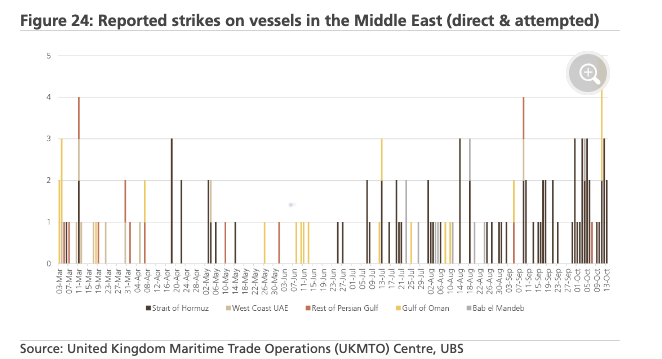
Attacks on tankers in the Strait of Hormuz and in the Gulf of Oman continue to be reported at the highest intensity since the start of the conflict (Figure 24).
Iran is reportedly using a new strategy to target ships, including using spotters in small boats. The attacks appear to be having a clearer negative impact on traffic via Hormuz in recent days. Separately, attacks have also continued in Saudi Arabia, with reports that Aramco's HQ which was targeted overnight.
Oil flows falling further; LNG holding up at much lower level
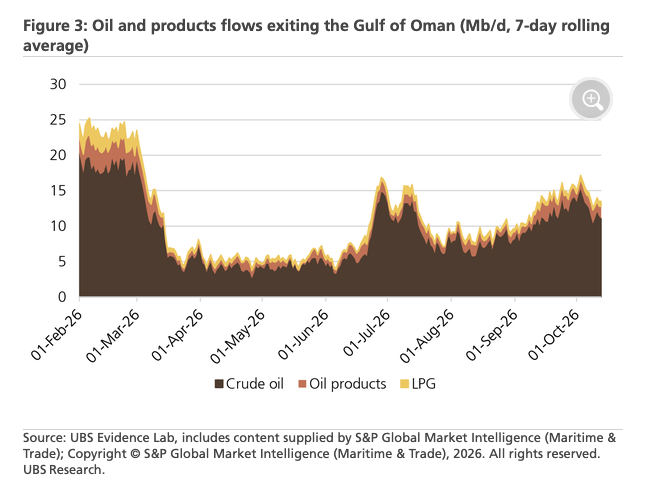
The latest data point to a more material drop in exports from the Middle East. UBS Evidence Lab data (> Access Dataset) indicate that crude and product flows out of the Gulf of Oman dropped to 9.1Mb/d in the past couple of days and have averaged 13.5Mb/d in the past week vs. a peak of 17Mb/d in early October (Figure 3).
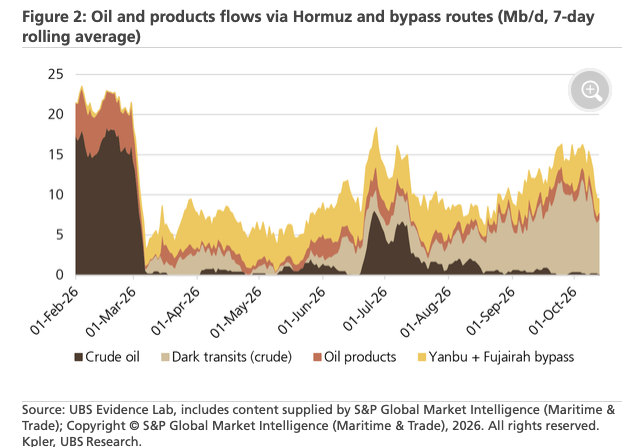
Our estimate of combined crude and product exports through Hormuz and bypass routes is down to 9.5Mb/d over the past week, well below the recent high of 16Mb/d and September average of 14Mb/d (Figure 2).
Flows are still likely to be revised higher but there now appears to be a clear trend of declining flows since early October now. We are adding a new chart showing LNG flows out of the Gulf of Oman (Figure 4).
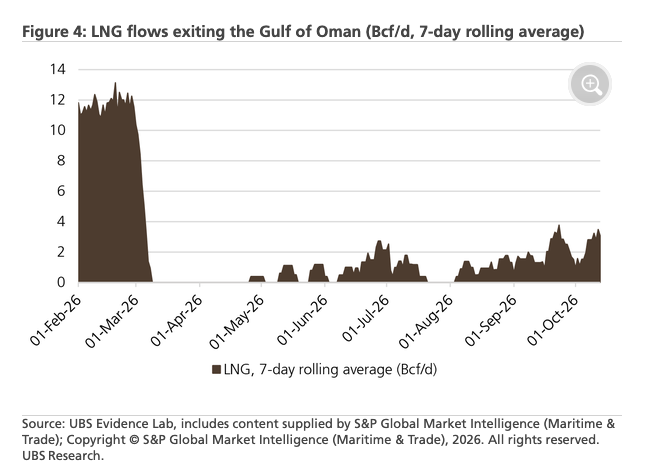
There has been an improvement in flows since mid-September and they are holding up for now, but only at ~25% of pre-conflict levels, vs. oil close close to 50% in the past week and 75% at recent peak.
Crude loadings rebound
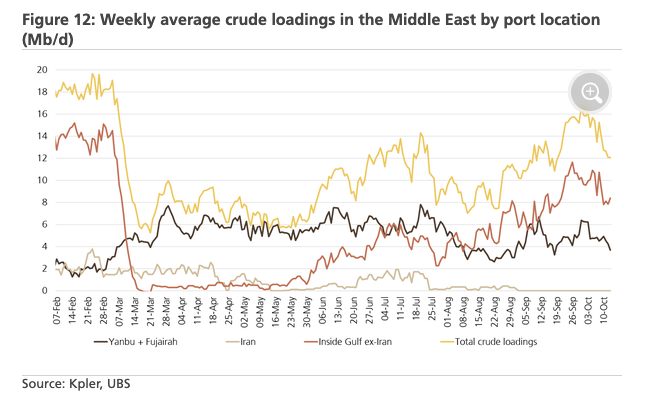
On the positive side, Gulf crude loadings excluding Iran bounced back to >12Mb/d over the past couple of days. As loadings in previous days were revised higher too, October loadings are back up to 8.7Mb/d on average, in line the September average (Figure 12).
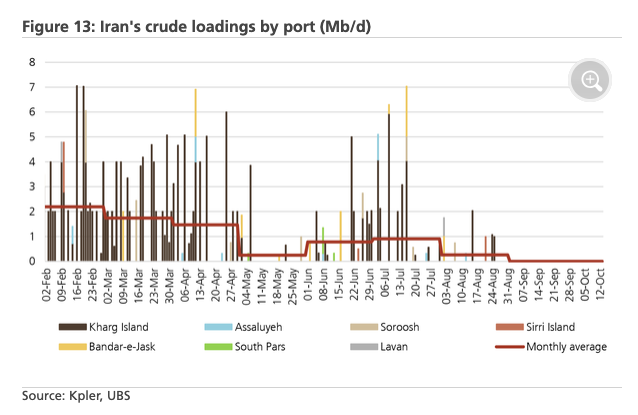
There is still no Iranian crude loading (Figure 13).
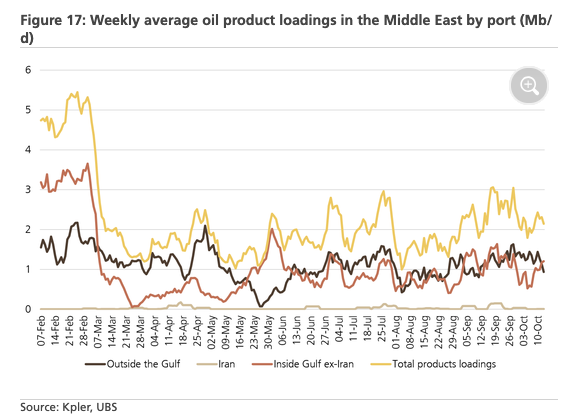
Outside Hormuz, preliminary data show no loadings from Yanbu in the past couple of days, taking the average to 1.6Mb/d so far in October, below the September average of 2.7Mb/d (Figure 16). Including Fujairah, bypass crude loadings averaged 2.1Mb/d over the past couple of days and 3.3Mb/d in October, vs. 5.4Mb/d in September. Gulf product loadings have ticked up just above 1Mb/d, still well below normal levels of >3Mb/d (Figure 17).
Commenting on market impacts, Dimitrios Laloudakis, a macro quantitative strategist at UBS, wrote earlier:
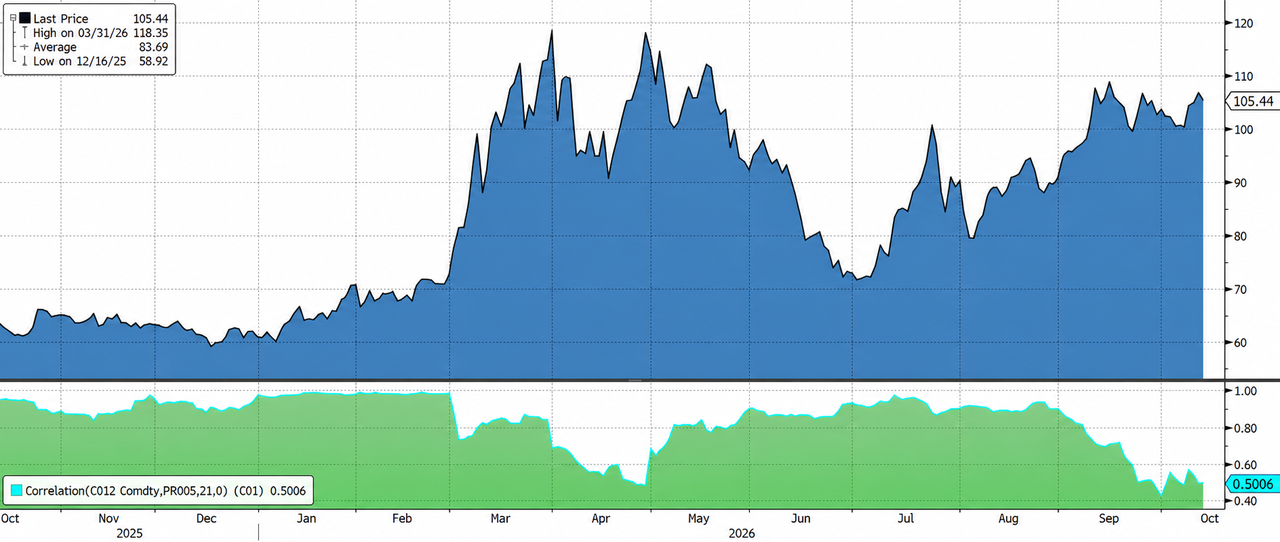
Brent Crude December 2028 Makes New Highs While front-end crude has been offered, longer-dated futures continue to reprice higher. The 21-day rolling correlation between front-month and 12th contract falls markedly (level last seen during peak uncertainty when front-month ripped higher). Markets now face the other side of the coin with front-contract remaining tepid, but oil expectations grinding higher for longer-dated futures.
Despite the Trump-Russia diesel deal, US industrial fuel prices continue to inch toward highs.
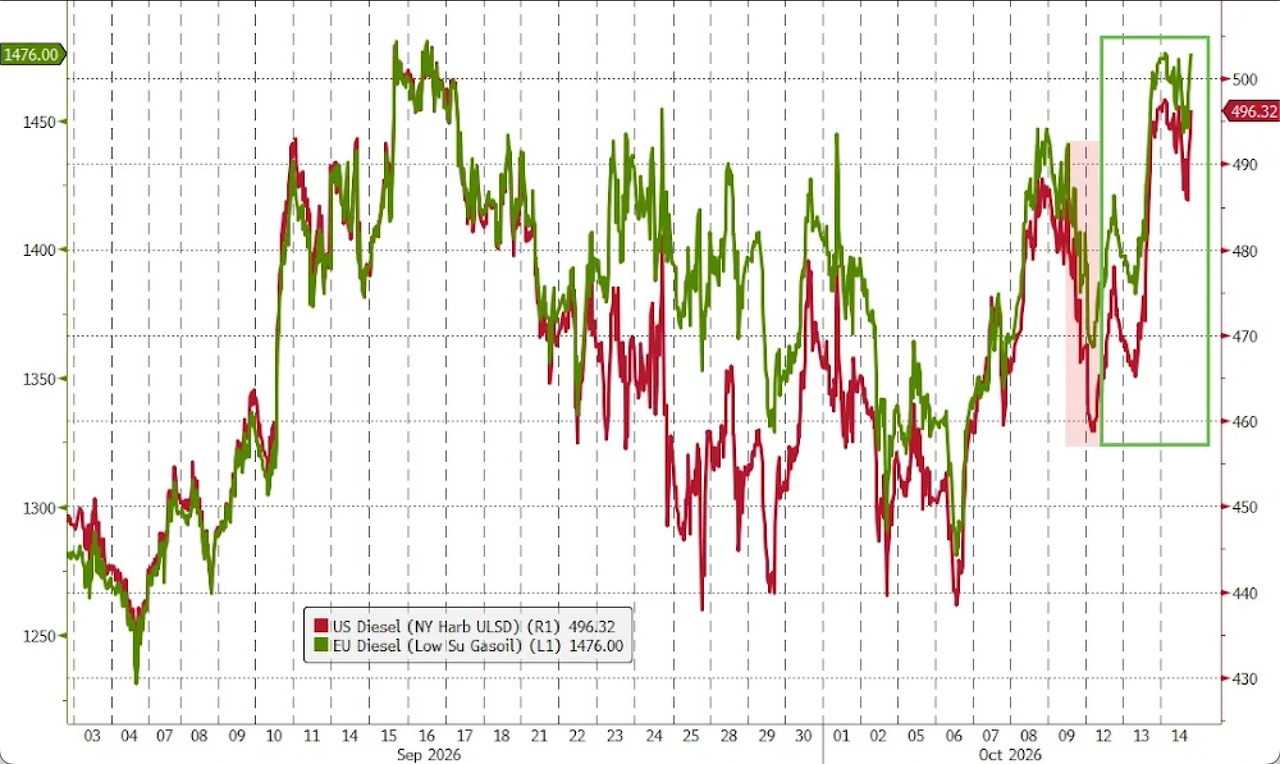
Earlier today, the International Energy Agency warned that the global diesel squeeze will likely persist well into the first half of 2027.
Tyler Durden Thu, 10/15/2026 - 02:45
Continue reading...
[ H/T ZeroHedge ]
A surge in Iranian drone attacks on commercial ships appears to be weighing on Middle Eastern energy exports through the Strait of Hormuz, with 24 attacks reported so far this month. The latest reports indicate that two Emirati container ships were struck and sank in the narrow waterway within the past 24 hours.
UBS energy expert Henri Patricot told clients on Wednseday morning that crude and petroleum-product flows exiting the Gulf of Oman dropped to 9.1 million barrels a day over the past couple of days. The weekly average slipped to 13.5 million, compared with an early-October peak of 17 million.
Patricot provided more color on deteriorating shipping conditions in the Strait of Hormuz:
More attacks around Hormuz and in Saudi Arabia
Attacks on tankers in the Strait of Hormuz and in the Gulf of Oman continue to be reported at the highest intensity since the start of the conflict (Figure 24).
Iran is reportedly using a new strategy to target ships, including using spotters in small boats. The attacks appear to be having a clearer negative impact on traffic via Hormuz in recent days. Separately, attacks have also continued in Saudi Arabia, with reports that Aramco's HQ which was targeted overnight.
Oil flows falling further; LNG holding up at much lower level
The latest data point to a more material drop in exports from the Middle East. UBS Evidence Lab data (> Access Dataset) indicate that crude and product flows out of the Gulf of Oman dropped to 9.1Mb/d in the past couple of days and have averaged 13.5Mb/d in the past week vs. a peak of 17Mb/d in early October (Figure 3).
Our estimate of combined crude and product exports through Hormuz and bypass routes is down to 9.5Mb/d over the past week, well below the recent high of 16Mb/d and September average of 14Mb/d (Figure 2).
Flows are still likely to be revised higher but there now appears to be a clear trend of declining flows since early October now. We are adding a new chart showing LNG flows out of the Gulf of Oman (Figure 4).
There has been an improvement in flows since mid-September and they are holding up for now, but only at ~25% of pre-conflict levels, vs. oil close close to 50% in the past week and 75% at recent peak.
Crude loadings rebound
On the positive side, Gulf crude loadings excluding Iran bounced back to >12Mb/d over the past couple of days. As loadings in previous days were revised higher too, October loadings are back up to 8.7Mb/d on average, in line the September average (Figure 12).
There is still no Iranian crude loading (Figure 13).
Outside Hormuz, preliminary data show no loadings from Yanbu in the past couple of days, taking the average to 1.6Mb/d so far in October, below the September average of 2.7Mb/d (Figure 16). Including Fujairah, bypass crude loadings averaged 2.1Mb/d over the past couple of days and 3.3Mb/d in October, vs. 5.4Mb/d in September. Gulf product loadings have ticked up just above 1Mb/d, still well below normal levels of >3Mb/d (Figure 17).
Commenting on market impacts, Dimitrios Laloudakis, a macro quantitative strategist at UBS, wrote earlier:
Brent Crude December 2028 Makes New Highs While front-end crude has been offered, longer-dated futures continue to reprice higher. The 21-day rolling correlation between front-month and 12th contract falls markedly (level last seen during peak uncertainty when front-month ripped higher). Markets now face the other side of the coin with front-contract remaining tepid, but oil expectations grinding higher for longer-dated futures.
Despite the Trump-Russia diesel deal, US industrial fuel prices continue to inch toward highs.
Earlier today, the International Energy Agency warned that the global diesel squeeze will likely persist well into the first half of 2027.
Tyler Durden Thu, 10/15/2026 - 02:45
Continue reading...
[ H/T ZeroHedge ]