




Peter King is one of America’s finest sportswriters. His passion for pro football, which was exemplified in his long-running Sports Illustrated column, “Monday Morning Quarterback,” and bestselling books such as Inside the Helmet, makes him a must-read for fans near and far. His stories about the NFL’s players, teams, owners, and personalities are vivid, descriptive, intricate, and more revealing than most of his talented contemporaries.
If you truly want to understand what the modern NFL represented in American sports and society, King’s writings remain the gold standard.
King’s newest book, The Game, contains 40 chapters that symbolize the 40 years he has spent covering the NFL. It’s a unique look at how one of the most successful pro sports leagues in the United States and the world has grown and evolved. The stories and anecdotes are illuminating and insightful. There are plenty of facts to mull over, and some hilarious moments along the way. While many football fans will obviously appreciate this impressive overview of their favorite game, you don’t need to be one to appreciate the author’s analyses, wisdom, and quality writing.
“I yearned for the real stories that explained the people and teams I covered,” King writes in the preface. “It almost got to be a drug, chasing those tales. The combination of SI opportunity and my inquisitive nature led to me finding myself in cars, on planes, in locker rooms, and on sidelines where the people who made this game told me why they did what they did, who they hated, who they thought highly of, what they dreamed of doing, and more.”
The Game; By Peter King; W.W. Norton; 576 pp.; $39.99
" data-large-file="https://www.washingtonexaminer.com/wp-content/uploads/2026/10/TheGame_102826.jpg?w=600" src="https://www.washingtonexaminer.com/wp-content/uploads/2026/10/TheGame_102826.jpg?w=600" alt="The Game; By Peter King; W.W. Norton; 576 pp.; $39.99" class="wp-image-4778914" style="width:221px;height:auto" srcset="https://www.washingtonexaminer.com/wp-content/uploads/2026/10/TheGame_102826.jpg 600w, https://www.washingtonexaminer.com/wp-content/uploads/2026/10/TheGame_102826.jpg?resize=198,300 198w" sizes="(max-width: 600px) 100vw, 600px">
The Game; By Peter King; W.W. Norton; 576 pp.; $39.99
Let’s go through some of the stories, personalities, and anecdotes to find out what he found out from his sources.
The first chapter takes place in 1984 at one of his early journalistic homes, the Cincinnati Enquirer. King, the “rookie beat guy” covering the Cincinnati Bengals, was speaking with the team’s rookie coach, Sam Wyche. When asked if he wanted to find out who the Bengals intended to draft, King naturally jumped at the chance. Wyche laid down some conditions that King felt were “more than fair.” These included: “Write what you want, don’t quote me, don’t say any of the picks are definite, don’t share information with out-of-town writers.”
The Bengals had lost the “player of their dreams,” Steve Young, to the United States Football League’s Los Angeles Express. (He would later become a Super Bowl champion with the San Francisco 49ers.) Several names mentioned that were high on the team’s draft list included Ricky Hunley, Leonard Coleman, and Boomer Esiason. King decided to confirm this list by calling Hunley, who, in turn, acknowledged the Bengals “seemed very interested.” In his Enquirer draft preview, King focused on four players: Hunley, Esiason, Brian Blados, and Stanford Jennings. The Bengals’ first five draft picks included King’s four choices, plus Pete Koch, whom Wyche hadn’t mentioned and the sportswriter was unfamiliar with.
King’s skills as a football prognosticator were clearly off to a flying start.
The next chapter focuses on a 1985 interview with then-NFL Commissioner Pete Rozelle. King describes him as a “thin man” who wore a suit and “looked impeccable,” but also a cigarette smoker who appeared “weary.” Furthermore, Rozelle apparently “didn’t have a machine or any kind of recording device to dictate correspondence” to his secretary, and instead relied on a “1940s-era Royal typewriter.”
Rozelle was in the midst of attempting to prevent unrestricted free agency “from becoming the law of the land in the NFL.” (As King observes today, “Good luck with that.”) Talking to Rozelle, King brought up a pertinent quote from Major League Baseball’s first commissioner, Kenesaw Mountain Landis: “The most important thing in sports is to stay out of the courts.” He asked Rozelle if Landis was right, to which Rozelle responded, “He sure as hell was.” King followed up by asking, “Does it anger you? … Do you bash your head against the wall?” The NFL commissioner responded, “No, but I’d be less than honest if I said it wasn’t very, very frustrating. I’ve spent nights smoking these things, sitting up, walking around, thinking.” This sounds exactly like the Rozelle whose love, devotion, and promotion of pro football knew no bounds.
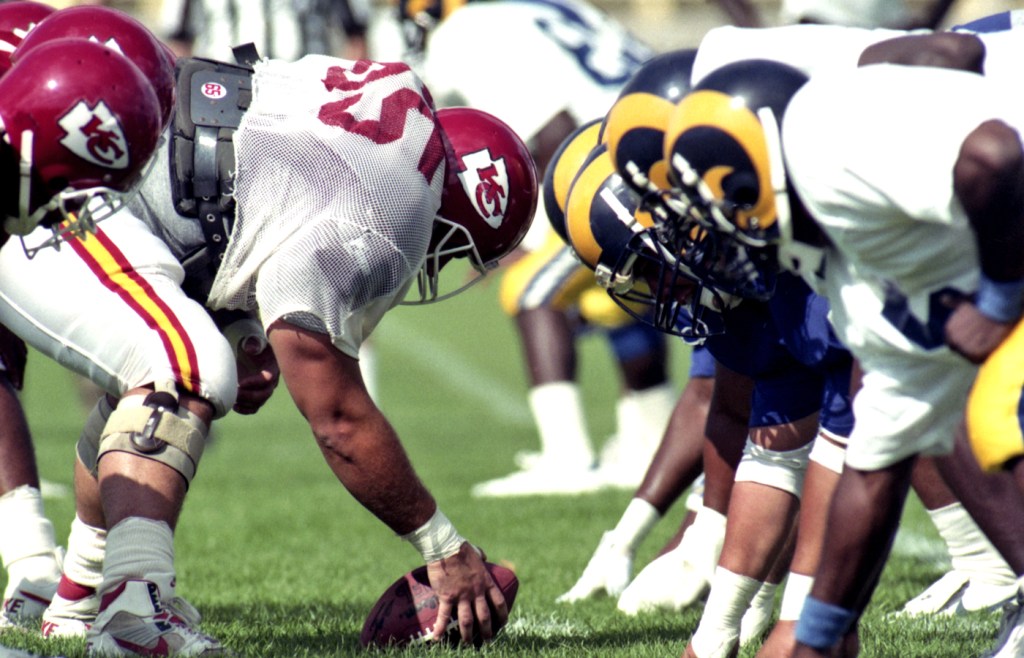
There’s a great chapter titled “The Greatest Fairy Tale on Turf.” This refers to the 1999 St. Louis Rams team, a “150-1 off-season longshot” to win the Super Bowl. When the team’s first-string quarterback got hurt, head coach Dick Vermeil looked to Kurt Warner, a “devout Christian who had started for only two professional teams,” NFL Europe’s Amsterdam Admirals and the Arena Football League’s Iowa Barnstormers. The Rams, who had finished 4-12 the previous season, watched their odds drop to 200-1.
King’s interview with Warner for The Game reveals some interesting tidbits. “When people looked at my journey, I think they looked at the wrong things,” Warner said. “Yes, I sat for four years in college, I didn’t make the Packers, I had to work in a grocery store when I was waiting for my shot, and I had to play arena ball and then in Europe.” Warner then points out what everyone had missed. “But when I played, I was really good. Conference Player of the Year my one year playing in college. Played well in the Arena League. I was probably the only one who thought I was going to play well with the Rams.”
Warner did just that. The Rams shocked the world by going 13-3 and beating the Tennessee Titans to win the Super Bowl. He was named NFL MVP and Super Bowl MVP. He also led the Rams and Arizona Cardinals to additional Super Bowl appearances (losing both) and reached the Pro Football Hall of Fame in 2017. This incredible rags-to-riches story, as King points out, is why NFL executives “are fond of calling the NFL America’s greatest reality show.”
We’ll end on King’s amusing chapter about the 2006 season and the great quarterback Peyton Manning’s single Super Bowl win while playing for the Indianapolis Colts.
BILL BELICHICK AT NORTH CAROLINA — WHAT (AND HOW) IS HE DOING?
“There is a universal lesson about excellence in the football life of Peyton Manning,” King writes. “The lesson involves compulsiveness — annoying, anal, distracting, time-sucking, normal-life-wrecking compulsiveness.” How so? To gain an advantage over Ryan Leaf and become the NFL’s first overall draft choice in 1998, Manning “found a tanning bed” before the weigh-in because it “helps the cut, the look.” When he was named SI’s Sportsman of the Year in 2013, he looked over the menu and asked, “Can we change the vegetables?” When King asked him about this, he responded, “Peter, it all matters.”
Compulsiveness defined his Super Bowl-winning Colts season, too. After finding out the NFL “mandated” that 108 footballs had to be “prepared for game use” by the Colts, which would whittle the number down to 54, Manning initially approved 26 of them. The Colts staff then “threw the balls shy of each other, into the ground, to scuff them up” — to make them, shall we say, Manning-worthy. The talented QB “palmed and gripped and pressed the remaining footballs until he had 28 more that he liked.” As fate would have it, Manning played the Super Bowl against the Chicago Bears with a “sore throwing thumb he wasn’t publicizing.” It makes you wonder what all the fuss was about … other than his personality!
This engrossing book helps emphasize why King loves the NFL’s topsy-turvy environment, and why we still love to read about it.
Michael Taube, a columnist for the National Post, Troy Media, and Loonie Politics, was a speechwriter for former Canadian Prime Minister Stephen Harper.
Continue reading...
[ H/T Washington Examiner ]