



Saturday marked 105 years since William Howard Taft was sworn in as chief justice, becoming the only person to have served as both president and a justice (though others have tried).
Plus, you only have a few days left to register for Thursday’s LinkedIn Live event on the 2025-26 term’s most consequential cases, featuring SCOTUSblog’s Amy Howe and Briefly’s Adam Stofsky. Register here for the event, which is set for noon EDT on Thursday, July 16.
Morning Reads
Samuel Alito, a MAGA-Friendly Justice With a New Conservative Legal Vision
James Romoser, The Wall Street Journal (paywalled)
Since President Donald Trump was first elected in 2016, Justice Samuel Alito “has become the justice most likely to provide a legal rationale for the president’s most ambitious policy goals,” according to a Wall Street Journal analysis. “In 100 cases over the past decade involving a major Trump administration policy position or in which Trump himself was a party, Alito’s votes aligned with Trump 89% of the time, the highest rate of any justice.” The Wall Street Journal noted that Justice Clarence Thomas “votes in Trump’s favor at a rate similar to Alito,” but that Thomas’ approach to these cases seemed to stem from his role as the “current torchbearer” for originalism. In other words, Thomas has continued to write “more academic” opinions emphasizing text, history, and tradition, while Alito more directly “engage
Behind black robes, Supreme Court justices reveal colorful differences
Maureen Groppe, USA Today
As commentators continue to reflect on what we learned about the court during the 2025-26 term, USA Today explored how each individual justice stood out over the past nine months. Among other observations, the article noted that Chief Justice John Roberts wrote “the three major decisions Trump lost – striking down his sweeping tariffs, his executive order limiting birthright citizenship and his attempt to fire Federal Reserve Governor Lisa Cook.” Still, Justice Amy Coney Barrett appeared to face the most pushback over the president’s losses, although she was not in the majority in the Cook case. “Impeach rogue, activist judges,” said Rep. Nancy Mace, a Republican from South Carolina, after the birthright citizenship ruling. “We’re looking at you Amy Coney Barrett.” Meanwhile, Justice Elena Kagan was, for the first time, the “1” in and 8-1 decision. “In a case about Cuban property that was confiscated by Fidel Castro’s government more than 65 years ago, Kagan was the only justice to rule against the property owners.”
U.S. extends work permissions for immigrants with TPS hours before expiration
Lauren Kaori Gurley, The Washington Post
On June 25, the Supreme Court cleared the way for the administration to end removal protections for Haitians and Syrians under the Temporary Protected Status program, holding that courts generally can’t review such termination decisions. The ruling sent employers who rely on workers with TPS, “from nursing homes and hospitals to schools and airports,” into a scramble as they faced a pending staffing shortage. They have been “pleading behind the scenes with the Trump administration for relief,” according to The Washington Post. On Friday, the Trump administration offered a temporary reprieve, “extend[ing] work permissions just hours before they were set to expire for hundreds of thousands of immigrants with humanitarian protections from Haiti and six other countries.” “Work permission will now expire for Haitians with temporary humanitarian protections July 24. ... Work permits for TPS holders from Myanmar, Ethiopia, South Sudan, Syria, Yemen and Somalia will end next Friday.”
Custodia Bank Asks US Supreme Court to Review Fed Account Denial
David Voreacos, Bloomberg (paywalled)
In a new petition for review that hasn’t yet been formally docketed, “Custodia Bank Inc., which provides financial services to cryptocurrency companies, has asked the US Supreme Court to review claims that it has been unlawfully denied access to the Federal Reserve payment system,” according to Bloomberg. In denying access in 2023, the Fed “express[ed] concerns about ‘business models that are concentrated in crypto-asset-related activities.’” “Custodia sued, but the 10th Circuit Court of Appeals upheld the Fed’s decision. In its petition filed Friday, Custodia said the case raises an ‘exceptionally important question’ about whether regional Fed banks can override state bank chartering decisions by denying essential payment services provided by the US central bank.”
Federal appeals court upholds Illinois ban on semiautomatic weapons, overturning lower-court ruling
Hallie Golden, Associated Press
On Thursday, the U.S. Court of Appeals for the 7th Circuit “upheld an Illinois ban on semiautomatic weapons,” finding “that the Illinois law does not violate the Second Amendment, and its restrictions are ‘consistent with the principles that underpin our Nation’s tradition of firearm regulation,’” according to the Associated Press. “The National Shooting Sports Foundation, the firearms industry trade association seeking to stop the ban, said that it is disappointed with the decision and plans to ask the U.S. Supreme Court to review the case.” The Supreme Court has already taken up the issue of “whether bans on semiautomatic rifles, often called assault weapons, violate the Second Amendment.” Next term, the court “is expected to hear appeals challenging a ban in the Chicago area, which predates the statewide law.”
On Site
From the SCOTUSblog Team

The limits of the Second Amendment
In the landmark case of District of Columbia v. Heller, Justice Antonin Scalia made clear that the opinion did not displace “prohibitions on the possession of firearms by felons and the mentally ill, or laws forbidding the carrying of firearms in sensitive places such as schools and government buildings.” What have courts said about such prohibitions since?
Contributor Corner
High court mysteries
In his Nuts and Bolts column, Stephen Wermiel explored some of the “many mysteries spanning a wide variety of” the court’s “customs, practices, and events,” including how the justices decide the final opinion announcement day each term and how they choose their clerks.
Contributor Corner
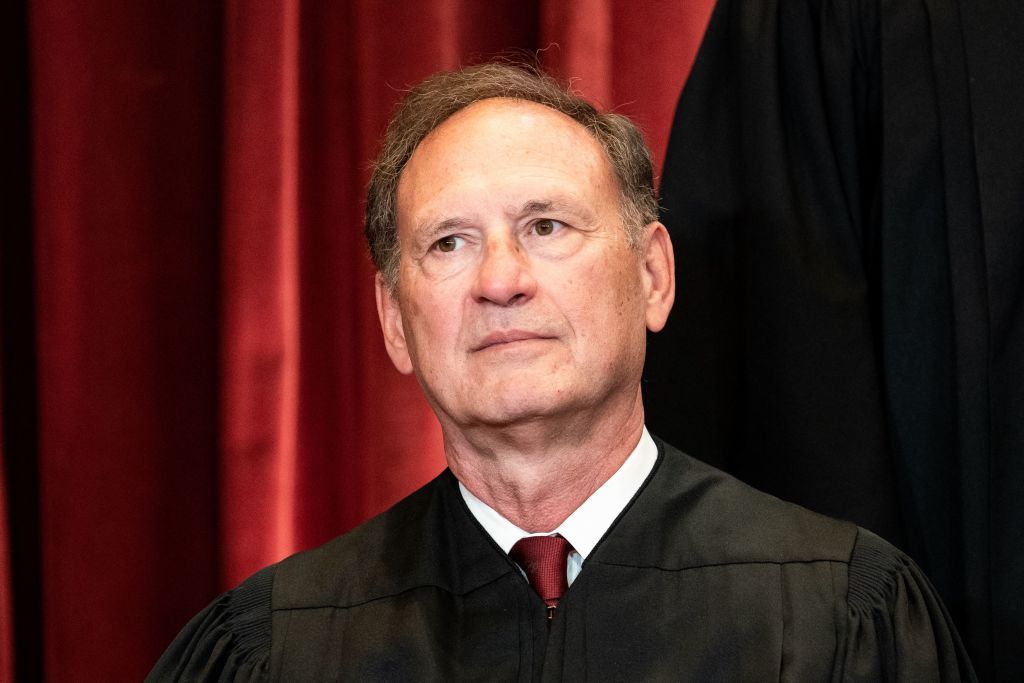
The man and the movement: a Q&A with Peter Canellos on his biography of Samuel Alito
For his In Other Words column, Ronald Collins interviewed author Peter Canellos about his new book, Revenge for the Sixties: Sam Alito and the Triumph of the Conservative Legal Movement. Among other things, they discussed what shaped Alito’s judicial philosophy and the justice’s potential legacy.
A Closer Look
Summer Order Lists
Although the Supreme Court released its final set of orders for the 2025-26 term on June 30, the court will issue at least three order lists before the fall, known as, well, summer order lists.
As a refresher: Throughout the term, the court releases orders on its “order lists,” which make public some of the actions the justices took at their most recent conference. Typically, most entries in an order list are decisions by the justices to grant or deny petitions for review, but order list entries can also consist of other actions on pending petitions, merits, or emergency docket cases (such as a request for a party to participate in oral argument, an invitation for the views of the U.S. solicitor general, etc.)
The June 30 orders came from the justices’ so-called “clean-up” conference on Monday, June 29, which marked the justices’ last conference before the summer recess. The conference has also “traditionally served as an opportunity for the justices to dispose of any petitions for review that may have been on hold until they issued opinions on the merits in cases presenting similar issues.”
Summer order lists typically do not add new cases to the court’s merits docket; in past years, the justices have acted on emergency petitions, denied petitions for review and rehearing, and disposed of applications to stay a lower court judgment. Last year’s summer order lists were released on July 21, Aug. 18, and Sept. 5 – in which the court primarily denied petitions for it to rehear cases.
This year’s summer order lists are scheduled to be issued on July 20, Aug. 17, and Sept. 4.
SCOTUS Quote
Continue reading...
[ H/T SCOTUSblog ]