




On this day in 1990, Justice William Brennan retired from the Supreme Court after nearly 34 years of service. He is among the longest-serving and most influential justices in the history of the court.
At the Court
This morning at 9:30 a.m. EDT, the court will release the first of three summer order lists. (We discussed what these lists typically address in a Closer Look last week.)
Morning Reads
Nearly half of Americans in poll say Supreme Court bases rulings on politics
Julian Mark and Scott Clement, The Washington Post (paywalled)
A new Washington Post-Ipsos poll found that “[m]ore than half of Americans disapprove of how the Supreme Court is doing its job, while 46 percent believe that the court is ruling on President Donald Trump’s policies based on ideology rather than the law.” “The approval numbers, gathered this month, are among the court’s lowest in recent memory and reflect an ongoing trend of Americans viewing the court’s decisions as partisan,” according to The Washington Post. The survey showed “55 percent of Americans disapprove of the Supreme Court’s performance while 41 percent approve. That hovers around historic lows, although it does not reach the dissatisfaction levels of 2022, when Gallup reported that 58 percent of Americans disapproved of the court’s performance while 40 percent approved.” Today, 46 “percent of Americans think the justices rule on Trump administration policies based on their political views, while 25 percent see the court as ruling based on the law.”
Trump administration will ask Supreme Court to keep ban on trans troops
Maureen Groppe, USA Today
In a filing last week, the Trump administration asked the U.S. Court of Appeals for the District of Columbia Circuit “not to finalize” its decision holding that President Donald Trump’s ban on transgender troops “probably violated the troops’ constitutional rights and cannot be enforced against those currently serving who challenged the policy” and notified the court that it intends to appeal the decision to the Supreme Court, according to USA Today. Lawyers for the government “emphasized that the justices already intervened in a different challenge to the policy last year when a majority said the ban can be enforced as it’s being litigated.” If the D.C. Circuit “does not agree to keep its ruling from going into effect while the administration appeals it, the government could ask the Supreme Court for an interim ruling pausing implementation.”
Trump administration races the clock to rebuild US tariff wall knocked down by Supreme Court
Paul Wiseman, Associated Press
After the Supreme Court in February held that President Donald Trump’s did not have the authority under the International Emergency Economic Powers Act to impose tariffs, Trump vowed to rebuild the tariff regime using other measures. “[T]he president turned first to Section 122 of the Trade Act of 1974 to impose 10% tariffs globally. But Section 122 only authorizes tariffs for 150 days” unless Congress extends them. “Trump’s expire on July 24,” according to the Associated Press. As Congress is unlikely to keep the Section 122 tariffs in place, the Trump administration has now turned to other trade laws – most notably, Section 301 of the Trade Act of 1974, which “permits the president to impose tariffs and other sanctions against countries found to engage in ‘unjustifiable,’ ‘unreasonable’ or ‘discriminatory’ trade practices” – to impose more “durable” tariffs. “Trade attorneys and analysts are confident the tariff-happy Trump administration will manage to beat the clock and swap out Section 122 tariffs with bigger Section 301 tariffs by the July 24 deadline.”
Hawaii Justices’ Stunning Screed Against the U.S. Supreme Court
Carrie Campbell Severino, National Review (paywalled)
In a column for the National Review, Carrie Campbell Severino highlighted a “nine-page broadside against the U.S. Supreme Court [] tucked inside an otherwise unremarkable post-conviction opinion” from the Hawaii Supreme Court. In Severino’s view, “[p]ages 72 through 80 are worth reading in full, if only to marvel at the scope and arrogance of the digression, spanning voting rights, campaign finance, abortion, religious liberty, the Second Amendment, the major questions doctrine, Chevron deference, the spending power, the removal power, and birthright citizenship.” “All but admitting its intent to disregard Supreme Court precedent,” Severino wrote, “the Hawaii court states, ‘[w]hen six justices walk away from those they are supposed to protect, state constitutions hold the line. That is not defiance. That is the design. State constitutionalism makes it easy to consider Roberts Court jurisprudence “white noise.”’” “One can only assume,” Severino concluded, “that more defiant rulings will follow.”
How Cooley Became A Leading Litigation Firm
David Lat, Original Jurisdiction
For his Substack, David Lat explored the evolution of Cooley, a law firm that’s long been known “for handling the initial public offerings of tech giants such as Nvidia, Uber, and quite possibly OpenAI” and now also “is a powerhouse in litigation – including Supreme Court and appellate practice.” “On June 29 and 30, the U.S. Supreme Court issued opinions in eight of the most high-profile cases of October Term 2025,” Lat noted. Cooley “appeared as merits counsel in four of them.”
On Site
Court News
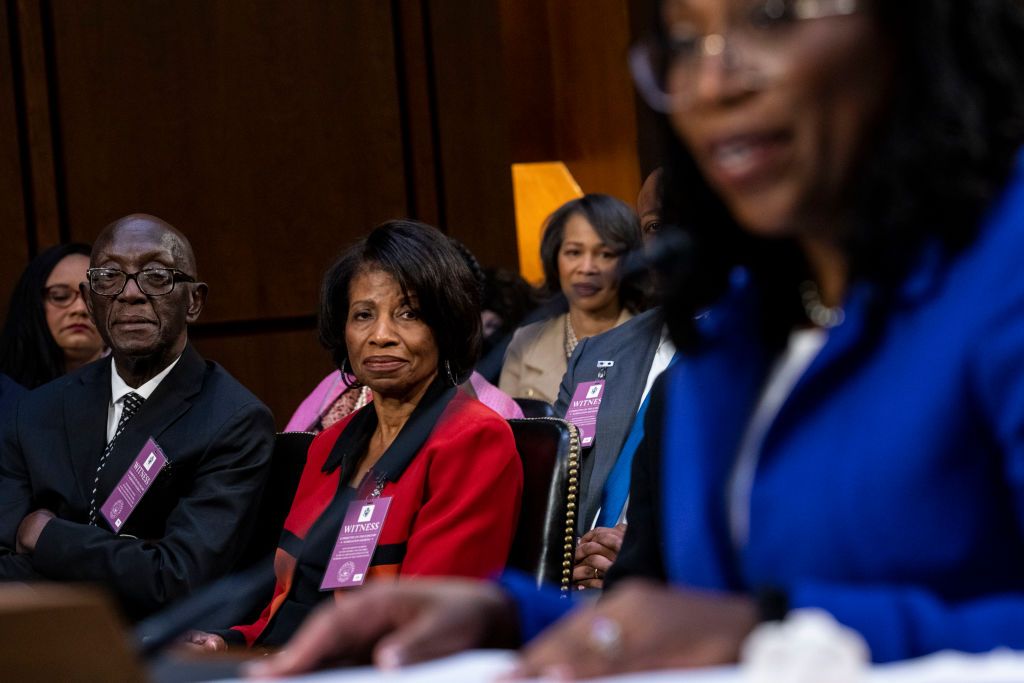
Johnny Brown, Justice Jackson’s father, passes away at 80
Johnny Brown, the father of Justice Ketanji Brown Jackson, died on Wednesday, according to an obituary published in the Miami Herald. He was 80 years old. In her memoir, Jackson credits Brown, who served as the lead lawyer for the Miami-Dade County Public Schools, with her interest in the law, writing that he “would sometimes look up from his textbooks to talk to me about his cases, to ask me what I thought, as if I weren’t four years old.”
From the SCOTUSblog Team
Three profound constitutional provisions – and how the Supreme Court has avoided dealing with them
Nora explored three constitution provisions that, despite their profound implications, have generally flown under the Supreme Court’s radar: the 13th Amendment’s “exception clause,” the guarantee clause of Article IV, and the Third Amendment.
Contributor Corner
In birthright citizenship dissent, Justice Thomas stakes out an ideological claim of who counts as an American
In his Immigration Matters column, César Cuauhtémoc García Hernández analyzed Justice Clarence Thomas’ 91-page dissent in the birthright citizenship case, Trump v. Barbara, which was joined by Justice Neil Gorsuch. In it, Thomas “set out to define what it means to be American and explain how it affects his view of the 14th Amendment.”
A Closer Look
Revising Opinions
The justices, just like us here at SCOTUSblog, are unfortunately not immune to making errors in their writing – despite the many rounds of edits by clerks and other justices. In fact, opinion revisions have been a part of the court’s proceedings since its earliest days.
Over the last few decades, justices have also revised their opinions, sometimes in significant, substantive ways after their release. In Lawrence v. Texas, Justice Sandra Day O’Connor deleted a full sentence characterizing Justice Antonin Scalia’s dissent, and in Environmental Protection Agency v. EME Homer City Generation, Scalia made a “high-profile mistake and correction,” rewriting a passage in his dissent that had mischaracterized the EPA’s argument in a 2001 Supreme Court ruling (a decision he had authored, no less). In 2008, Justices Clarence Thomas and Samuel Alito voted to rehear a case in which Justice Anthony Kennedy had made his own “high-profile correction” to the court’s decision in Kennedy v. Louisiana, which banned the death penalty in the case of child rape. Kennedy’s decision had incorrectly stated the existing federal law around the death penalty for child rape; he wrote that in 30 states and under federal law the death penalty was barred for the non-fatal rape of a child, but he neglected to mention a federal law passed two years earlier that permitted the death penalty in military justice cases for that offense.
Corrections like these are supervised by the Reporter of Decisions, whose office has managed the revision process “at least since the early twentieth century.” Each slip opinion contains a notice asking readers to report “typographical or other formal errors” to the Reporter, whose office also reviews opinions. (Former Reporter Frank Wagner once said readers contact the office 10-20 times per year, although few of them actually warrant changes.) The Reporter compiles all suggested changes and sends them to the authoring justice, who then accepts or rejects each suggestion. Since 1994, substantive changes have reportedly required approval by the full court. Approved corrections are then added to the opinion as it moves from slip form, to preliminary print, to the bound U.S. Reports, which the court says alone contains the “final, official” text. In 2015, the court began annotating slip opinions to show where there had been changes. The change came after Harvard law professor Richard Lazarus’ 2014 law review article, “The (Non) Finality of Supreme Court Opinions” brought widespread awareness to the revisions.
So what has been corrected in the current term’s opinions?
As of July 14, revisions have been made in nine cases. One replacement was made in the 194-page Trump v. Barbara, which struck down President Donald Trump’s executive order ending birthright citizenship. On page 28 of Thomas’ 91-page dissent, a quote initially attributed to “Senator Reverdy Williams” was changed to “Senator George Williams.” Supreme Court watchers caught the mistake the day the opinion was issued: National Review Online writer Dan McLaughlin posted on X that “Thomas & Alito both cite a Senator ‘Reverdy Williams’ in their dissents, but pretty sure they mean Reverdy Johnson (D-MD), who was a vigorous participant in the Senate debates.”
As for other revisions, most of these have been minor grammatical fixes or spelling changes (for instance, in Cox Communications, Inc. v. Sony Music Entertainment, one word was changed – from “have plaintiffs show any way” to “have plaintiffs shown any way” – and in Abouammo v. United States “means rea” was changed to “mens rea.”)
And as SCOTUSblog editor Sarah Isgur noted the day Hunter v. United States was released, the wrong version of “forgo” appeared on the first page of Justice Neil Gorsuch’s concurrence. “Today, the Court begins to correct course,” Gorsuch wrote. “It rules that prosecutors may not always leverage their plea-bargaining power to induce a defendant to forego the right to contest his sentence on appeal.” Sarah: “Fun fact: Forego means to go before. Forgo means to waive. Therefore, I predict this little typo is going to be revised for the foregoing reason.” And so it was. In Trump v. Slaughter, one word and a comma was changed on page eight of Justice Sonia Sotomayor’s dissent – from “If, it was true” to “If it were true.”
Other edits have been (slightly) more substantive. In Louisiana v. Callais, the opinion text was changed from “Argued October 15, 2025—Decided” to “Argued March 24, 2025—Reargued October 15, 2025—Decided April 29, 2026,” and in United States v. Hemani, “Tylenol with codeine” was changed to “Robitussin with codeine.”
SCOTUS Quote
Continue reading...
[ H/T SCOTUSblog ]