







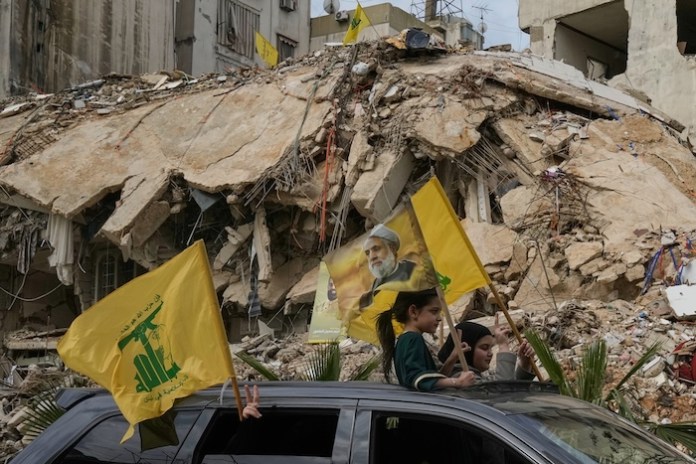
Brazil dismisses Hezbollah as a Lebanese problem with little bearing on it. That fiction puts Americans at risk.
The Lebanese Shiite terrorist group maintains an active presence in at least a dozen Latin American countries, and Brazil is one of its main nodes. Security analysts estimate that the Tri-Border Area, joining Brazil, Paraguay, and Argentina, and home to roughly 30,000 Lebanese expatriates, channels at least $200 million annually to Hezbollah.
These networks raise the money through narcotics trafficking, cigarette and charcoal smuggling, document fraud, U.S. dollar counterfeiting, trade-based money laundering, and front companies in import-export, construction, and real estate. Regional reports in April 2025 placed about 400 Hezbollah field commanders and their families across South America, including Brazil. A month later, the State Department’s Rewards for Justice program offered $10 million for information leading to the disruption of this terrorist financial umbrella.
In 2006, the U.S. Treasury exposed the infrastructure’s regional depth by designating nine individuals and two entities in Assad Ahmad Barakat’s mob for supporting Hezbollah. But only an FBI alert after Hamas’s Oct. 7, 2023, attack spurred Brazil’s Federal Police to launch Operation Trapiche.
Working alongside Mossad, Brazilian authorities executed two arrest warrants and conducted 11 search-and-seizure operations across São Paulo, Brasília, and Minas Gerais. Investigators identified Syrian-Brazilian Mohamad Khir Abdulmajid and Lebanese national Haissam Houssim Diab as indoctrinators who recruited at least six Brazilians. They lured recruits to Beirut with large cash payments to plan attacks against Jewish and Israeli objectives. The possible targets included two Brasília synagogues, Israel’s embassy, and a Jewish cemetery. At least one recruit conducted surveillance for the Hezbollah-sponsored operation.
A 2024 Trapiche follow-up exposed the money trail. Police made one preventive arrest and carried out eight searches in Belo Horizonte, Uberlândia, Contagem, São Paulo, and Brasília. Proceeds from smuggled electronic cigarettes paid recruits’ airfare. The money moved through shell companies and a one-billion-real laundering structure identified by Operation Colossus investigators before reaching cryptocurrency wallets already flagged by terrorism-finance specialists. The charges carry a combined possible sentence of 75 years and six months; however, both alleged masterminds remain at large.
Trapiche exposed another dangerous shift: Hezbollah is recruiting Brazilians and exploiting contacts at Shiite cultural centers, including Brasília’s Islamic Beneficent Cultural Center, for cover, indoctrination, and operational support. Brazil’s roughly 90,000 Jews form Latin America’s second-largest Jewish community. Hezbollah has put them squarely in its crosshairs.
Argentina, Paraguay, Colombia, Honduras, and Guatemala have designated Hezbollah as a terrorist organization. Brazil still refuses, leaving Iran’s Shiite proxy intact and operational on its soil. That denial does not preserve neutrality; it protects the network.
America now pays for Brasília’s complicity. Hezbollah’s Latin American networks fund operations against our country’s interests and allies, while their operatives exploit trafficking routes in our southern border. Therefore, the U.S. Congress and the Trump administration must force a choice.
HEZBOLLAH’S ISLAND HIDEOUT IS JUST HOURS FROM MIAMI BY DRONE
The U.S. Treasury should publish a quarterly Hezbollah Crypto and Shell Company Watchlist targeting illicit transactions in the Tri-Border Area, automatically freezing all U.S.-linked wallets and entities upon designation. On the other hand, Washington must condition all non-humanitarian aid, Export-Import Bank financing, and preferential trade access for Brazil on two non-negotiable mandates: the South American nation needs to formally designate Hezbollah as a terrorist organization, and the Lula administration must adhere to a permanent U.S.-Brazilian intelligence fusion cell to dismantle the Tri-Border Area terrorist pipelines.
Every day Brasília denies this threat, Hezbollah gains more room to operate on America’s doorstep.
Jose Lev Alvarez is an American–Israeli scholar specializing in international security policy. A multilingual veteran of the IDF special forces and the U.S. Army, he holds three master’s degrees and is completing a Ph.D. in Intelligence and Global Security in the Washington, D.C., area.
Continue reading...
[ H/T Washington Examiner ]