Happy Thanksgiving eve, SCOTUStoday readers! We are very grateful for your support of our work. If you’d like to learn more about what the Supreme Court has said about Thanksgiving, you can revisit our Closer Look on the topic from this time last year.
Following the Thanksgiving break, the court’s December argument session will begin, on Monday, November 30. The justices will hear eight total oral arguments during this session, addressing such issues as the Second Amendment, deportations to “third-party countries,” and the seizure of an airplane over the illegal transportation of beer.
Finally, a few reminders:
- In recognition of the Thanksgiving holiday, we will not send SCOTUStoday tomorrow or Friday.
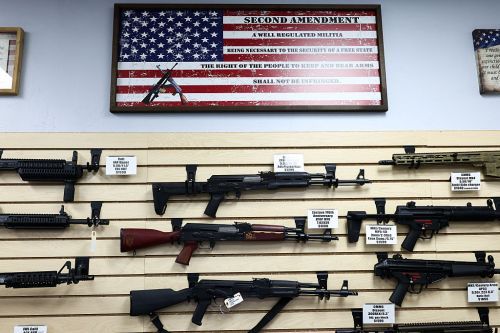
- We will be live blogging during the oral argument in Khaya v. Cook County, on the constitutionality of bans on AR-15s and similar semiautomatic rifles, on Wednesday, December 2. The live blog will open at 9:30 a.m. EST, and the argument will begin about 30 minutes later.
- Advisory Opinions will be doing live tapings in Houston on Saturday, December 5, and Austin on Sunday, December 6. Tickets are still available for both shows.
At the Court This Week
On Monday, the Supreme Court dismissed lead plaintiff Cutberto Viramontes from the case formerly known as Viramontes v. Cook County, on whether the Second Amendment guarantees a right to possess AR-15s and similar semiautomatic rifles, but it did not take action on Cook County’s request to dismiss the case as moot. On Tuesday, the court announced that it had deferred action on that request until after oral argument, which will take place on Wednesday, December 2. The case name is now Khaya v. Cook County. For more on Tuesday’s announcement, see the On Site section below.
The Supreme Court Building will be closed tomorrow and Friday for Thanksgiving.
The December argument session will begin on Monday. That day, the justices will hear oral arguments in two cases: Crowther v. Board of Regents of the University System of Georgia, on whether Title IX, the federal law that prohibits sex-based discrimination by schools that receive federal funding, allows school employees to bring lawsuits alleging sex discrimination; and Wassily v. Blanche, on whether immigrants whose asylum protections have been terminated remain eligible to become lawful permanent residents, also known as green card holders.
On Tuesday, the justices will hear argument in Jouppi v. Alaska, an Alaskan bush pilot’s challenge to the forfeiture of his $95,000 airplane over the transport of beer into a dry village.
On Wednesday, December 2, the court will hear argument in Khaya v. Cook County, on the constitutionality of bans on AR-15s and similar semiautomatic rifles, at 10:00 a.m. EST. As noted above, we will be live blogging that morning beginning at 9:30 a.m.
Morning Reads
Catholic schools ask Supreme Court to strike Maine’s effort to ‘outmaneuver’ past public funding ruling
Jack Birle, Washington Examiner
In June 2022, the Supreme Court ruled “in Carson v. Makin that Maine could not exclude religious schools from a state program that allows parents to use vouchers for public or private schools for their children.” Now, a group of Catholic schools has asked the justices to revisit the program and address rules that were passed while the earlier case was pending “to bar schools from participating ... if their admissions policies prefer students of a certain religion, allow religious discrimination in their schools, or do not follow the state’s views on gender ideology,” according to the Washington Examiner. “The Catholic schools urge the Supreme Court to address multiple questions if it takes up the case, including whether to overrule the 1990 Supreme Court ruling Employment Division v. Smith, which found that the free exercise clause does not allow for people to violate a law as part of their religious practice, as long as the law is valid and neutral in how it is applied. The petition ... argues that Smith has allowed Maine to continue to exclude religious schools from state programs.”
Maine mother ordered to stop taking daughter to church appeals to U.S. Supreme Court
Adam Bartow, WMTW
Attorneys for Emily Bickford, a Maine mother “who has been prohibited from taking her 13-year-old daughter to church” in a custody order, appealed her challenge to the order to the Supreme Court last week. The order allows the child’s father “to solely decide on his daughter’s involvement with Calvary Chapel Church.” Bickford asks the justices to find that it violates “parental rights and religious liberty protections,” according to WMTW in Portland, Maine. “A parent’s ability to take her child to church during her own parenting time now depends on the State in which she lives,” Bickford’s petition for review says. “When a state court strips a fit parent of her right to direct her child’s religious upbringing and vests a co-parent with veto power, it deploys the coercive authority of the State to extinguish a fundamental right.”
Salvadoran migrant Kilmar Abrego Garcia to leave US for Spain
Kanishka Singh and Julia Harte, Reuters
On Tuesday, “Salvadoran migrant Kilmar Abrego Garcia, whose wrongful deportation to El Salvador made him one of the symbols of President Donald Trump’s immigration crackdown,” left the United States for Spain, according to Reuters. His voluntarily departure brought an end to “a legal fight that, at one point, reached the US Supreme Court.” It began when “US authorities sent Abrego Garcia, who entered the US illegally, to a megaprison in El Salvador in March 2025 despite a prior court order barring his return there because of the risk of persecution.” For months, officials “said they could not bring him back,” but the Supreme Court ultimately “ordered the government [to] facilitate Abrego Garcia’s return.” After he returned to the United States in June 2025, Abrego Garcia faced human smuggling charges “stemming from an earlier incident” and a renewed deportation effort.
U.S. Prepares to Raise Tariffs on China and Other Countries
Gavin Bade, The Wall Street Journal (paywalled)
Since February, when the Supreme Court held that President Donald Trump did not have the authority under the International Emergency Economic Powers Act to impose tariffs, the Trump administration has been using other statutes to rebuild the president’s tariff regime. This week, that effort will continue when the administration announces increased “tariffs on China and dozens of other countries,” according to The Wall Street Journal. “The new tariffs will likely be added to levies from a separate tariff action, unveiled in July, that sought to penalize nations for not blocking the trade of goods produced with forced labor,” and target countries that the Trump administration has concluded are harming U.S. producers by “flood[ing] global markets with cheaper goods.” That July action sparked a new lawsuit over the administration’s tariff policies.
Appeals court breathes new life into Trump’s fight over hush money conviction
Zach Schonfeld, The Hill
On Monday, a panel for the U.S. Court of Appeals for the 2nd Circuit sided with President Donald Trump “in his fight to overturn his hush money criminal conviction in New York, ruling that a judge wrongly denied his effort to move the case into federal court,” according to The Hill. Trump’s current push to transfer the case “cites the Supreme Court’s presidential immunity ruling.” The president contends that “he has the legal right to bring it up before a federal judge as a defense,” and the 2nd Circuit panel held on Monday that the district court did not properly consider this argument. “Monday’s decision effectively puts a halt to Trump’s ongoing appeal in New York’s state court system and moves it to federal court, where the president will continue pressing his arguments that the case should remain there.”
AG-elect Johnson says he won’t defend law requiring Ten Commandments
Philip Jankowski, The Dallas Morning News (paywalled)
Texas’ Democratic Attorney General-elect Nathan Johnson said he will not defend the state’s “Ten Commandments classroom law,” just weeks before the justices are expected to consider whether to take up a challenge to it, according to The Dallas Morning News. “My jurisprudential opinion is that the law is unconstitutional,” Johnson said. “The court will have the ultimate say as to what’s constitutional and what is not, but I’m the one who says what the state’s position is, and it will not be the position the state has previously taken.” Outgoing Republican Attorney General Ken Paxton “cited Johnson’s unwillingness to defend the law as a reason the justices should decline to hear” the challenge to it in the state’s brief in opposition, which was filed on November 10. “If the Supreme Court stays out of the fight, a federal appeals court ruling upholding the classroom displays in Texas would remain in place, preserving a legal victory for Paxton even after he leaves office in January.”
On Site This Week
Court News

Supreme Court defers decision on whether to dismiss major gun case
With just over a week remaining before the justices will hear argument in a pair of challenges to the constitutionality of bans on AR-15-style semiautomatic rifles, the Supreme Court on Tuesday afternoon put off a decision on a request by Cook County, Illinois, to dismiss the dispute over its ban as moot – that is, no longer a live controversy. The court’s brief, unsigned order came one day after the justices granted a request by the lead plaintiff to remove him from the case.
From the SCOTUSblog Team
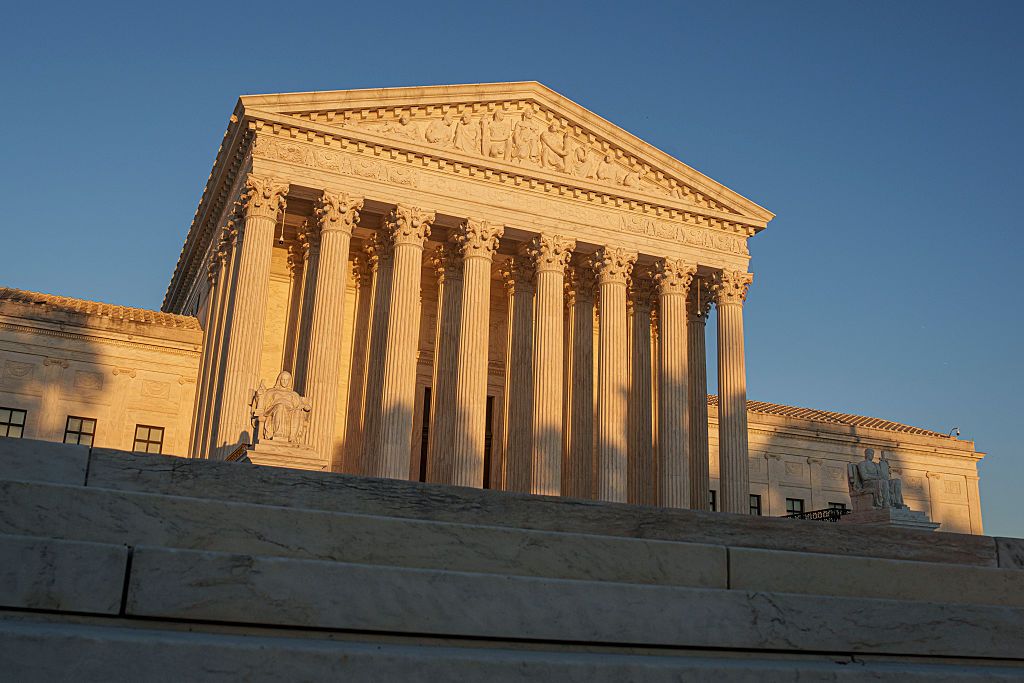
What do these Supreme Court plaintiffs have in common?
On Tuesdays for the past few months, we have dedicated the Closer Look section of this newsletter to covering the plaintiffs behind landmark Supreme Court cases. In this article, Blake took a step back and reflected on what we have learned.
Contributor Corner
Which justices favor the Trump administration the most (and least) on the emergency docket?
In his Empirical SCOTUS column, Adam Feldman analyzed each justice’s voting pattern in interim docket cases involving federal executive action, highlighting “a conservative majority whose members separate over particular exercises of federal power, a liberal bloc with distinguishable voting and dissent records, and occasional alliances that cross ideological lines.”
Contributor Corner
Refugees, asylum, and Supreme Court exceptionalism
In his Court Beyond Borders column, Martin Flaherty focused on the Supreme Court’s grant of review in Mullin v. Refugee and Immigrant Center for Education and Legal Services, on President Donald Trump’s suspension of asylum at the U.S.-Mexico border. The case, according to Flaherty, will put “the Supreme Court’s wariness toward international law” in the spotlight.
Contributor Corner
The Supreme Court and profanity
In her In Dissent column on Monday, Anastasia Boden explored 1978’s Federal Communications Commission v. Pacifica Foundation, holding that the government may “constitutionally prohibit indecency even” when it falls “short of legal obscenity.” In a dissenting opinion, Justice William Brennan criticized the majority for “attempt[ing] to impose its notions of propriety on the whole of the American people.”
From the SCOTUSblog Team
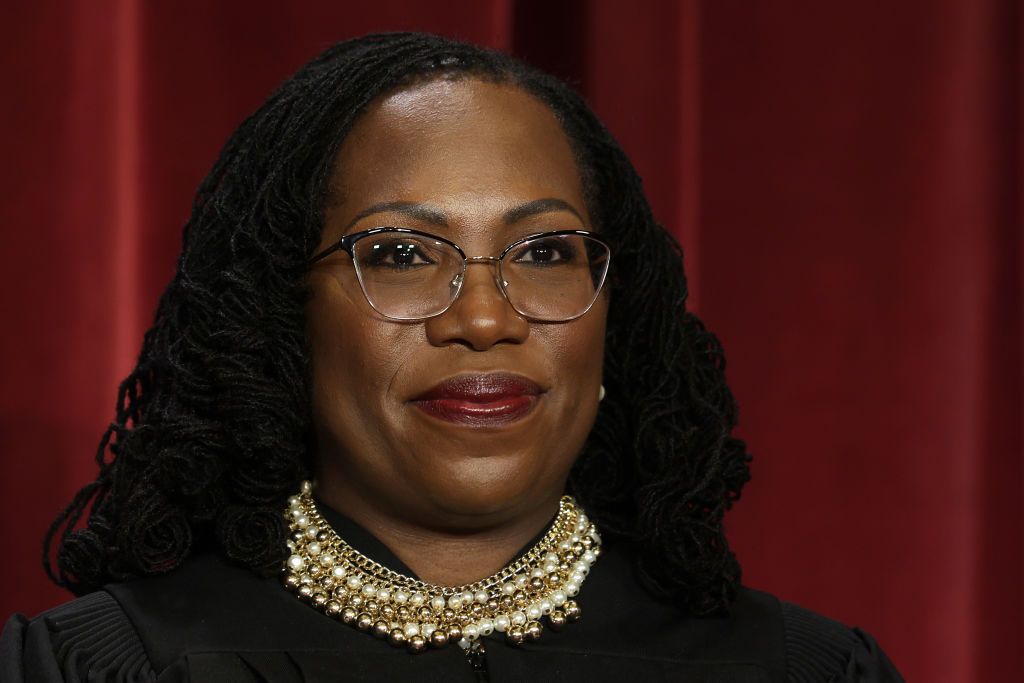
Justice Ketanji Brown Jackson and the arc of the law
(SCOTUSblog Plus) Since joining in 2022, Justice Ketanji Brown Jackson has forged a unique role on the Supreme Court. It often appears, as Amy noted in this analysis, that Jackson’s goal in dissenting opinions is not simply to express disagreement with the majority, but to offer an alternative vision of the law and speak to the public directly – regardless of whether anyone else on the court agrees.
Contributor Corner
Criminal law is constitutional law
In his SCOTUSCrim column on Friday, Rory Little aimed “to demonstrate that much of criminal law is actually constitutional law” and explore “why that can be so interesting.”
Podcasts
Advisory Opinions
Why We Can’t Have Nice Things
Sarah Isgur and David French critique Congress’ current governing processes with the help of Michael “Frags” Fragoso, a partner at Torridon Law, and Nicholas Bagley, a professor of law at the University of Michigan and author of the book Why We Can’t Have Nice Things: How Legal Reformers Accidentally Broke America.
Ask Amy
The Closer Look in Wednesday editions is typically an entry in our Ask Amy series, in which Amy Howe answers reader questions about the Supreme Court.
Q: At least for those of us of a certain age, the November 9 order list contained a familiar name in the “Attorney Discipline” section: Larry Klayman, perhaps best known as a frequent and fervent foe of the Clinton administration, had been “disbarred from the practice of law” in the Supreme Court. Which leads to the question: How, exactly, does someone get disbarred from the Supreme Court bar – especially if, like Klayman, they’ve never argued there?
A: The answer (like so many others) can be found in the Supreme Court’s rules, starting with the rule that outlines how someone becomes eligible to join the Supreme Court bar, which is necessary not only to argue before the justices but also to sign filings there: lawyers must have been (among other things) “admitted to practice” in another jurisdiction for at least three years, and they cannot have been subject to any disciplinary proceedings during that time.
Because becoming a member of the Supreme Court bar requires a clean disciplinary record, it follows that disciplinary problems can get a lawyer kicked out of the Supreme Court bar – even if the underlying conduct had nothing to do with the court itself. Specifically, the court’s rules provide for the suspension of any lawyer who “has been disbarred or suspended from practice in any court of record, or has engaged in conduct unbecoming a member of the Bar of this Court.” The suspended lawyer then has the chance to try to persuade the court “why disciplinary action should not be taken,” after which the court may take “any appropriate disciplinary action,” which can include disbarment.
In Klayman’s case, he was apparently suspended by the bar associations in the District of Columbia and Florida for alleged ethical violations in connection with his efforts to represent rancher Cliven Bundy in a federal court in Nevada, leading to his disbarment from the Supreme Court earlier this month. Klayman told Law360 that he plans to seek reconsideration of the Supreme Court’s order.
SCOTUS Quote
Continue reading...
[ H/T SCOTUSblog ]