




A friend of mine recently posted something on social media that made me smile. He had been reading my essays on the importance of young men having role models outside their families and decided to put the idea into practice.
One Sunday after Mass, he and his son began sitting with some of the older gentlemen over coffee and donuts. They learned that one had commanded a nuclear submarine during the Cold War and another had been an art professor.
These older men were folks they had seen regularly but knew almost nothing about. Now they were friends, and his son looked forward to seeing them each week. My friend thanked me for the encouragement, but he deserves the credit. He made the effort to approach people, and something wonderful came of it.
I’ve been wondering recently whether our national conversation about loneliness and isolation has become part of the problem. I thought about his experience when I took my youngest son to New York Comic Con for the first time this month.
I’ve been going for years. I love comics, have collected them for much of my life, and still get enormous pleasure from wandering the aisles, looking at original artwork, talking with artists, and seeing what people have brought to sell. The show is crowded, expensive, noisy, chaotic, and exhausting, but I wouldn’t miss it.
My youngest absolutely adores Spider-Man. I knew there would be people dressed as his favorite superhero and figured that alone would make the trip worthwhile. I had no idea how he would handle the crowds and noise, but nothing bothered him. I underestimated how much he would love the event.
There were Spider-Men everywhere, some with elaborate costumes that must have taken months to make, others with far simpler outfits. My son didn’t care. He wanted to meet them all, and we walked up to one after another. He boldly said hello, asked questions, and requested selfies. People stopped to talk, bent down to his level, joked with him, and gave him their attention, even with thousands of others streaming through the Con.
He has been talking about Comic Con ever since. He wants to know when we’re going back, and he doesn’t fully understand that he has to wait a year.
My son’s story aside, I wasn’t surprised by how nice people were. I’ve been writing for years about how much we underestimate other people’s willingness to engage with us.
We regularly hear on social media and in the news that Americans are lonely, that we have fewer friends, that our communities are disappearing, and that we no longer trust one another. There is plenty of evidence to support these concerns. I am part of this conversation, having written more than a few pieces about the decline of civic life and the disappearance of gathering places.
Many of us are not even willing to date across political differences. A 2025 Florida State University survey found that 73% of people would be willing to join a recreational activity with someone who holds opposing political views, but just half (52%) would be comfortable with that person marrying into their family. Only 41% would even date the person. Many other studies find almost identical trends as well.
These problems are certainly real. But I do worry that my own writing about how isolated and antisocial we’ve become, along with that of many others, has helped us talk ourselves out of making connections.
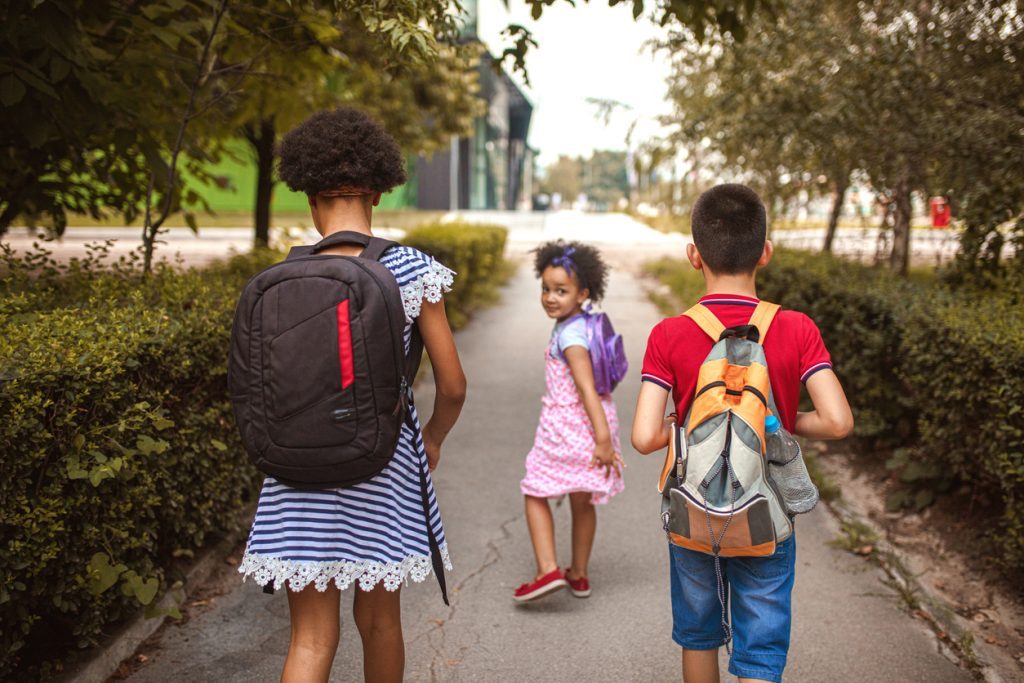
Think about how often we hear that Americans are divided, angry, suspicious, and unwilling to engage with people who are different from them. Online conflict goes viral, and the negativity is amplified and compounded. I wonder what happens when we hear these messages often enough. Are we being primed to cocoon and disconnect from others? Do many Americans stop trying to engage with others because we have already convinced ourselves that nobody wants to talk?
(Getty Images)
" data-large-file="https://www.washingtonexaminer.com/...5/iStock-1333038312-e1793395215494.jpg?w=1024" src="https://www.washingtonexaminer.com/wp-content/uploads/2026/05/iStock-1333038312.jpg?w=1024" alt="kids children walking park school" class="wp-image-4564010">
(Getty Images)
Fortunately, there is research which suggests that people underestimate others’ interest in connecting. In experiments with bus and train commuters, we see that participants initially expected to enjoy solitude more than conversation, but those instructed to talk with a stranger actually reported more positive experiences. Other research suggests that people underestimate how much their conversation partners like them.
These findings, and there are many more, are fascinating to me because they suggest that our expectations may be keeping us apart even when the people around us would welcome an interaction.
Comic Con is a wonderful place to see this. Thousands show up because they care deeply about sharing and showing off their interests. Much of this now happens online, often with people they have never met. At Comic Con, fans meet up in the real world, and that is where the fun happens.
I love watching strangers stop one another to enjoy their respective costumes or discuss a comic or character. Some leave as friends, and I have made real friends from conventions I’ve attended over the years.
Of course, Comic Con is an unusual setting. Many attend precisely because they want to share something with others. But churches, volunteer fire departments, bowling leagues, community organizations, and clubs devoted to hobbies the rest of us barely understand are self-selected groups, too. These places provide opportunities for people to encounter one another, and friendships often follow.
As someone who has looked at how friendships and ties develop for almost two decades, I can confidently say that we sometimes make community sound more complicated than it needs to be. Organizations develop programs to combat loneliness and institutions convene experts to explain how we might rebuild trust. Certainly, some of this work is valuable, and institutions and groups matter enormously in creating opportunities to meet and keep connecting which fosters friendships. But we also need the confidence and gumption to walk across a room, extend a hand in greeting and friendship, and introduce ourselves.
I find the intergenerational aspect of my friend’s experience especially important. We worry, rightly, that young men lack mentors and role models. Yet here were older men who had lived fascinating lives, sitting around after church, happy to spend time with a father and his son. My friend and his son kept going back, and the conversations became friendships.
I think about this need to take the first step as both a father and a professor. Our nation’s young people need to learn that the world is filled with fascinating people whose experiences are worth hearing about. They need opportunities to talk with adults beyond their parents and teachers, and to discover that friendship and community are not confined to people their own age.
My youngest certainly wasn’t thinking about any social awkwardness or macro-trend at Comic Con. He saw Spider-Man and wanted to say hello — he didn’t worry about whether he would be rejected or whether the encounter might be awkward. He just approached happily and openly and it was refreshing as so many adults are much better at inventing reasons not to do that.
Of course, not every stranger is friendly, kind, or wants to be approached. I would be remiss if I didn’t make that statement, and there are many good reasons to exercise judgment. But in worrying about the possibility of an unpleasant or awkward encounter, I wonder if many of us have stopped trying to connect.
That is a real loss, especially for our children. I would rather they learn that, in safe settings such as these, most people are approachable, that many have something interesting to share, and that a simple hello can lead somewhere unexpected.
CIVIC RENEWAL IS ALIVE INSIDE A CHICK-FIL-A ON LONG ISLAND
My youngest came home from Comic Con with signed artwork, stories, and a burning desire to return. I came home thinking about all those strangers who gave him a few minutes of their day. None had to, and almost all seemed genuinely happy to.
I am grateful for their kindness, and I wish we were collectively more friendly, more often. Perhaps we would discover that the people around us have been waiting for someone to say hello.
Continue reading...
[ H/T Washington Examiner ]