




Republicans had hoped that the passage of new tax cuts would buoy them in the midterm elections, but their ability to campaign on their signature legislation has been diminished by the war with Iran and high gas prices.
The tax cut bill, the One Big Beautiful Bill Act, passed by Republicans last year and signed by President Donald Trump, was supposed to give the party an advantage by preventing tax increases for a majority of voters, enacting new tax breaks for tips and overtime, and boosting the economy overall. But since the start of the war with Iran, gas prices have driven an overall rise in inflation that has caused many families financial distress. Republican strategists say that the economic pain has made it difficult for the GOP to capitalize on its brand as the party of tax cuts.
Alex Conant, a GOP strategist and a partner at Firehouse Strategies, told the Washington Examiner that if the war hadn’t happened, the tax cuts package — now being dubbed the working families tax cuts by Republicans — would carry more weight with voters.
“Republicans had every intention of winning the affordability argument at the beginning of this campaign, and tax cuts were their best talking point, but then when gas prices soar, interest rates rise, it just undercuts the rest of the message,” Conant said.
FLORIDA LEADS PROPERTY TAX REVOLT ON BALLOTS IN NOVEMBER
Polling indicates the tax cuts aren’t top of mind for voters. A Politico survey released this month found that fewer than 1 in 10 people say the tax cuts are one of the biggest successes of the president’s second term in office.
That’s despite it being the most significant legislation, in fiscal and policy terms, that Trump has signed since the Tax Cuts and Jobs Act in 2017. Even the name of the bill — the One Big Beautiful Bill Act — was meant to indicate the importance Trump placed on it.
Much of the political capital that Republicans might have earned from the tax cuts has been sapped by the war and by perceptions that the economy is not working for voters. Consumer sentiment hit the second-lowest reading on record this month, lower than during the Great Recession.
“I think it’s a useful talking point in how Republicans are helping with affordability, but I don’t think it’s particularly persuasive because whatever gains people realize in take-home pay, they’ve lost to inflation,” Jason Roe, a veteran Republican political consultant, told the Washington Examiner.
“And so I think it doesn’t net out as that important, because they’re still worse off than they were before when you figure in what they’re paying out of pocket to make ends meet,” he said.
Wages in the United States have been growing below the rate of inflation, meaning that the purchasing power of many workers has declined. Many workers feel miserable because their paychecks have not grown as fast as the prices for gas, groceries, electricity, housing, and many other key items.
Average hourly earnings grew at a 3% year-over-year rate in September, as measured by the Bureau of Labor Statistics. Inflation, as tracked by the consumer price index, was 3.7% for the year ending in September.
“Overall, if you look over the last year for all employees, people can buy less with a sort of average hour of work than they could a year before,” Aaron Sojourner, a labor economist and senior researcher at the W.E. Upjohn Institute for Employment Research, told the Washington Examiner.
Still, despite other economic issues overshadowing the OBBBA, Brian Darling, a Republican strategist and former Senate aide, said that tax cuts are a key plank for Republicans.
“You’re seeing a lot of ads in different campaigns about Democrats wanting to raise taxes, and so Republicans can say, ‘We cut your taxes with the big, beautiful bill, and if you elect me, you’re not gonna have somebody who’s gonna try and raise your taxes,’” Darling told the Washington Examiner.
“I mean the tax cut issue is powerful, but it is being overshadowed by the impacts on gas prices and grocery prices from the Iran War,” Darling said.
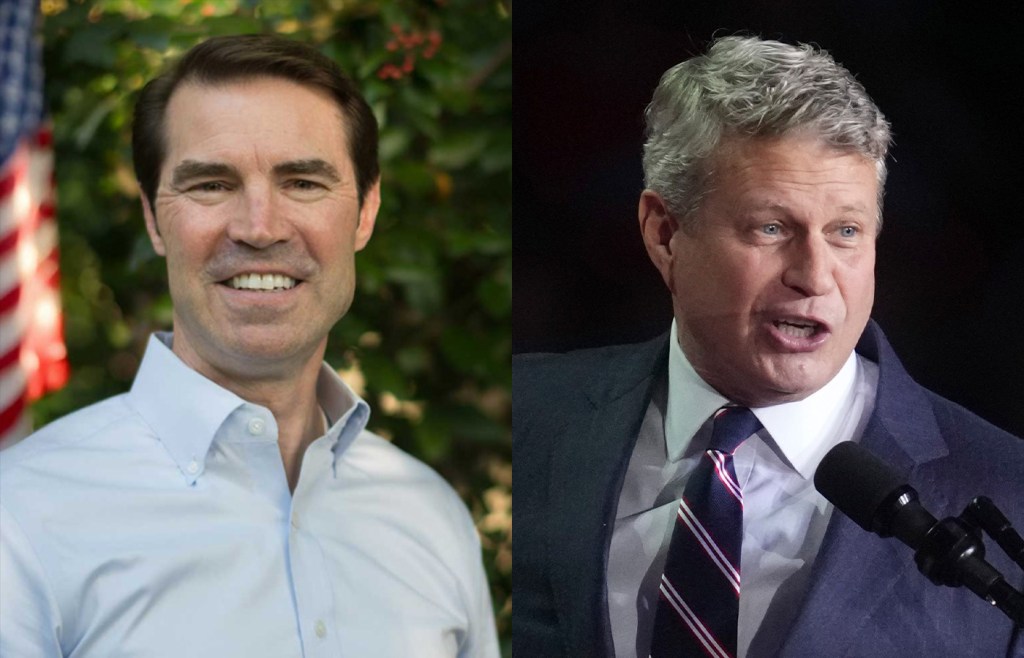
In one of the most closely watched races, the Senate race in Texas, Attorney General Ken Paxton has run in part on cutting taxes even further, and has accused his opponent, Democratic state Rep. James Talarico, of wanting to raise taxes.
A recent advertisement accused Talarico of not supporting key tax cuts from the OBBBA.
“Talarico … supports taxing tips, overtime, and Social Security,” the voiceover says in the ad.
MAGA Inc. has also cut ads emphasizing that Democrats voted against the new tax cuts, like no taxes on tips, which were part of the broader OBBBA.
“Every single House Democrat will vote ‘hell no,’” House Minority Leader Hakeem Jeffries (D-NY) says in a voiceover in the ad about taxes.
Darling said it is a good political strategy to try to rebrand the legislation as a tax cut for families.
“Because the Big Beautiful Bill was just a comprehensive bill that included the tax cuts,” he said. “I think changing it and talking about working families tax cuts makes sense. It’s good messaging, and it’s a good issue. I mean, it’s one of the few issues Republicans can go on offense on.”
Still, some lawmakers are likely benefiting from the tax cut legislation more than others. The group of “SALT Republicans” increased the $10,000 cap on state and local tax deductions to $40,000. That was a major priority for their districts, and Republican members in those high-tax areas — typically blue states and possible swing seats — have been touting the win.
Still, Trump and his team appear not to see the tax cuts as a major factor in winning the midterm elections. Trump has focused on other ways to appeal to voters, including by promising to simply send them checks.
TRUMP’S $5,000 CHECK PROMISE FACES MAJOR OBSTACLES
Trump said at the Republican midterm convention that if the GOP holds on to the House and the Senate, the government would send a $5,000 check to every adult citizen. He said that the check would be a “dividend” for the “tremendous economic success” of the U.S.
Critics have panned the proposed payments as being unable to pass Congress and have said that sending out more than a trillion dollars in checks, without offsetting tax hikes or spending cuts, would add to inflationary pressures.
Continue reading...
[ H/T Washington Examiner ]