








Goldman Hikes 2027 Brent Forecast For These Two Reasons
On Sunday, Goldman Sachs' head of oil research, Daan Struyven, raised his crude oil price forecasts, warning that the threat of renewed supply disruptions will keep a higher geopolitical risk premium in crude prices even as Gulf area production recovers.
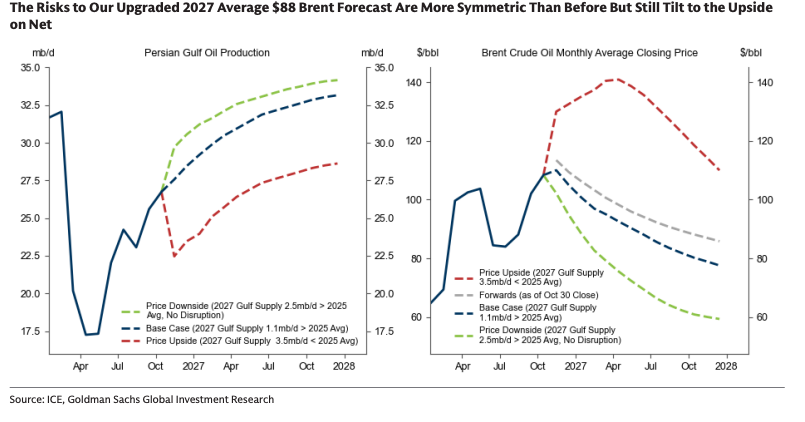
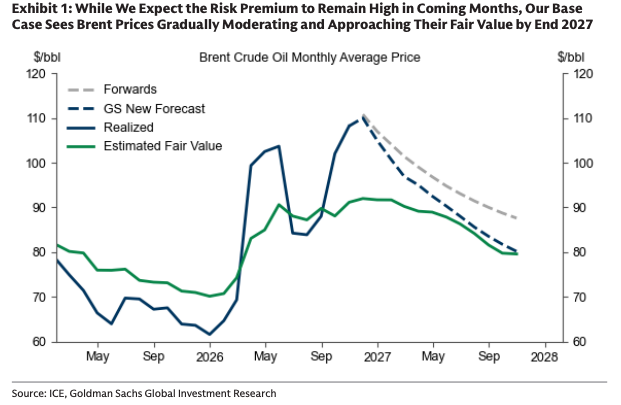
Struyven lifted his December Brent forecast to $105 a barrel from $90 and its West Texas Intermediate estimate to $94 from $81. For 2027, he expects Brent to average around $88 (up from $80) and WTI around $78 (up from $73).
Struyven provides one major reason for the upgrade:
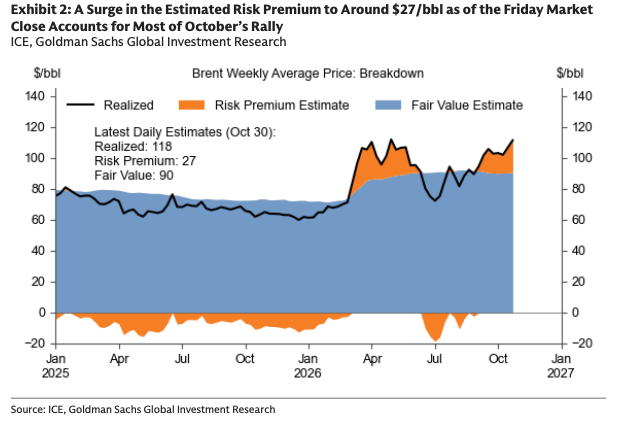
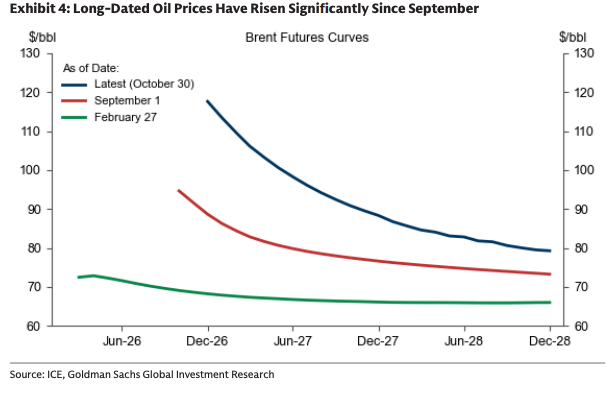
A larger risk premium. We now expect markets to price in a higher risk premium, reflecting downside risks to Mideast supply, the length of past major oil supply shocks, and many market participants' view that a lasting diplomatic breakthrough will be difficult.
Here are Struyven's upside and downside oil price risks:
The chart below shows Struyven's view that the risk premium will remain high for the coming months, then will moderate in the back half of next year.
"Although Mideast output continues to recover as we had expected, we are raising our crude oil price forecasts for two related reasons: substantial downside supply risks are likely to sustain a large near-term risk premium, while our new global supply disruption allowance captures elevated high disruption risk and reduces our global oil output forecast over the medium term," the energy expert said.
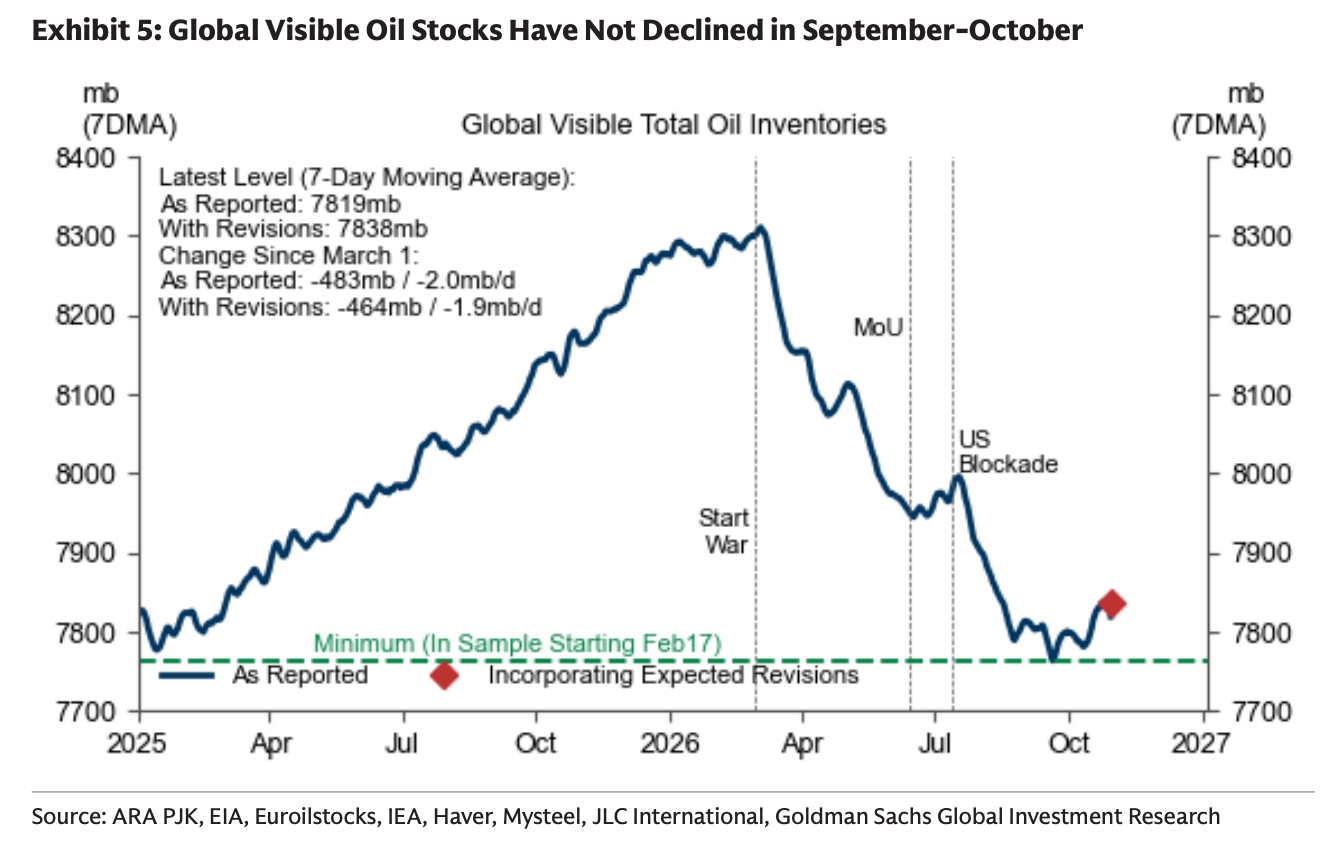
One of the more notable charts in Struyven's slide deck shows that global visible oil inventories held steady through September and October, suggesting supply and demand remained balanced despite a record number of tanker attacks in the Strait of Hormuz last month.
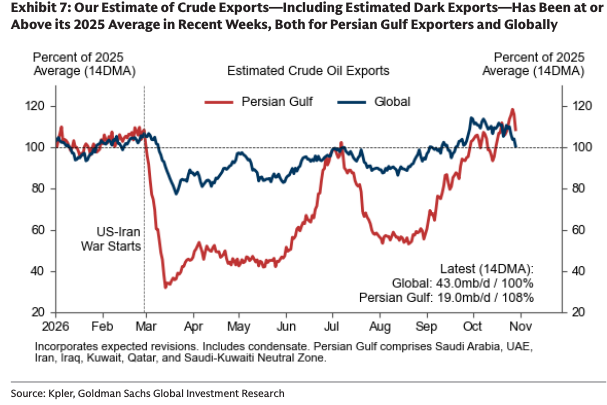
He also highlighted that estimated Gulf crude exports, including shipments carried by dark tanker fleets, had recovered to at or above their 2025 averages (pre-war) in recent weeks.
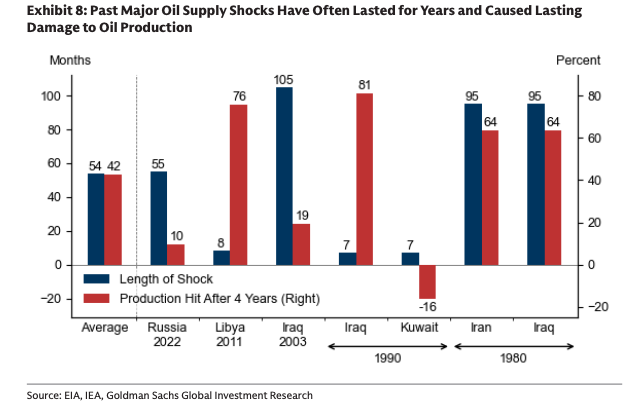
However, historical data from the EIA and IEA show that major oil supply shocks have often lasted for years, leaving lasting damage to production capacity. More specifically, the crisis remains in refining and diesel.
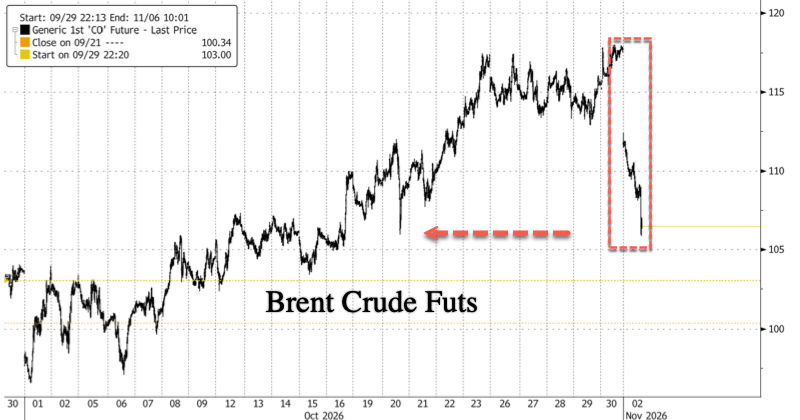
Struyven's report was published one day before Monday morning's diplomatic headlines sent Brent crude futures tumbling to around $106 a barrel and WTI to roughly $97.
Read our coverage from earlier this morning here.
Professional subscribers can read more at our new Marketdesk.ai portal.
Tyler Durden Mon, 11/02/2026 - 11:45
Continue reading...
[ H/T ZeroHedge ]
On Sunday, Goldman Sachs' head of oil research, Daan Struyven, raised his crude oil price forecasts, warning that the threat of renewed supply disruptions will keep a higher geopolitical risk premium in crude prices even as Gulf area production recovers.
Struyven lifted his December Brent forecast to $105 a barrel from $90 and its West Texas Intermediate estimate to $94 from $81. For 2027, he expects Brent to average around $88 (up from $80) and WTI around $78 (up from $73).
Struyven provides one major reason for the upgrade:
A larger risk premium. We now expect markets to price in a higher risk premium, reflecting downside risks to Mideast supply, the length of past major oil supply shocks, and many market participants' view that a lasting diplomatic breakthrough will be difficult.
Here are Struyven's upside and downside oil price risks:
The chart below shows Struyven's view that the risk premium will remain high for the coming months, then will moderate in the back half of next year.
"Although Mideast output continues to recover as we had expected, we are raising our crude oil price forecasts for two related reasons: substantial downside supply risks are likely to sustain a large near-term risk premium, while our new global supply disruption allowance captures elevated high disruption risk and reduces our global oil output forecast over the medium term," the energy expert said.
One of the more notable charts in Struyven's slide deck shows that global visible oil inventories held steady through September and October, suggesting supply and demand remained balanced despite a record number of tanker attacks in the Strait of Hormuz last month.
He also highlighted that estimated Gulf crude exports, including shipments carried by dark tanker fleets, had recovered to at or above their 2025 averages (pre-war) in recent weeks.
However, historical data from the EIA and IEA show that major oil supply shocks have often lasted for years, leaving lasting damage to production capacity. More specifically, the crisis remains in refining and diesel.
Struyven's report was published one day before Monday morning's diplomatic headlines sent Brent crude futures tumbling to around $106 a barrel and WTI to roughly $97.
Read our coverage from earlier this morning here.
Professional subscribers can read more at our new Marketdesk.ai portal.
Tyler Durden Mon, 11/02/2026 - 11:45
Continue reading...
[ H/T ZeroHedge ]