


In every 10th-grade English class, my teacher would greet us with, “Hello, comrades.” At the time, I laughed. We were studying George Orwell’s Animal Farm, after all. But there is something absurd about being taught a warning against totalitarianism while being greeted like a communist revolutionary. Now, watching young people take to the streets of Paris under the banners of revolution, I find myself wondering whether the joke was ever entirely a joke. What happens when an education system stops treating revolution as something to be understood and starts treating it as something to be admired? France may be discovering the answer on its own streets.
It should be no shock that this “student-led movement” mirrored a Bolshevik-type revolution. On Oct. 8, the hard-left leader of La France Insoumise, Jean-Luc Melenchon, posted on X that the Bastille had been “retaken,” a reference to the storming that began the French Revolution. In the same post, he called it a “powerful demonstration by the youth who carry their demands in the most beautiful way possible,” stating that he had “Immense pride.”
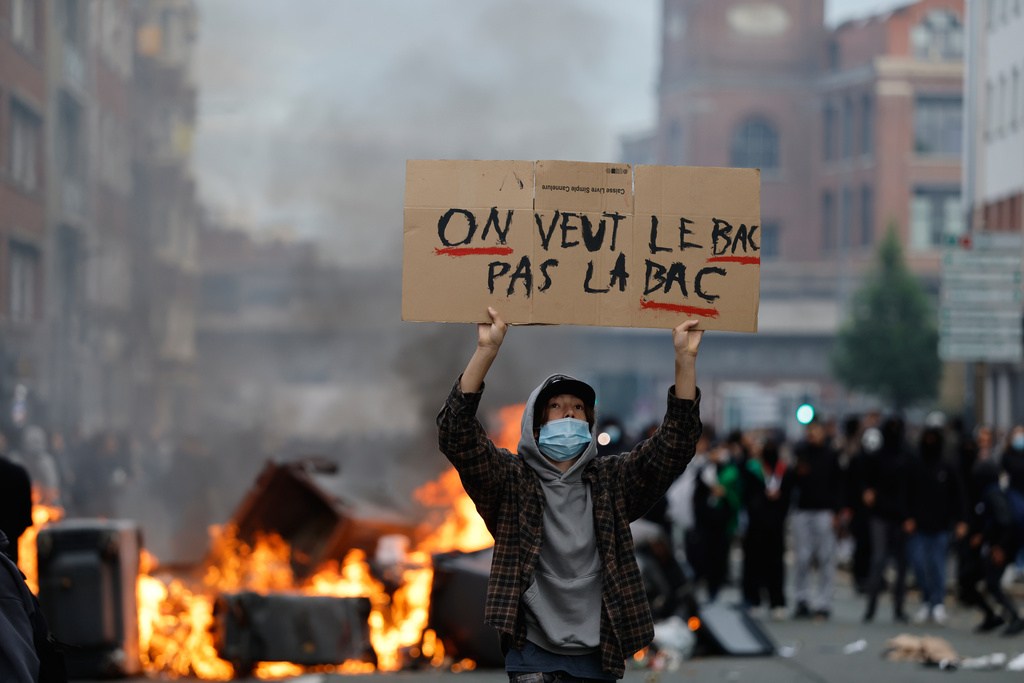
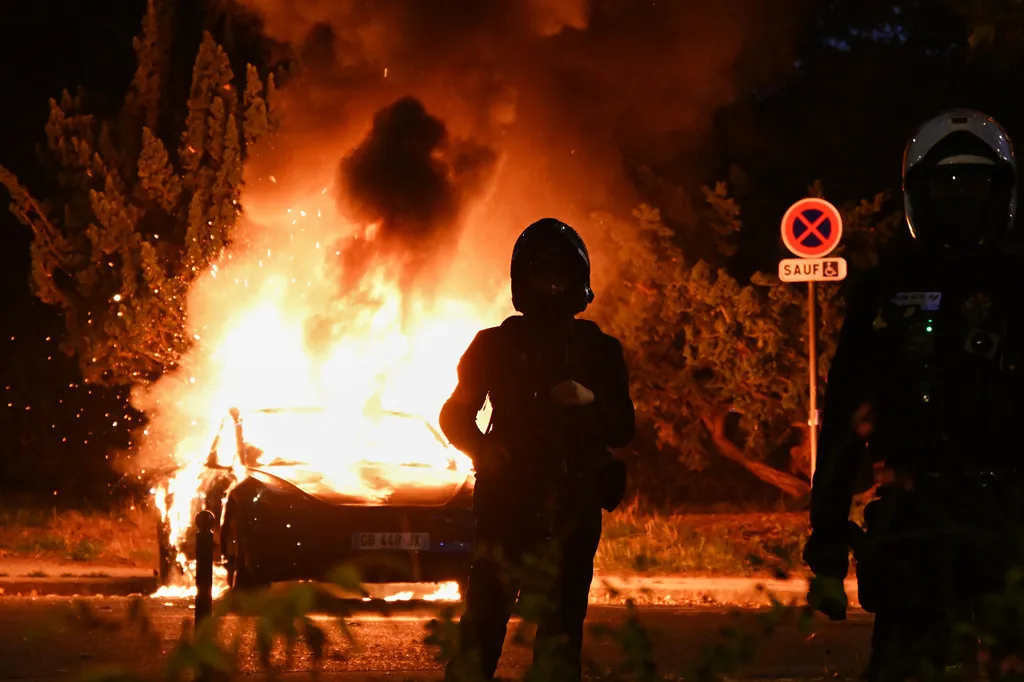
Call them protests if you like, though riots seem the better term. They have so far cost upwards of $1 billion and resulted in the arrests of 7,000 people, 86% of them minors. Not only that, Bally Bagayoko, a Muslim communist mayor and LFI member of Saint-Denis, famously pictured standing in front of the protests with his arms out, said “violence at some point can be legitimate.”
Looking back at my own classroom experience, the greeting seems much less of a joke. When I showed another English teacher my work for a different course, unrelated to Animal Farm, and joked that I sounded “like a Marxist,” her response was: “What’s wrong with that?” Even in college, many students make it clear they want to mirror a “Russian revolution.” And in France, it is no wonder that revolt looks necessary, given what high schoolers are taught in an elective called Sciences Économiques et Sociales (SES). The state program requires teachers to present the “theories of class and social stratification within the sociological tradition (Marx, Weber).”
The Ministry of Education also requires students to examine whether class analysis still explains modern French society, comparing Karl Marx and Max Weber. Every major textbook publisher, including Hatier, Bordas and Nathan, covers the subject, which also features in the national baccalauréat exam. And these ideas haven’t stayed in the classroom: teachers unions have joined students on the streets, echoing the same rhetoric of class struggle that the students are.
If this is what students are taught, are their stated grievances the full story? The French “protests” seem to be less about the issues they claim to care about: the cost of living and education funding. The unrest has spread to Italy, Belgium, Albania, and Greece, all centered on underfunded schools and cost-of-living measures. But we shouldn’t be so naïve as to think revolutions happen overnight. Mao’s didn’t.
But at the end of the day, this is about education, right? Well, property damage is a strange way to demand better school funding. But the flags tell a different story: This is about more than education. Rather than patriotic symbols, protesters displayed the communist hammer and sickle alongside the Palestinian flag. Banners read “Guerre de classe!” (“Class War!”) beneath a bright yellow hammer and sickle, and “Pour un soulèvement antifasciste” (“For an antifascist uprising”). Even symbols associated with far-left movements such as antifa were on display. Nobody seeking school funding needs to wave a hammer and sickle or foreign political flags.
Not every student who goes through the education system is a communist, and I am a living example. Nor is it untrue that education funding was pulled as France’s national debt grew. But it doesn’t take every student for a revolution to succeed, even one that involves destroying streets and historic buildings. If you teach revolution as a normal concept, even a small percentage filling the streets is enough, because the others won’t fight back. They may also vote for the hard-left party La France Insoumise, with Melenchon currently polling as high as 47% among 18- to 24-year-olds for next year’s presidential election.
THE GRASS IS ALWAYS GREENER… UNTIL YOU REALIZE IT’S BURNING
The same pattern is not isolated to Europe. It has also appeared in New York, where between 75% and 78% of voters aged 18 to 29 backed Zohran Mamdani. This is, in a way, a reflection of what happened in France, with Bally Bagayoko winning the mayoralty in the first round with 50.77% of the vote. This goes beyond their similarities as Muslim, communist mayors, to the fact that they both champion the same movement of pro-Palestinian activists and communist revolutionaries. This movement is spreading across America, and Paris is showing exactly how it goes down.
On Oct. 8, Melenchon was celebrating the “Bastille retaken.” By Oct. 18, things had gone beyond protests into full violence. The irony is that the students want the revolution, and they were taught to want it, but revolt means acting without responsibility. Once the protests turned violent and students were hurt, including a teenager who lost his hand to a police stun grenade, those who had cheered the revolt did not want to take responsibility and instead fell back on blaming the police and the government.
William Nye is a Brisbane-based Australian university student and writer.
Continue reading...
[ H/T Washington Examiner ]