





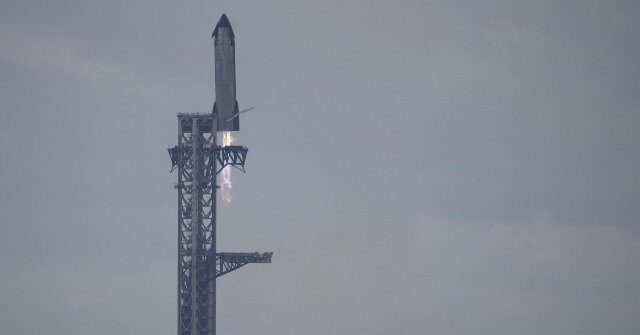

In Ayn Rand’s Atlas Shrugged, Hank Rearden develops a revolutionary alloy that threatens established industries and provokes government interference. Rearden Metal represents more than a technological breakthrough. Its extraordinary utility challenges existing economic arrangements and exposes the tension between technological innovation and political authority.
In 1989, FASA Corp. introduced another fictional vision of the relationship between corporations and governments. Shadowrun, a tabletop role-playing game set in a dystopian future, imagines a world where mega corporations have grown powerful enough to challenge national sovereignty. Governments still pass laws, collect taxes, and maintain courts, but corporations increasingly control the infrastructure upon which modern civilization depends. Some even possess extraterritorial rights, placing portions of their operations beyond ordinary national jurisdiction.
For decades, Shadowrun read like stylized cyberpunk fiction. Look at northern Finland today, and it almost reads like a strategic briefing.
Consider Alphabet’s announced $14.4 billion investment in Finnish AI and digital infrastructure, planned for 2027 and 2028. Building on Google’s existing data center in Hamina, the expansion encompasses northern and eastern municipalities including Muhos, Vaala, and Kajaani-Otanmäki.
The economic implications are substantial for a nation of approximately 5.6 million people. According to projections released by Google, the construction phase could contribute $3.9 billion annually to Finland’s GDP and support more than 37,000 jobs nationwide during 2027–2028. Once operational, Google projects that the facilities will support approximately 7,000 jobs annually, including direct employment, suppliers, and jobs supported throughout the broader economy.
The development also includes long-term nuclear and wind power agreements, notably a 22-year arrangement with Finnish utility Fortum supporting the extension of its Loviisa nuclear power plant through 2050. Such commitments increasingly connect corporate computing capacity with the nation’s electricity infrastructure.
Yet this fall, the expansion collided with Finnish environmental law. Google’s Finnish subsidiary, Tuike Finland, cleared approximately 815 acres of forest in Muhos and nearly 494 acres in Kajaani before the completion of required environmental impact assessments. The Finnish Supervisory Agency subsequently ordered environmentally significant preparatory work suspended at both sites. Police in Oulu opened a criminal investigation into suspected environmental damage at Muhos. Google has apologized for the situation while maintaining that it believed its activities complied with Finnish law. The investigation has not established criminal wrongdoing.
Under Chapter 9 of Finland’s Criminal Code, the ordinary maximum corporate criminal fine is about $937,000 for offenses to which corporate criminal liability applies. Against an announced $14.3 billion investment, that maximum represents approximately six-thousandths of 1% — the corporate equivalent of loose change. Remediation costs, construction delays, and other penalties could be considerably greater. Nevertheless, the disparity illustrates the difficulty of regulating investments of extraordinary magnitude.
The result is an uncomfortable paradox. Finnish regulators are obligated to enforce environmental protections, while the government has compelling economic reasons to preserve the investment. Thousands of anticipated jobs, billions in projected economic activity, future tax revenues, and long-term energy partnerships create substantial incentives for a government seeking growth. Neither side needs to conspire with the other. The incentives themselves create a tension. When the scale of private investment dwarfs the financial penalties available to public authorities, the distinction between corporate compliance and corporate calculation becomes increasingly difficult to ignore.
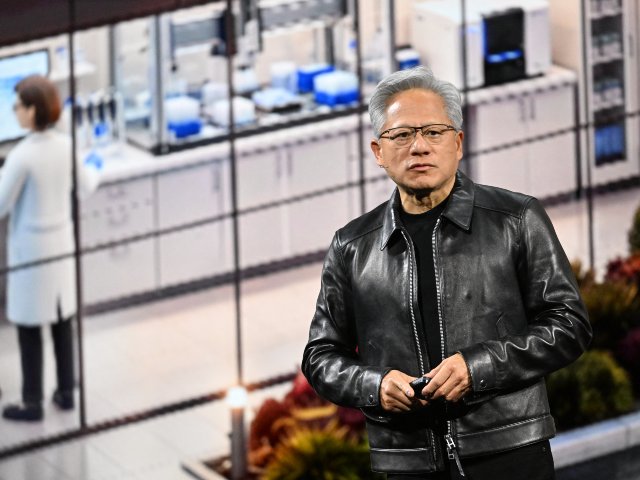
And therein lies the modern Shadowrun dynamic. Governments retain their laws, regulators retain their authority, and corporations remain formally accountable. Yet the practical balance of power becomes more complicated when the economic ambitions of a sovereign state become intertwined with those of a multinational corporation. There are multiple intelligence opportunities that are likely to be generated. Just look at Nvidia and Jensen Huang as an example.
But Finland’s dilemma does not end at its regulatory borders. Finland shares approximately 830 miles of frontier with Russia, a country that has repeatedly characterized NATO’s expansion as a threat to its security. Finland’s accession to NATO in 2023 transformed that frontier into one of the alliance’s most consequential geopolitical boundaries. Finland’s geography compounds the issue. Although the country is long from north to south, its east-west dimensions are comparatively narrow across substantial portions of its territory. Major infrastructure projects, even those constructed for entirely commercial purposes, can therefore occupy locations of potential strategic interest to a neighboring military power.
Against this backdrop, the construction of $14.3 billion in American-owned computing and supporting energy infrastructure presents Moscow with an opportunity. The Kremlin need not establish that Google’s facilities serve a military purpose. It needs only to suggest that they could. Hyperscale data centers can possess dual-use capabilities, with computational resources potentially applicable to intelligence processing, military planning, and allied defense networks. Their American ownership and location within a NATO frontier state could therefore provide material for a Russian narrative of Western strategic encroachment, regardless of whether the facilities ever perform military functions.
Americans should recognize the underlying argument. For years, politicians in Washington have expressed concern about Chinese companies acquiring property near American military installations. The proposed Fufeng Group corn-processing facility near Grand Forks Air Force Base in North Dakota became a prominent example. Although ostensibly an agricultural investment, its location approximately 12 miles from a sensitive military installation prompted national security objections, including concerns raised by the U.S. Air Force. The logic is straightforward: a commercial enterprise need not be a military installation to attract strategic scrutiny. Its ownership, proximity to sensitive facilities, and potential future uses can be sufficient to raise national security concerns.
The situations are not identical. Google is an American company investing in a NATO ally, while American concerns about Chinese land purchases arise from competition with a potential adversary. Nevertheless, governments do not always evaluate foreign-controlled infrastructure solely according to its stated commercial purpose. If American officials can regard a Chinese-owned corn-processing facility near an Air Force base as a potential security concern, it is not difficult to imagine Russian officials applying similar reasoning — or exploiting the appearance of such reasoning — to American-owned computing infrastructure in Finland.
This is not to suggest that Google’s Finnish facilities are military installations or that their construction will constitute a genuine provocation. Rather, Russia could exploit the investment through political messaging, intelligence activities, or other forms of pressure without establishing any military role for the facilities themselves.
Nor is Russia’s military posture along Finland’s frontier static. Moscow has reconstituted its Leningrad Military District and begun expanding military infrastructure in Karelia and the Kola region. New and renovated garrisons are intended to accommodate additional forces, although much of Russia’s available ground combat strength remains committed to Ukraine. Finnish military assessments anticipate substantial reinforcement of the Russian forces facing Finland as resources become available.
The outcome of the war in Ukraine may therefore shape the likelihood of future Russian aggression toward Finland. A prolonged stalemate could keep Russian forces committed to Ukraine, limiting Moscow’s ability to reinforce its northern frontier. Even a costly Russian victory, however, might increase the likelihood of overt or covert aggression by emboldening Moscow and eventually permitting the redeployment of military resources. Severe losses could constrain conventional operations without eliminating opportunities for cyberattacks, sabotage, or political intimidation. For Finland, the end of the fighting in Ukraine would not necessarily mean the end of the danger.
Commercial computing infrastructure becoming a strategic target is no longer entirely hypothetical. In March, Iranian drone attacks reportedly damaged Amazon Web Services data centers in the Middle East. An August Brookings Institution analysis cited those attacks in examining the national security risks of overseas AI infrastructure. Although Finland is not the Middle East, the precedent demonstrates how civilian computing facilities can become vulnerable during military conflict.
The very investment that makes Finland economically stronger could also create infrastructure whose strategic significance extends beyond Finland’s control. As Google’s investment becomes integrated into Finnish employment, electricity generation, and regional development, the economic consequences of any disruption may become increasingly significant. Infrastructure welcomed for its commercial benefits can become a political target, an intelligence objective, or potentially a strategic target precisely because those benefits make it valuable to the host country.
This is not necessarily a conflict between economic prosperity and national security. The investment may strengthen both. But it illustrates how private commercial decisions can create strategic consequences that extend beyond the intentions of the corporation or the government that welcomes it.
The relationship is one of mutual dependence. Finland benefits from investment and industrial growth; Google gains reliable electricity, political stability, and access to European markets. But mutual dependence does not guarantee equal bargaining power or protection from geopolitical consequences.
Finland therefore confronts two very different calculations. Economically, the investment offers substantial benefits. Geopolitically, it introduces additional American-controlled infrastructure into a country already occupying a sensitive position along Russia’s frontier. What appears to Helsinki as economic development could be presented in Moscow as strategic expansion.
In Atlas Shrugged, Rearden Metal challenged established economic and political arrangements through the sheer utility of technological innovation. In Shadowrun, mega corporations acquired powers traditionally associated with sovereign governments. In contemporary Finland, we may be witnessing a synthesis of these two fictional worlds. Governments seek the economic benefits of transformative technologies while confronting the growing difficulty of regulating the corporations that provide them. Meanwhile, infrastructure constructed for commercial purposes acquires potential strategic significance simply because of its ownership, location, scale, and technological capabilities.
THE REPUBLICANS TAKE THE COURT AS THE WASHINGTON GENERALS
The pressures arise naturally from the convergence of enormous private investment, national economic ambition, and an increasingly uncertain geopolitical environment. Russia need not interfere with the construction of a single data center to exploit its existence for political advantage or intelligence opportunities.
Russia is watching every acre cleared to build it like a big juicy mutton chop.
Andrew Moore is a small-business owner and author of the Primus Aeternus series.
Continue reading...
[ H/T Washington Examiner ]