






Guest Post by Milan Adams

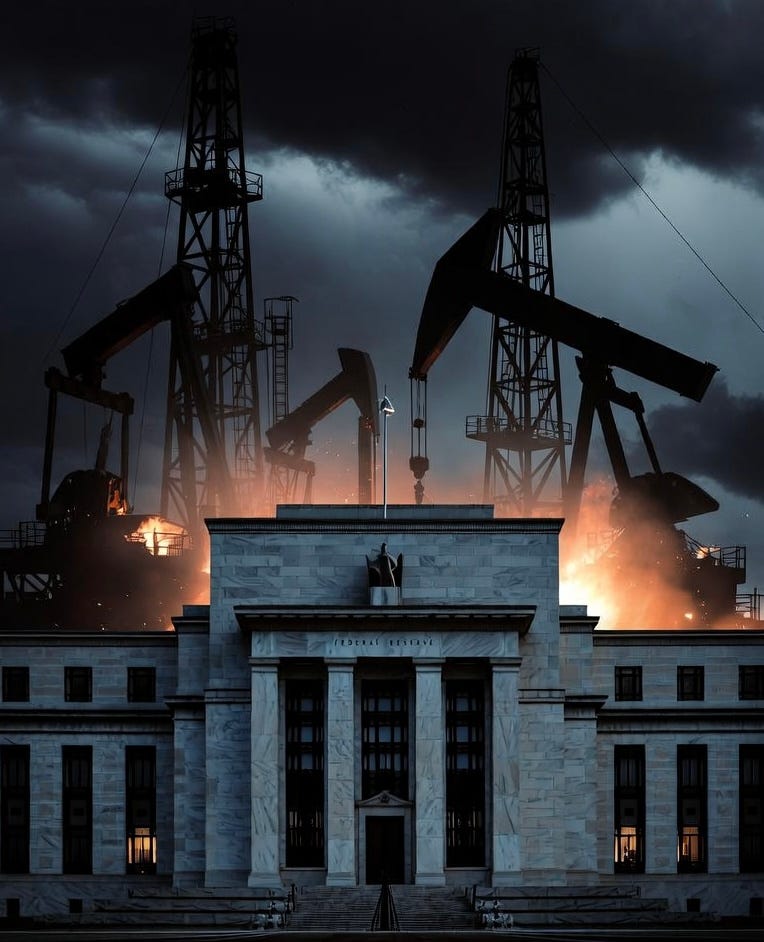
You probably didn’t notice the moment the global financial system started burning. It wasn’t on the evening news. No anchors broke into regular programming. There was no explosion you could see from space, no mushroom cloud, no immediate body count. But make no mistake: in the trading floors of Tokyo, London, and New York, something detonated in August 2024 that had strategists using words they usually reserve for actual warfare.
They called it the “Yen Carry Trade Unwind.” What they meant was that trillions of dollars in borrowed money—money that had been propping up asset prices from Sydney to San Francisco—suddenly had to be paid back. Immediately. At any cost. And when everyone tries to sell everything at once to cover the same debt, markets don’t just correct. They implode.
The Beautiful Lie That Funded Everything
The carry trade itself sounds almost elegant in its simplicity, which is probably why it fooled so many supposedly smart people for so long. Here’s how it worked: Japan spent decades with interest rates hovering near zero, sometimes below zero, because their economy couldn’t generate inflation no matter how much money they printed. Meanwhile, the United States, Australia, Brazil, and other countries offered actual returns—4%, 5%, sometimes 10% on bonds or deposits. So global investors did what any rational actor would do. They borrowed yen—essentially for free—and converted those yen into dollars, reals, or Australian dollars to capture the spread.
Trillions upon trillions of yen flowed out of Japan, seeking yield elsewhere. Hedge funds ran this trade with 50-to-1 leverage. Pension funds, desperate for returns to meet obligations to retirees, piled in. Even ordinary investors, through complex derivatives they didn’t understand, found themselves effectively short the yen and long everything else. The yen became the world’s ATM, dispensing cheap credit that found its way into tech stocks, emerging market debt, real estate, crypto—basically every asset bubble you’ve heard about since 2020.
And it worked. Beautifully. For years. As long as the yen stayed weak or stable, as long as Japanese interest rates remained anchored near zero, the trade just printed money. It became so ubiquitous that people stopped seeing it as a trade at all. It became background radiation, the assumed state of financial markets. You borrowed yen. You bought assets. Prices went up. You got rich. Rinse, repeat.
By 2024, estimates suggested the total yen carry trade exposure had reached $20 trillion. Not billion. Trillion. That’s larger than the entire annual economic output of the United States. And because leverage multiplies like bacteria in a petri dish, the actual market exposure—when you count derivatives, swaps, and structured products—might have been three to five times that amount. The global financial system had become a leveraged bet on the yen staying weak forever.
The Moment Everything Changed
In July 2024, facing inflation they hadn’t seen in three decades and a currency collapsing toward 160 yen per dollar, the BOJ raised interest rates. Just a quarter point, from negative territory to 0.25%. The market barely reacted. Everyone assumed this was symbolic, a one-off gesture to appease domestic critics, nothing that would actually change the calculus of the carry trade.
Governor Kazuo Ueda didn’t just hike again. He signaled that the era of zero rates was definitively over. The yen, which had been treated like financial toilet paper for twenty years, suddenly became valuable. It started strengthening violently—150 to the dollar, then 145, then 140. Each tick higher meant billions in losses for carry trade participants who had borrowed in yen and invested elsewhere. Because here’s what the elegant models didn’t account for: when you borrow 50 times your capital, a 2% move in the wrong direction wipes out your entire position. Margin calls start hitting. You have to sell whatever you own—stocks, bonds, crypto, real estate—to buy yen and pay back your loans. But everyone is selling simultaneously. Liquidity evaporates. Prices gap down. More margin calls trigger. The death spiral accelerates.
By August 5, 2024, the Nikkei 225 had crashed 12% in a single session—the worst drop since 1987’s Black Monday. But this wasn’t just Japan. Because the carry trade wasn’t just Japanese money. It was global leverage disguised as Japanese funding. Australian banks, which had relied on yen borrowing to fund their mortgage lending, saw their funding costs explode. Brazilian real estate developers, who had borrowed yen to build apartment towers in São Paulo, faced immediate insolvency as their debts ballooned in local currency terms. American tech stocks, which had been buoyed by cheap margin debt denominated in yen, cratered as that margin got called.
The VIX—the so-called “fear index”—spiked to levels not seen since COVID. But this wasn’t a virus. This was a financial virus, spreading through interconnected leverage faster than any disease. Credit default swaps on Japanese banks widened dramatically. The yen, paradoxically, strengthened even as Japan’s equity market collapsed, because everyone needed to buy yen to unwind their positions. The currency that had been the funding mechanism for global speculation became a black hole, sucking liquidity out of every market it touched.
Central banks, which had spent sixteen years since 2008 learning to coordinate their responses to crises, found themselves paralyzed. The Federal Reserve couldn’t cut rates to ease the pressure because American inflation was still running hot. The European Central Bank was caught between German demands for austerity and Italian needs for support. The Bank of Japan, having finally started normalizing, couldn’t reverse course without destroying their credibility and sending the yen into freefall the other direction. There was no cavalry coming.
The Human Cost of Mathematical Destruction
Hedge funds that had been up 20% year-to-date through June found themselves down 40% by August. Not because they had made bad stock picks. Because they had made one massive macro bet—that Japan would never normalize rates—and that bet had gone catastrophically wrong. The unwind was so violent because the trade had become so crowded. When everyone is on the same side of a boat, and that boat starts tipping, there’s no orderly exit. There’s just panic.
But the damage wasn’t confined to trading floors. By September 2024, the ripple effects were hitting ordinary people who had never heard of a carry trade. Australian homeowners, who had seen their mortgages tied to funding costs that suddenly spiked, faced payments jumping 30% or more. Some found themselves underwater—owing more than their homes were worth—as property values corrected in Sydney and Melbourne. The Australian banking system, which had quietly become one of the most exposed to yen funding, faced a crisis of confidence that required central bank intervention to prevent bank runs.
In Southeast Asia, the picture was worse. Indonesian developers who had borrowed yen to build shopping malls in Jakarta found their debts had doubled in rupiah terms within weeks. Construction stopped mid-project. Workers were laid off by the thousands. The malls that were supposed to house luxury brands stood half-finished, concrete skeletons baking in the tropical sun, monuments to a leverage trade that had gone wrong. The Indonesian rupiah collapsed to levels not seen since the 1997 Asian Financial Crisis, forcing the central bank to raise rates aggressively, crushing domestic demand even as unemployment spiked.
The real estate implications kept emerging. Property markets in Canada and New Zealand—countries that had seen housing bubbles inflated by foreign capital, much of it yen-denominated—suddenly lost their marginal buyers. Developers who had pre-sold apartments based on assumed continued cheap financing found they couldn’t complete projects. Construction halted. Banks that had lent against inflated valuations faced loan-to-value ratios that had flipped upside down. The 2008 playbook, which everyone thought they had learned from, replayed itself with a Japanese accent.
Emerging markets got hit even harder. Malaysia, Thailand, Vietnam—countries that had borrowed heavily in yen to fund infrastructure projects—saw their debt servicing costs explode in local currency terms. The Asian Financial Crisis of 1997 had been triggered by similar dynamics, but this time the scale was larger and the interconnection deeper. Japanese banks, which had been major lenders to Asian corporates, suddenly found their own funding costs rising and started pulling credit lines. Contagion spread through channels that regulators didn’t even know existed, buried in derivatives contracts and swap agreements that had never been stress-tested for yen appreciation.

By October 2024, the IMF was holding emergency meetings. Not the usual quarterly gatherings where bureaucrats read prepared statements. Emergency sessions, convened at 3 AM Washington time, where the discussion wasn’t about preventing crisis but about containing damage that was already spreading. The yen carry trade unwind had become what derivatives traders call a “gamma squeeze”—a feedback loop where each price move forced more trading that pushed prices further, creating moves that shouldn’t have been possible in efficient markets.
When Algorithms Became Executioners
The crypto markets, which had partially recovered from 2022’s FTX collapse, got obliterated. Bitcoin, which had been touted as a hedge against fiat currency debasement, proved to be exactly correlated with risk assets when actual deleveraging occurred. It dropped from $70,000 to $40,000 in weeks. Ethereum, Solana, the entire ecosystem of digital assets that had been funded by cheap leverage—including yen-denominated leverage—saw liquidations cascade through automated protocols that sold into already illiquid markets. Decentralized finance, which had promised to eliminate traditional banking risks, recreated them in algorithmic form with no humans to slow the panic.
What made this different from 2008 was the speed. In 2008, the crisis built over months—Bear Stearns in March, Lehman in September, the gradual recognition that mortgage-backed securities were toxic. The yen carry trade unwind happened in days. Modern market structure—algorithmic trading, passive fund flows, retail trading apps—meant that selling pressure transmitted instantly and amplified itself. Circuit breakers tripped on exchanges worldwide. Trading halts, meant to calm markets, instead created uncertainty that worsened the panic when reopening occurred.
Japanese pension funds, which had been pushed by their government to invest overseas to generate returns in a low-yield domestic environment, found their hedging strategies had failed. They had bought foreign assets but hedged the currency risk—meaning they were effectively short yen. When yen strengthened, those hedges became massive liabilities. Some funds faced losses exceeding their annual contributions from active workers. The demographic time bomb of Japan’s aging population, which had been manageable in a zero-rate environment, became immediately explosive when rates rose and asset values fell simultaneously.
The yen itself became impossible to trade at certain moments. Liquidity—the ability to buy or sell without moving the price—evaporated. What had been the third-most-traded currency in the world, the funding currency for the global financial system, became a one-way bet where you could buy but not sell, or sell but not buy, depending on which direction the unwind was pushing that hour. Central banks had to step in with swap lines—agreements to provide dollars for yen and vice versa—just to keep the plumbing from seizing entirely.
By November 2024, the damage was being tallied. Not in the way 2008 was tallied—bankruptcies, foreclosures, unemployment lines—but in a more insidious fashion. Companies that had survived the initial shock found their cost of capital permanently higher. The era of cheap money, which had allowed zombie companies to stay alive and speculative projects to get funded, was definitively over. A great repricing was underway, where assets were being marked down to levels that reflected actual risk rather than the risk-free rate of yen borrowing.
The psychological damage, if anything, exceeded the financial. A generation of traders and investors had never seen a carry trade unwind. They had been taught that central banks would always step in, that currencies don’t move 20% in weeks, that leverage was safe if you diversified. They learned, violently, that correlation goes to one in crisis—that everything falls together when the funding currency gets repaid. The belief in central bank omnipotence, carefully cultivated since 2008, cracked. If the BOJ could surprise this badly, what about the Fed? What about the ECB?
The Winter That Followed the Blast
Looking forward, the landscape appears permanently altered. Projections for 2025-2026 suggest that the yen carry trade unwind has initiated a structural shift in global liquidity that will constrain asset prices for years. Analysts at major investment banks—who privately acknowledge they missed the magnitude of the unwind—now forecast that global leverage ratios will remain depressed as regulators and risk managers finally recognize the dangers of funding mismatches. The “Great Moderation” of low volatility, which had persisted since the 1990s except for brief interruptions, has ended. Welcome to the Great Instability.
Japanese economic prospects, already dim due to demographic decline, have darkened further. Projections suggest the BOJ will be forced to reverse course and cut rates again by mid-2025, not because they want to, but because the economic damage from the rapid yen appreciation has become too severe to ignore. But this time, rate cuts won’t restore the carry trade. Too much trust has been broken. The leverage that funded global asset bubbles has evaporated, and it won’t return at the same scale. Japan faces the worst of both worlds: a strong yen that hurts exports, and a collapsing stock market that destroys domestic wealth.
For the global financial system, the implications are profound. The yen had been the “funding currency of last resort”—the place where money could always be borrowed cheaply when other sources dried up. That function is gone. In its absence, liquidity crises that would have been smoothed over by yen borrowing will now bite harder and faster. The next crisis—whether it starts in American commercial real estate, European sovereign debt, or Chinese property—will find a financial system without its shock absorber.
Some analysts are now warning that the 2024 yen carry trade unwind was merely the first domino. They point to the $600 trillion in derivatives outstanding globally, much of it predicated on interest rate and currency assumptions that have now been proven false. They note that pension funds, having lost trillions in the unwind, will be forced to sell assets into weak markets to meet obligations, creating a supply overhang that could depress prices for years. They observe that the “everything bubble” of the 2010s and early 2020s required cheap yen among other cheap monies, and that with that funding source removed, the bubble cannot be re-inflated.
The yen carry trade blow-up wasn’t just a market event. It was a demonstration that the entire architecture of global finance—built on cheap dollars, cheaper yen, and the assumption that rates would never normalize—was fragile in ways that stress tests hadn’t captured. It showed how leverage, when multiplied through derivatives and shadow banking, could turn a 0.25% rate hike into trillions of dollars of destruction. It revealed that the “search for yield” had created a minefield where stepping on any single mine could trigger a chain reaction.
And it proved, definitively, that nuclear war doesn’t require missiles. Sometimes it just requires a central bank governor to finally do what everyone said was impossible, and markets that had bet their existence on the opposite.
The fallout is still settling. The yen stabilized eventually, but at levels that made Japanese exports uncompetitive and imports crushingly expensive. The carry trade tried to re-establish itself, but never at the same scale—too many scars, too much memory of how quickly it could all go wrong. Global liquidity, that ether that had floated asset prices for years, remained tighter. The everything bubble, which had been inflated by borrowed yen among other things, found its pin.
They called it the financial equivalent of nuclear war because there was no target, no enemy, no one to negotiate with or surrender to. Just blast radius spreading through interconnected systems, indiscriminately destroying wealth that had been considered safe, exposing the fragility of assumptions that had been considered fundamental. And like nuclear war, the real question wasn’t whether you could survive the initial blast, but whether you could survive what came after—the winter, the fallout, the world changed irrevocably.
The yen carry trade was supposed to be free money. It turned out to be the most expensive lesson in financial history.
Tweet
Continue reading...
[ H/T The Burning Platform ]
You probably didn’t notice the moment the global financial system started burning. It wasn’t on the evening news. No anchors broke into regular programming. There was no explosion you could see from space, no mushroom cloud, no immediate body count. But make no mistake: in the trading floors of Tokyo, London, and New York, something detonated in August 2024 that had strategists using words they usually reserve for actual warfare.
They called it the “Yen Carry Trade Unwind.” What they meant was that trillions of dollars in borrowed money—money that had been propping up asset prices from Sydney to San Francisco—suddenly had to be paid back. Immediately. At any cost. And when everyone tries to sell everything at once to cover the same debt, markets don’t just correct. They implode.
The Beautiful Lie That Funded Everything
The carry trade itself sounds almost elegant in its simplicity, which is probably why it fooled so many supposedly smart people for so long. Here’s how it worked: Japan spent decades with interest rates hovering near zero, sometimes below zero, because their economy couldn’t generate inflation no matter how much money they printed. Meanwhile, the United States, Australia, Brazil, and other countries offered actual returns—4%, 5%, sometimes 10% on bonds or deposits. So global investors did what any rational actor would do. They borrowed yen—essentially for free—and converted those yen into dollars, reals, or Australian dollars to capture the spread.
Trillions upon trillions of yen flowed out of Japan, seeking yield elsewhere. Hedge funds ran this trade with 50-to-1 leverage. Pension funds, desperate for returns to meet obligations to retirees, piled in. Even ordinary investors, through complex derivatives they didn’t understand, found themselves effectively short the yen and long everything else. The yen became the world’s ATM, dispensing cheap credit that found its way into tech stocks, emerging market debt, real estate, crypto—basically every asset bubble you’ve heard about since 2020.
And it worked. Beautifully. For years. As long as the yen stayed weak or stable, as long as Japanese interest rates remained anchored near zero, the trade just printed money. It became so ubiquitous that people stopped seeing it as a trade at all. It became background radiation, the assumed state of financial markets. You borrowed yen. You bought assets. Prices went up. You got rich. Rinse, repeat.
By 2024, estimates suggested the total yen carry trade exposure had reached $20 trillion. Not billion. Trillion. That’s larger than the entire annual economic output of the United States. And because leverage multiplies like bacteria in a petri dish, the actual market exposure—when you count derivatives, swaps, and structured products—might have been three to five times that amount. The global financial system had become a leveraged bet on the yen staying weak forever.
The Moment Everything Changed
In July 2024, facing inflation they hadn’t seen in three decades and a currency collapsing toward 160 yen per dollar, the BOJ raised interest rates. Just a quarter point, from negative territory to 0.25%. The market barely reacted. Everyone assumed this was symbolic, a one-off gesture to appease domestic critics, nothing that would actually change the calculus of the carry trade.
Governor Kazuo Ueda didn’t just hike again. He signaled that the era of zero rates was definitively over. The yen, which had been treated like financial toilet paper for twenty years, suddenly became valuable. It started strengthening violently—150 to the dollar, then 145, then 140. Each tick higher meant billions in losses for carry trade participants who had borrowed in yen and invested elsewhere. Because here’s what the elegant models didn’t account for: when you borrow 50 times your capital, a 2% move in the wrong direction wipes out your entire position. Margin calls start hitting. You have to sell whatever you own—stocks, bonds, crypto, real estate—to buy yen and pay back your loans. But everyone is selling simultaneously. Liquidity evaporates. Prices gap down. More margin calls trigger. The death spiral accelerates.
By August 5, 2024, the Nikkei 225 had crashed 12% in a single session—the worst drop since 1987’s Black Monday. But this wasn’t just Japan. Because the carry trade wasn’t just Japanese money. It was global leverage disguised as Japanese funding. Australian banks, which had relied on yen borrowing to fund their mortgage lending, saw their funding costs explode. Brazilian real estate developers, who had borrowed yen to build apartment towers in São Paulo, faced immediate insolvency as their debts ballooned in local currency terms. American tech stocks, which had been buoyed by cheap margin debt denominated in yen, cratered as that margin got called.
The VIX—the so-called “fear index”—spiked to levels not seen since COVID. But this wasn’t a virus. This was a financial virus, spreading through interconnected leverage faster than any disease. Credit default swaps on Japanese banks widened dramatically. The yen, paradoxically, strengthened even as Japan’s equity market collapsed, because everyone needed to buy yen to unwind their positions. The currency that had been the funding mechanism for global speculation became a black hole, sucking liquidity out of every market it touched.
Central banks, which had spent sixteen years since 2008 learning to coordinate their responses to crises, found themselves paralyzed. The Federal Reserve couldn’t cut rates to ease the pressure because American inflation was still running hot. The European Central Bank was caught between German demands for austerity and Italian needs for support. The Bank of Japan, having finally started normalizing, couldn’t reverse course without destroying their credibility and sending the yen into freefall the other direction. There was no cavalry coming.
The Human Cost of Mathematical Destruction
Hedge funds that had been up 20% year-to-date through June found themselves down 40% by August. Not because they had made bad stock picks. Because they had made one massive macro bet—that Japan would never normalize rates—and that bet had gone catastrophically wrong. The unwind was so violent because the trade had become so crowded. When everyone is on the same side of a boat, and that boat starts tipping, there’s no orderly exit. There’s just panic.
But the damage wasn’t confined to trading floors. By September 2024, the ripple effects were hitting ordinary people who had never heard of a carry trade. Australian homeowners, who had seen their mortgages tied to funding costs that suddenly spiked, faced payments jumping 30% or more. Some found themselves underwater—owing more than their homes were worth—as property values corrected in Sydney and Melbourne. The Australian banking system, which had quietly become one of the most exposed to yen funding, faced a crisis of confidence that required central bank intervention to prevent bank runs.
In Southeast Asia, the picture was worse. Indonesian developers who had borrowed yen to build shopping malls in Jakarta found their debts had doubled in rupiah terms within weeks. Construction stopped mid-project. Workers were laid off by the thousands. The malls that were supposed to house luxury brands stood half-finished, concrete skeletons baking in the tropical sun, monuments to a leverage trade that had gone wrong. The Indonesian rupiah collapsed to levels not seen since the 1997 Asian Financial Crisis, forcing the central bank to raise rates aggressively, crushing domestic demand even as unemployment spiked.
The real estate implications kept emerging. Property markets in Canada and New Zealand—countries that had seen housing bubbles inflated by foreign capital, much of it yen-denominated—suddenly lost their marginal buyers. Developers who had pre-sold apartments based on assumed continued cheap financing found they couldn’t complete projects. Construction halted. Banks that had lent against inflated valuations faced loan-to-value ratios that had flipped upside down. The 2008 playbook, which everyone thought they had learned from, replayed itself with a Japanese accent.
Emerging markets got hit even harder. Malaysia, Thailand, Vietnam—countries that had borrowed heavily in yen to fund infrastructure projects—saw their debt servicing costs explode in local currency terms. The Asian Financial Crisis of 1997 had been triggered by similar dynamics, but this time the scale was larger and the interconnection deeper. Japanese banks, which had been major lenders to Asian corporates, suddenly found their own funding costs rising and started pulling credit lines. Contagion spread through channels that regulators didn’t even know existed, buried in derivatives contracts and swap agreements that had never been stress-tested for yen appreciation.
By October 2024, the IMF was holding emergency meetings. Not the usual quarterly gatherings where bureaucrats read prepared statements. Emergency sessions, convened at 3 AM Washington time, where the discussion wasn’t about preventing crisis but about containing damage that was already spreading. The yen carry trade unwind had become what derivatives traders call a “gamma squeeze”—a feedback loop where each price move forced more trading that pushed prices further, creating moves that shouldn’t have been possible in efficient markets.
When Algorithms Became Executioners
The crypto markets, which had partially recovered from 2022’s FTX collapse, got obliterated. Bitcoin, which had been touted as a hedge against fiat currency debasement, proved to be exactly correlated with risk assets when actual deleveraging occurred. It dropped from $70,000 to $40,000 in weeks. Ethereum, Solana, the entire ecosystem of digital assets that had been funded by cheap leverage—including yen-denominated leverage—saw liquidations cascade through automated protocols that sold into already illiquid markets. Decentralized finance, which had promised to eliminate traditional banking risks, recreated them in algorithmic form with no humans to slow the panic.
What made this different from 2008 was the speed. In 2008, the crisis built over months—Bear Stearns in March, Lehman in September, the gradual recognition that mortgage-backed securities were toxic. The yen carry trade unwind happened in days. Modern market structure—algorithmic trading, passive fund flows, retail trading apps—meant that selling pressure transmitted instantly and amplified itself. Circuit breakers tripped on exchanges worldwide. Trading halts, meant to calm markets, instead created uncertainty that worsened the panic when reopening occurred.
Japanese pension funds, which had been pushed by their government to invest overseas to generate returns in a low-yield domestic environment, found their hedging strategies had failed. They had bought foreign assets but hedged the currency risk—meaning they were effectively short yen. When yen strengthened, those hedges became massive liabilities. Some funds faced losses exceeding their annual contributions from active workers. The demographic time bomb of Japan’s aging population, which had been manageable in a zero-rate environment, became immediately explosive when rates rose and asset values fell simultaneously.
The yen itself became impossible to trade at certain moments. Liquidity—the ability to buy or sell without moving the price—evaporated. What had been the third-most-traded currency in the world, the funding currency for the global financial system, became a one-way bet where you could buy but not sell, or sell but not buy, depending on which direction the unwind was pushing that hour. Central banks had to step in with swap lines—agreements to provide dollars for yen and vice versa—just to keep the plumbing from seizing entirely.
By November 2024, the damage was being tallied. Not in the way 2008 was tallied—bankruptcies, foreclosures, unemployment lines—but in a more insidious fashion. Companies that had survived the initial shock found their cost of capital permanently higher. The era of cheap money, which had allowed zombie companies to stay alive and speculative projects to get funded, was definitively over. A great repricing was underway, where assets were being marked down to levels that reflected actual risk rather than the risk-free rate of yen borrowing.
The psychological damage, if anything, exceeded the financial. A generation of traders and investors had never seen a carry trade unwind. They had been taught that central banks would always step in, that currencies don’t move 20% in weeks, that leverage was safe if you diversified. They learned, violently, that correlation goes to one in crisis—that everything falls together when the funding currency gets repaid. The belief in central bank omnipotence, carefully cultivated since 2008, cracked. If the BOJ could surprise this badly, what about the Fed? What about the ECB?
The Winter That Followed the Blast
Looking forward, the landscape appears permanently altered. Projections for 2025-2026 suggest that the yen carry trade unwind has initiated a structural shift in global liquidity that will constrain asset prices for years. Analysts at major investment banks—who privately acknowledge they missed the magnitude of the unwind—now forecast that global leverage ratios will remain depressed as regulators and risk managers finally recognize the dangers of funding mismatches. The “Great Moderation” of low volatility, which had persisted since the 1990s except for brief interruptions, has ended. Welcome to the Great Instability.
Japanese economic prospects, already dim due to demographic decline, have darkened further. Projections suggest the BOJ will be forced to reverse course and cut rates again by mid-2025, not because they want to, but because the economic damage from the rapid yen appreciation has become too severe to ignore. But this time, rate cuts won’t restore the carry trade. Too much trust has been broken. The leverage that funded global asset bubbles has evaporated, and it won’t return at the same scale. Japan faces the worst of both worlds: a strong yen that hurts exports, and a collapsing stock market that destroys domestic wealth.
For the global financial system, the implications are profound. The yen had been the “funding currency of last resort”—the place where money could always be borrowed cheaply when other sources dried up. That function is gone. In its absence, liquidity crises that would have been smoothed over by yen borrowing will now bite harder and faster. The next crisis—whether it starts in American commercial real estate, European sovereign debt, or Chinese property—will find a financial system without its shock absorber.
Some analysts are now warning that the 2024 yen carry trade unwind was merely the first domino. They point to the $600 trillion in derivatives outstanding globally, much of it predicated on interest rate and currency assumptions that have now been proven false. They note that pension funds, having lost trillions in the unwind, will be forced to sell assets into weak markets to meet obligations, creating a supply overhang that could depress prices for years. They observe that the “everything bubble” of the 2010s and early 2020s required cheap yen among other cheap monies, and that with that funding source removed, the bubble cannot be re-inflated.
The yen carry trade blow-up wasn’t just a market event. It was a demonstration that the entire architecture of global finance—built on cheap dollars, cheaper yen, and the assumption that rates would never normalize—was fragile in ways that stress tests hadn’t captured. It showed how leverage, when multiplied through derivatives and shadow banking, could turn a 0.25% rate hike into trillions of dollars of destruction. It revealed that the “search for yield” had created a minefield where stepping on any single mine could trigger a chain reaction.
And it proved, definitively, that nuclear war doesn’t require missiles. Sometimes it just requires a central bank governor to finally do what everyone said was impossible, and markets that had bet their existence on the opposite.
The fallout is still settling. The yen stabilized eventually, but at levels that made Japanese exports uncompetitive and imports crushingly expensive. The carry trade tried to re-establish itself, but never at the same scale—too many scars, too much memory of how quickly it could all go wrong. Global liquidity, that ether that had floated asset prices for years, remained tighter. The everything bubble, which had been inflated by borrowed yen among other things, found its pin.
They called it the financial equivalent of nuclear war because there was no target, no enemy, no one to negotiate with or surrender to. Just blast radius spreading through interconnected systems, indiscriminately destroying wealth that had been considered safe, exposing the fragility of assumptions that had been considered fundamental. And like nuclear war, the real question wasn’t whether you could survive the initial blast, but whether you could survive what came after—the winter, the fallout, the world changed irrevocably.
The yen carry trade was supposed to be free money. It turned out to be the most expensive lesson in financial history.
Tweet
Continue reading...
[ H/T The Burning Platform ]