










Guest Post by Martin Armstrong
 Morale inside the surveillance company has deteriorated so badly amid the public backlash that employees are considering leaving. Flock has now introduced a voluntary separation program offering severance, subsidized healthcare, and additional time to exercise vested stock options. People familiar with the program believe a significant number of Flock’s roughly 1,500 employees could apply. This is what happens when people finally discover what has been constructed around them.
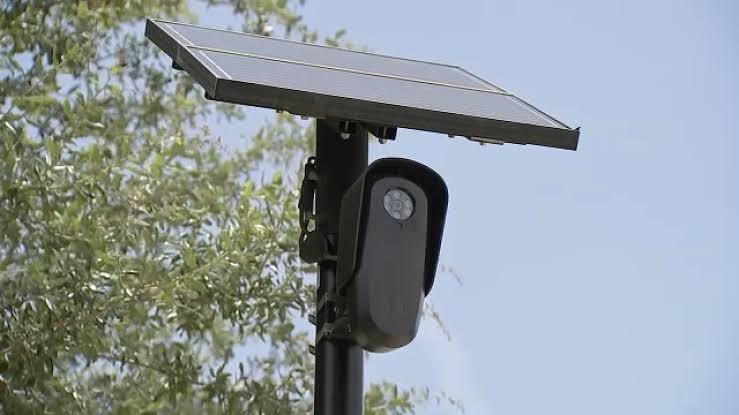
Flock was sold to communities as a crime fighting tool. Put cameras around town, read license plates, find stolen cars, catch criminals. It always begins with something that sounds reasonable. Nobody walks into a city council meeting and announces, “We would like to construct a nationwide surveillance network capable of recording where ordinary citizens travel.” You sell it incrementally under the banner of safety. Then the network expands, databases become interconnected, thousands of agencies gain access, and suddenly technology created to find a stolen automobile can potentially reconstruct the movements of people who have committed no crime whatsoever.
The abuses are precisely why the public has become angry. Neowin recounts cases involving officers allegedly using Flock to track women with whom they had personal relationships. In Georgia, an officer was accused of searching for his former girlfriend and her teenage daughter hundreds of times. In San Jose, an officer was fired after authorities said he used the system to obtain location information involving a woman and shared information with a man accused of abusing her. There have also been reports of innocent motorists being stopped after automated systems incorrectly identified vehicles.
Flock cameras are operating in roughly 6,000 communities across every state except Alaska. Hackers who obtained data from a Flock camera found that the devices could capture far more information than merely a license plate. WIRED reported that the recovered material showed cameras taking numerous images associated with vehicle detections and detecting people as well as automobiles. Data associated with one city’s system could reportedly be accessed across a network involving more than 2,000 agencies. Flock maintains that tampering with its equipment is illegal and says researchers should use authorized security-reporting channels, but the technical revelations illustrate why people are asking how extensive this system really is.
Now the backlash is hitting the company itself. Cities have been terminating contracts. An anti-surveillance group identified 90 cities dropping Flock during August alone, while Florida and Texas have also moved away from using the company’s technology in certain contexts. Flock CEO Garrett Langley has acknowledged that the controversy has damaged internal morale. In August, he publicly apologized for instances in which the technology had been abused and announced additional safeguards.
This is what I have always said about government surveillance. The question is NEVER whether today’s politicians promise to use a technology responsibly. The question is what the NEXT government can do with the infrastructure you surrender to them today. Once the cameras exist, once the databases exist, once your movements can be searched, the political promises surrounding their original purpose become meaningless.
Most people had no idea this infrastructure existed. They did not realize how extensive license plate surveillance had become, how broadly information could potentially be accessed, or how easily technology designed for legitimate police work could allegedly be misused by individual officers. The technology expanded faster than public awareness.
There was a time when following somebody required manpower. The government needed agents, vehicles, warrants, and resources. Those practical limitations themselves provided a degree of protection because governments could not physically monitor everyone. Technology removes that barrier. A computer does not sleep. It does not demand overtime. It can potentially search billions of records in seconds.
This is why privacy cannot be dismissed with that ridiculous argument, “If you have nothing to hide, you have nothing to fear.” That turns the entire principle of a free society upside down. The government is supposed to have probable cause to investigate YOU. You are not supposed to prove your innocence every time you drive down the street.
Flock may survive this controversy. It may change its policies. Governments may impose stronger safeguards. But the larger issue will remain long after this particular company disappears from the headlines. Every government in history has sought more information about its citizens because information is power. AI has now made gathering, analyzing, and connecting that information cheaper than at any point in human history.
We are approaching the point where society must decide whether technology serves the individual or whether the individual becomes merely another data point monitored by technology. That decision will determine what freedom means in the 21st century.
Tweet
Continue reading...
[ H/T The Burning Platform ]
Morale inside the surveillance company has deteriorated so badly amid the public backlash that employees are considering leaving. Flock has now introduced a voluntary separation program offering severance, subsidized healthcare, and additional time to exercise vested stock options. People familiar with the program believe a significant number of Flock’s roughly 1,500 employees could apply. This is what happens when people finally discover what has been constructed around them.Flock was sold to communities as a crime fighting tool. Put cameras around town, read license plates, find stolen cars, catch criminals. It always begins with something that sounds reasonable. Nobody walks into a city council meeting and announces, “We would like to construct a nationwide surveillance network capable of recording where ordinary citizens travel.” You sell it incrementally under the banner of safety. Then the network expands, databases become interconnected, thousands of agencies gain access, and suddenly technology created to find a stolen automobile can potentially reconstruct the movements of people who have committed no crime whatsoever.
The abuses are precisely why the public has become angry. Neowin recounts cases involving officers allegedly using Flock to track women with whom they had personal relationships. In Georgia, an officer was accused of searching for his former girlfriend and her teenage daughter hundreds of times. In San Jose, an officer was fired after authorities said he used the system to obtain location information involving a woman and shared information with a man accused of abusing her. There have also been reports of innocent motorists being stopped after automated systems incorrectly identified vehicles.
Flock cameras are operating in roughly 6,000 communities across every state except Alaska. Hackers who obtained data from a Flock camera found that the devices could capture far more information than merely a license plate. WIRED reported that the recovered material showed cameras taking numerous images associated with vehicle detections and detecting people as well as automobiles. Data associated with one city’s system could reportedly be accessed across a network involving more than 2,000 agencies. Flock maintains that tampering with its equipment is illegal and says researchers should use authorized security-reporting channels, but the technical revelations illustrate why people are asking how extensive this system really is.
Now the backlash is hitting the company itself. Cities have been terminating contracts. An anti-surveillance group identified 90 cities dropping Flock during August alone, while Florida and Texas have also moved away from using the company’s technology in certain contexts. Flock CEO Garrett Langley has acknowledged that the controversy has damaged internal morale. In August, he publicly apologized for instances in which the technology had been abused and announced additional safeguards.
This is what I have always said about government surveillance. The question is NEVER whether today’s politicians promise to use a technology responsibly. The question is what the NEXT government can do with the infrastructure you surrender to them today. Once the cameras exist, once the databases exist, once your movements can be searched, the political promises surrounding their original purpose become meaningless.
Most people had no idea this infrastructure existed. They did not realize how extensive license plate surveillance had become, how broadly information could potentially be accessed, or how easily technology designed for legitimate police work could allegedly be misused by individual officers. The technology expanded faster than public awareness.
There was a time when following somebody required manpower. The government needed agents, vehicles, warrants, and resources. Those practical limitations themselves provided a degree of protection because governments could not physically monitor everyone. Technology removes that barrier. A computer does not sleep. It does not demand overtime. It can potentially search billions of records in seconds.
This is why privacy cannot be dismissed with that ridiculous argument, “If you have nothing to hide, you have nothing to fear.” That turns the entire principle of a free society upside down. The government is supposed to have probable cause to investigate YOU. You are not supposed to prove your innocence every time you drive down the street.
Flock may survive this controversy. It may change its policies. Governments may impose stronger safeguards. But the larger issue will remain long after this particular company disappears from the headlines. Every government in history has sought more information about its citizens because information is power. AI has now made gathering, analyzing, and connecting that information cheaper than at any point in human history.
We are approaching the point where society must decide whether technology serves the individual or whether the individual becomes merely another data point monitored by technology. That decision will determine what freedom means in the 21st century.
Tweet
Continue reading...
[ H/T The Burning Platform ]