


A federal appeals court in the District of Columbia upheld the Pentagon’s effective blacklisting of Anthropic in a 2-1 decision on Friday.
The ruling is the latest moment in the feud between the War Department, which listed Anthropic as a supply chain risk in March, and the artificial intelligence company that runs the Claude platform.
“The Department had ample support for its conclusion that the continued integration of Claude into the Department’s information systems, by the Department or its contractors, presented a statutorily covered national-security risk,” Judge Gregory Katsas wrote in the majority opinion for the U.S. Court of Appeals for the District of Columbia, which Judge Neomi Rao joined.
Katsas and Rao were nominated by President Donald Trump. Judge Karen LeCraft Henderson, who was nominated by former President George H.W. Bush, dissented.
“We respectfully disagree with the court’s decision,” an Anthropic spokesperson told the Washington Examiner. “Another federal court has already held the government’s parallel designation unlawful. We remain confident in our position and are considering all options, including further review.”
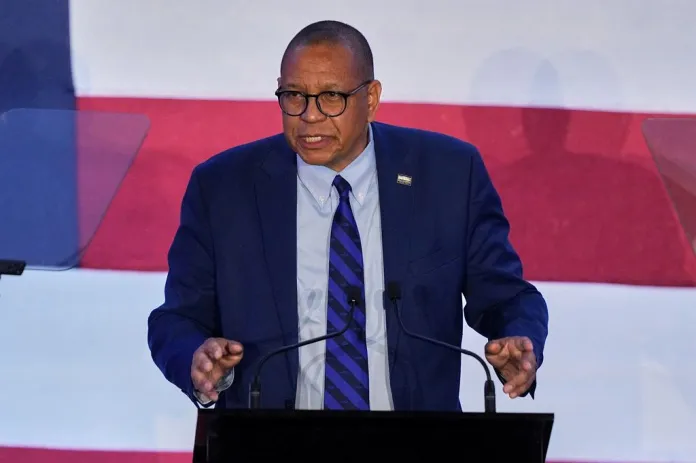
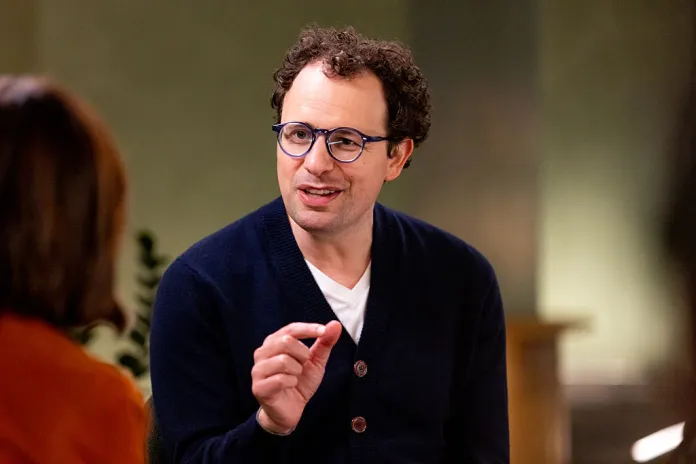
Dario Amodei, co-founder and chief executive officer of Anthropic, during an interview on The Circuit with Emily Chang on Thursday, April 30, 2026, at Anthropic’s headquarters in San Francisco. (Jason Henry/Bloomberg via Getty Images)
" data-large-file="https://www.washingtonexaminer.com/wp-content/uploads/2026/09/GettyImages-2280291366.jpg?w=696" src="https://www.washingtonexaminer.com/wp-content/uploads/2026/09/GettyImages-2280291366.jpg?w=696" alt="Dario Amodei, co-founder and chief executive officer of Anthropic, during an interview on "The Circuit with Emily Chang" at Anthropic's headquarters in San Francisco, California, US, on Thursday, April 30, 2026. Anthropic is testing a different version of leadership, one where the CEO protects nearly all of his time for big-picture conversations, organizational culture, and giving input on research direction and strategy, rather than managing people in senior leadership roles." class="wp-image-4743278" style="width:593px;height:auto" srcset="https://www.washingtonexaminer.com/wp-content/uploads/2026/09/GettyImages-2280291366.jpg 1024w, https://www.washingtonexaminer.com/.../09/GettyImages-2280291366.jpg?resize=300,200 300w, https://www.washingtonexaminer.com/.../09/GettyImages-2280291366.jpg?resize=768,512 768w, https://www.washingtonexaminer.com/.../09/GettyImages-2280291366.jpg?resize=150,100 150w, https://www.washingtonexaminer.com/.../09/GettyImages-2280291366.jpg?resize=696,464 696w" sizes="(max-width: 1024px) 100vw, 1024px">
Dario Amodei, co-founder and chief executive officer of Anthropic, during an interview on The Circuit with Emily Chang on Thursday, April 30, 2026, at Anthropic’s headquarters in San Francisco. (Jason Henry/Bloomberg via Getty Images)
The supply-chain-risk designation is historically reserved for foreign companies and is designed to exclude companies from participating in defense contracts or supplying components for sensitive military systems if they have ties to foreign and potentially adversarial companies, states, or stateless actors.
Anthropic filed two lawsuits to stop the designation, one in U.S. District Court for the Northern District of California and the other in the D.C. Circuit Court of Appeals, because the Pentagon relied on two distinct designations to justify its overall decision. Each case challenges one of those designations. A judge in San Francisco ruled last month that one designation was illegal, while the D.C. appeals court ruling upheld the other on Friday.
The dispute began because Anthropic did not want Claude to be used for mass domestic surveillance or fully autonomous weapons, neither of which department officials said they wanted to use it for, but the Pentagon also refuses to allow private companies the final say over how they use their programs.
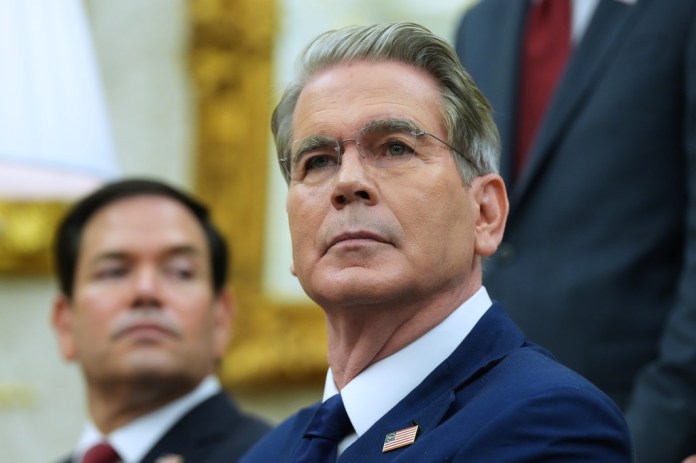
In the Pentagon, Emil Michael, the undersecretary of war for research and development, was one of the most outspoken officials about Anthropic.
“The hammer of justice has smashed [Anthropic] arguments,” Michael said in response to the court’s ruling on Friday. “They are a Supply Chain Risk to the defense industrial base serving the [War Department]. Warfighters will sleep better knowing that no private company will insert their opinions in the chain of command. [War Secretary Pete Hegseth] was right!”
The Trump administration, including the president, has rebuked Anthropic CEO Dario Amodei, who penned an essay earlier this month calling for more guardrails on AI, titled “We must pace the frontier.” Amodei warned that industry leaders should “slow down” technological advancement, and OpenAI’s Sam Altman and SpaceX CEO Elon Musk both supported his comments. Amodei said that if left unchecked, AI’s “recursive self-improvement” could lead to a system where AI outpaces humans’ ability to control and check the systems it creates.
UNDERSTANDING THE ARMY’S DRONE STRATEGY: NECESSARY ‘ACROSS EVERY WARFIGHTING FUNCTION
Trump wrote Monday in a post on Truth Social that his administration “has stopped AI ‘people’ from doing bad, or potentially bad, ‘things,’ like Dario (Anthropic!), who is now pretending to be a ‘perfect little angel’ – and we will continue to do so!”
Artificial intelligence is rapidly changing the way the military operates, in combat and in mundane and routine tasks. One main way in which the military uses AI is with the analysis of intelligence gathered from a wide array of entities and synthesizes it in a fraction of the time it would take a human to do the same.
Continue reading...
[ H/T Washington Examiner ]