






DETROIT — Instead of capitalizing on Republican vulnerabilities to retake the Senate on Tuesday, some of the Democratic Party’s most prominent figures and their allies are consumed by a fight of their own making.
In Michigan, where Democratic Senate nominee Abdul el Sayed is locked in a closely watched contest against Republican Mike Rogers, a bitter and messy primary feud has resurfaced just days before voters head to the polls. Former rival Rep. Haley Stevens (D-MI), who lost to el Sayed in August, has continued challenging his positions on Israel, while his campaign has asked her to stay away from his remaining events.
The move threatens efforts to unite Democrats behind their nominee. It also raises questions about whether the party’s establishment is willing to embrace a progressive candidate who defeated a more traditional Democrat.
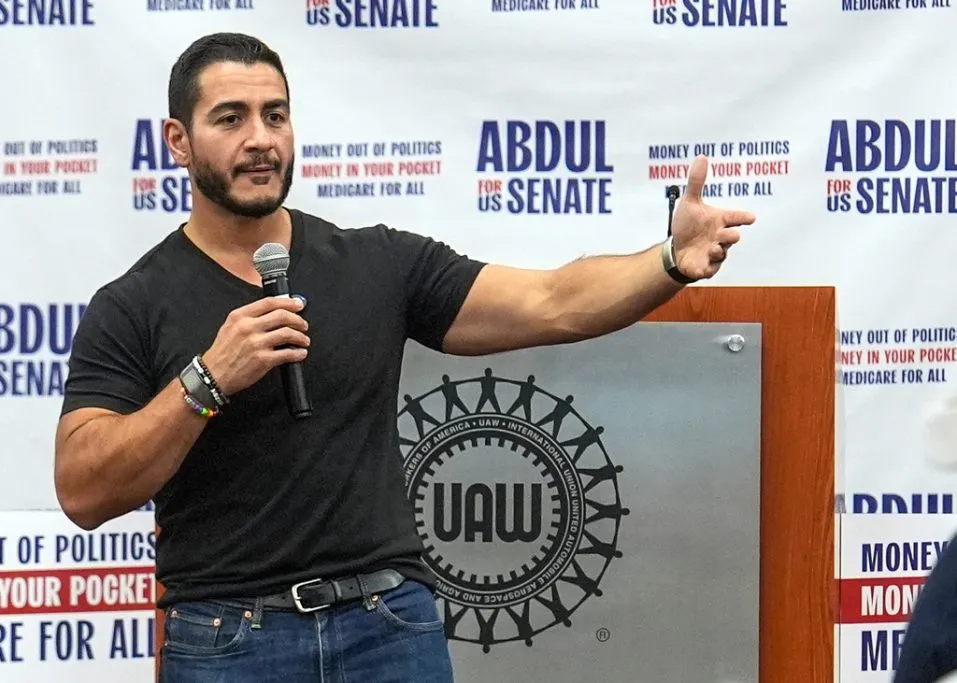
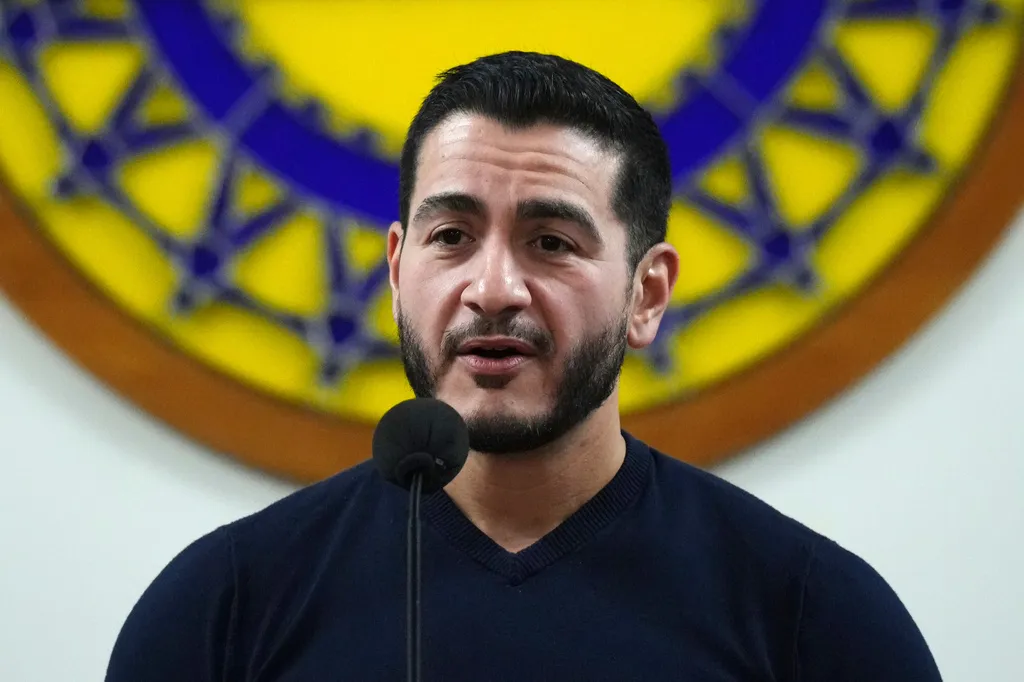
Michigan Senate candidate Abdul el Sayed roasts President Donald Trump at Grand Rapids, Michigan, rally on Oct. 26, 2026. (Barnini Chakraborty/Washington Examiner)
" data-image-caption="
Michigan Senate candidate Abdul el Sayed roasts President Donald Trump at Grand Rapids, Michigan, rally on Oct. 26, 2026. (Barnini Chakraborty/Washington Examiner)
" data-large-file="https://www.washingtonexaminer.com/wp-content/uploads/2026/10/IMG_0494-e1792984028912.jpeg?w=911" src="https://www.washingtonexaminer.com/wp-content/uploads/2026/10/IMG_0494-e1792984028912.jpeg?w=911" alt="Michigan Senate candidate Abdul el Sayed roasts President Donald Trump at Grand Rapids, Michigan, rally on Oct. 26, 2026." class="wp-image-4779366" srcset="https://www.washingtonexaminer.com/wp-content/uploads/2026/10/IMG_0494-e1792984028912.jpeg 911w, https://www.washingtonexaminer.com/...0/IMG_0494-e1792984028912.jpeg?resize=300,225 300w, https://www.washingtonexaminer.com/...0/IMG_0494-e1792984028912.jpeg?resize=768,576 768w" sizes="(max-width: 911px) 100vw, 911px">
Michigan Senate candidate Abdul el Sayed roasts President Donald Trump at Grand Rapids, Michigan, rally on Oct. 26, 2026. (Barnini Chakraborty/Washington Examiner)
The timing couldn’t be worse. Former President Barack Obama, Sen. Bernie Sanders (I-VT), and Rep. Alexandria Ocasio-Cortez (D-NY) have all campaigned for el Sayed and tried to present a united front. Yet divisions left over from the primary continue to play out publicly, giving Republicans an opportunity to shift attention from their own shortcomings.
“Democrats have an extraordinary ability to turn an opportunity into an internal crisis,” campaign expert Michael Fahey told the Washington Examiner. “We’re three days away from Election Day, control of the Senate is potentially on the line, and instead of talking about Mike Rogers, we’re talking about whether two Democrats can even stand on the same stage together. You almost couldn’t script a better distraction for Republicans.”
The latest confrontation centers on a planned Sunday appearance in Detroit with Rep. Jim Clyburn (D-SC), a prominent Democratic leader whose participation could have signaled party unity. Stevens had initially been expected to attend the church service in downtown Detroit alongside el Sayed and Clyburn. But after the former rivals resumed publicly attacking each other over Israel, campaign spending, and the direction of the party, el Sayed’s campaign asked her to stay away.
On Friday, Stevens demanded that el Sayed apologize for remarks blaming Israel for Michigan’s inability to afford schools, healthcare, and childcare. She also pressed him to condemn an advertisement produced by one of his allies featuring a Michigan couple discussing grocery prices and linking them to U.S. military support for Israel.
El Sayed said he disagreed with the ad’s contents and emphasized that his campaign did not produce it. But he resisted Stevens’s demands to continue addressing the controversy, arguing that the primary was over and Democrats should focus on defeating Rogers.
At a campaign appearance Saturday, el Sayed faced repeated questions about Stevens and the ad. He said he did not want the dispute distracting from his campaign’s central issues.
“We had a primary, right? And the outcomes of the primary are what they were,” el Sayed said. “I understand that some folks are upset about that. I get it. But I’m here trying to beat Mike Rogers.”
The fight has exposed a fault line in Michigan’s Democratic coalition.
Stevens received significant support from Jewish and black voters during the primary, blocs el Sayed needs to bring together as he seeks to expand beyond the progressive base that carried him to the nomination.
Earlier this week, Jason Turkish, Stevens’s fiancé and a Jewish Democrat, told the Washington Examiner he plans to vote for Rogers. Turkish, a disabilities and civil rights attorney, said he had hoped el Sayed would use the months after the primary to move beyond disagreements over Israel and unite Democrats. Instead, he said, el Sayed’s rhetoric and political associations had convinced him the candidate was unfit for the Senate.
Turkish also criticized el Sayed’s association with political streamer Hasan Piker, arguing it should disqualify the candidate from receiving Jewish support.
Fahey said el Sayed’s primary victory represents a broader challenge to the traditional Democratic establishment, which has struggled to reconcile the growing influence of progressives with the party’s moderate wing.
“El Sayed represents a progressive movement that’s increasingly challenging the traditional party establishment,” Fahey said. “His primary victory wasn’t an accident. Voters made a choice, and the establishment has been struggling with that choice ever since.”
Fahey said Stevens has no obligation to abandon her principles or ignore disagreements with el Sayed, particularly on Israel. But he questioned the decision to continue the public fight so close to Election Day.
“There’s a time to have those debates, and there’s a time to recognize that the voters have already selected their nominee,” he said.
The consequences could extend into the next presidential cycle. If el Sayed wins, progressives could point to Michigan as evidence that their politics can succeed in a competitive state. If he loses, the divisions could become ammunition for both sides of the Democratic debate.
“Either way, this race could become one of the first major battles over the Democratic Party’s identity heading into 2028,” Fahey said.
That debate is also playing out among Democrats who see the progressive movement as a threat to the party’s traditional political identity.
Daniel Saint, founder of the Anti Social Socialist Club and a 2028 congressional candidate in New York’s 12th District, said Democrats remain divided over what an el Sayed victory could mean for the party’s future.
“Those who are paying attention to the Socialists and view the DSA as more than just useful, youthful energy recognize the danger of an el Sayed win,” Saint told the Washington Examiner.
He argued traditional Democrats who support Israel, secure borders, and a market-based economy are increasingly uncomfortable with the progressive movement and risk alienating voters by moving too far left.
The divisions also raise questions about whether Democrats can maintain a broad coalition capable of governing once a candidate wins a primary.
James Christopher, who has worked on political campaigns, said winning an election is different from governing.
“The Democratic Party has long been a broad coalition of moderates, progressives, organized labor, and working families,” Christopher said. “That diversity is a strength, but it requires leaders who can navigate disagreements without deepening divisions.”
Progressive candidates backed by the DSA have shown they can generate enthusiasm and win elections, Christopher said. The harder test comes afterward, when they must represent constituents beyond their ideological base and build relationships across party lines.
“Winning an election gets you a seat at the table. Governing means proving you can accomplish something once you’re there,” he said.
Garry South, a veteran Democratic strategist, said the responsibility for party unity also falls on those who lose primaries. His advice to defeated candidates has always been to support the winner or stay quiet — a standard he said applies even more strongly to their spouses and fiancés.
South took particular aim at Turkish’s decision to publicly endorse Rogers, questioning whether his intervention would influence voters or help Democrats defeat Republicans.
“Is there a single voter in Michigan who gives a damn what he thinks?” South said.
Public criticism of a nominee by defeated primary candidates and their allies can backfire in the closing days of a campaign, South argued. He said Democrats should focus on making the case against Rogers rather than giving Republicans an opening to exploit their divisions.
EL SAYED ASKS HALEY STEVENS TO STAY AWAY FROM CAMPAIGN EVENTS IN DRAMATIC 11TH-HOUR FEUD ESCALATION
For Republicans, the spectacle offers an opportunity to keep attention on Democratic infighting rather than healthcare, affordability, and the direction of the country.
“The irony is that Republicans don’t have to manufacture a Democratic civil war when Democrats are willing to conduct one in public,” Fahey said. “Mike Rogers would much rather have voters watching this infighting than talking about healthcare, affordability or the direction of the country. And right now, Democrats are giving him that opportunity for free.”
Continue reading...
[ H/T Washington Examiner ]