

.jpg)


.jpg)
We call it the “rare disease community,” but there is nothing rare about the number of Americans whose lives are touched by these diseases.
Cancer afflicts 18 million Americans. Comparatively, an estimated 30 million Americans — roughly 1 in 10 — live with a rare disease. Individually, the more than 7,000 rare diseases affect relatively small populations, but collectively, rare disease patients represent one of the largest and most vulnerable constituencies in America.
I am one of those patients. When I was diagnosed with ALS at just 32 years old, I was told that there were no treatments. Millions of rare disease patients hear those same ominous words. Often, the problem is not that science has nothing to offer, but that promising therapies meander through a regulatory system that treats delay as cost-free. That is why the next Food and Drug Administration commissioner bears an enormous responsibility.
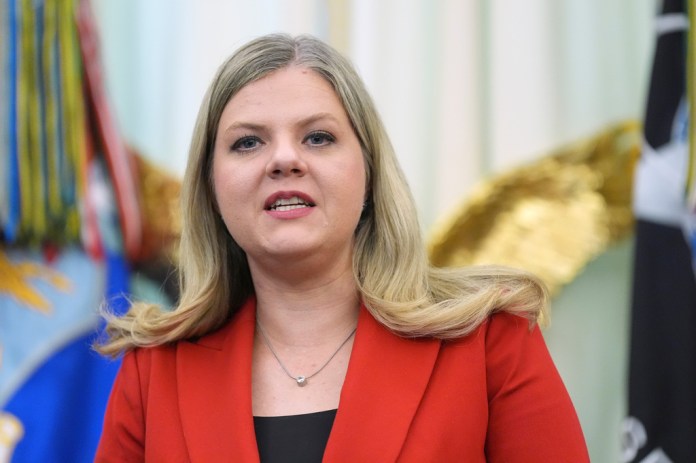
President Donald Trump’s next nominee is Dr. Heidi Overton, a physician and deputy director of the White House Domestic Policy Council.
Her nomination immediately raised alarms in the rare disease community — and especially with me — because of her long professional relationship with Dr. Marty Makary, an official many families viewed as an obstacle to drug approvals.
Makary mentored Overton as a surgery resident at Johns Hopkins, advised her doctoral research, and collaborated with her on published work. For rare disease families, that decadelong relationship now raises fair questions about whether she will chart a different course on rare disease drug reviews.
After hitting a wall at the FDA for over a dozen years, I was initially heartened to learn that “Marty” was confirmed as FDA commissioner. When I was a resident at Johns Hopkins, I practiced under him. I believed his promises to help the rare disease community. I contacted him repeatedly. Former acting Commissioner Janet Woodcock had responded over the past decade. From Makary: silence.
When Makary and Chief Scientific Officer Dr. Vinay Prasad took office, the rare disease community had hope. Marty publicly promoted Trump’s mandate to “deliver more cures and meaningful treatments.” In the keynote address at the National Organization for Rare Disorders Scientific Symposium, Prasad emphasized the FDA’s commitment to approve therapies “at the first sign of promise.”
Those words were empty promises. Instead, they became barriers to rare disease treatment approvals. They overruled review team recommendations for accelerated approval, moved the goalposts on previously agreed statistical plans, and canceled advisory committee meetings that give dying patients a voice. Ultimately, according to the RARE Foundation, the FDA issued 23 complete response letters for rare disease treatments — stunning sponsors and patients alike.
In response, the rare disease community rose up with a tsunami of complaints. After 13 turbulent months, Makary resigned, and Prasad — Makary’s protege, just like Overton — twice left the agency.
Overton’s association with failed FDA leadership is why her nomination has raised questions within the rare disease community. Additionally, as the White House’s health-policy lead, she has been highly visible on the administration’s other health priorities, yet invisible on rare disease review standards, despite the very public controversies. Her silence — like Makary’s before her — is not reassuring.
The rare disease community has spent years asking the FDA to use the flexibility Congress has repeatedly mandated, and the FDA’s own regulations promise. While regulators concede that traditional clinical trial models often fail in small, heterogeneous populations, the FDA’s approval decisions frequently contradict that reality. Even worse, regulators often ignore the irreparable harm of not approving a therapy that works — tacitly tolerating the inhumanity that many patients will endure lethal disease progression and may die waiting for completion of another trial. I will be one of those.
Former Center for Biologics Evaluation and Research Director Peter Marks put that human cost in plain terms during his keynote speech at the Philadelphia Cell & Gene Therapy Conference. At the current slow pace of rare disease approvals, he forewarned that, “it will take something like 600 years to get through another couple hundred diseases.”
That is why Overton’s nomination merits intense Senate scrutiny. The question isn’t whether she has a health policy résumé, but whether she will lead an FDA that will prioritize rare disease patients as the ultimate stakeholders. Will she follow the leadership and compassion of acting Commissioner Kyle Diamantas, who has won broad acclaim from the rare disease community for applying the law as Congress intended? Or will she turn a deaf ear to our community as did her mentor, Makary?
Rare disease patients do not need another round of soundbites and empty promises. We cannot afford another commissioner who talks flexibility but practices delay.
OPINION: YOUR NEXT CANCER SCAN SHOULDN’T DEPEND ON MOSCOW’S PERMISSION
Thirty million Americans with rare diseases have waited too long for the FDA to recognize that “doing nothing” is not neutral. When someone is dying of a rare disease, delays have dire consequences. For rare disease families, time is a luxury we don’t have.
The next FDA commissioner must understand that urgency before taking the job. Overton has yet to reassure our community that she is that person.
Dr. Shahriar Minokadeh is a Johns Hopkins-trained anesthesiologist and pain management specialist. He has been battling ALS for 15 years. He is now a ventilator-dependent quadriplegic with limited use of his eyes. He wrote this opinion piece with his eye gaze device.
Continue reading...
[ H/T Washington Examiner ]