

%20(2).jpg)



WHAT’S HAPPENING TODAY: Good afternoon and happy Thursday, readers! The United Nations’ World Space Week is currently underway, celebrating space science and technology with more than 50,000 events across the world. See if there is an event near you.


Meanwhile, with midterm elections just around the corner, Maydeen broke down where Senate candidates in competitive races stand on data centers. Take a look here.

 We spoke with Democrat Rep. Scott Peters this week about the bipartisan Senate permitting bill released last month, which faces an uphill battle to pass in both chambers. Curious about what he has to say? Keep reading.
Welcome to Daily on Energy, written by Washington Examiner energy and environment writers Callie Patteson (@CalliePatteson) and Maydeen Merino (@MaydeenMerino). Email cpatteson@washingtonexaminer dot com or mmerino@washingtonexaminer dot com for tips, suggestions, calendar items, and anything else. If a friend sent this to you and you’d like to sign up, click here. If signing up doesn’t work, shoot us an email, and we’ll add you to our list.
SCOTT PETERS TALKS PERMITTING REFORM:
While election season is in full swing across the country, Democratic Rep. Scott Peters isn’t taking his mind off passing meaningful permitting reform when members come back to D.C. later this fall.
Peters, who is running for reelection to represent California’s 50th congressional district, spoke with Callie over the phone yesterday afternoon to discuss the party’s energy policy priorities during the lame-duck session.
At the top of that list? Permitting reform.
If you have been tuned out of the news cycle the last few weeks, at the end of September, a bipartisan group of senators released a 417-page bill aimed at accelerating and streamlining the federal permitting process. The bill is called the Bipartisan American Affordability and Jobs Act (or BAAJA), and its backers hope to put it to a vote in the upper chamber following the midterm elections.
“I think from the perspective of Democrats…I think for everyone, it’s going to reduce affordability, it’s going to help clean energy because so many of the roadblocks are in the way of clean energy, it’s going to help reliability,” Peters said. “And I think it will resolve a lot of the issues that have been dogging us for a long time around energy.”
He praised provisions in the bill meant to build out more transmission infrastructure, which would make it easier to connect thousands of gigawatts worth of solar, storage, and wind capacity to the broader grid.
From Peters’s perspective as a member of the Energy and Commerce Committee, the transmission text as written might be the best Democrats can get.
“The transmission provisions in this bill are as good as anything we could ever get out of the Energy and Commerce Committee from the perspective of Democrats – what we’ve been looking for,” he said. “And so I hope that’s settled.”
Bullish on House passage: Last year, Peters voted against the House version of a permitting bill, known as the SPEED Act, saying it didn’t meet certain priorities Democrats had, such as protecting projects from political interference.
At the time, though, Peters was joined by more than two dozen Democrats in the House in signing a letter that called for reforming the federal permitting process, specifically through reforming the National Environmental Policy Act.
During yesterday’s conversation, Peters sounded confident that the interest among his colleagues hasn’t wavered.
“I believe that there is,” Peters said when asked if there is enough support to pass the bill during the lame duck.
“If you first look at the coalition we have, we have a lot of folks who have been working on this, who are concerned about affordability, frustrated with the process, and I think that coalition is going to grow,” he said, referring to the New Democrat Coalition.
The California Democrat pointed out that the Senate package has support from labor groups like the Laborers’ International Union of North America, as well as the Blue Dog Coalition, the Build America Caucus, and the Problem Solvers Caucus.
Pushback from environmental groups: While the Senate bill was introduced with bipartisan support, backed by known climate hawks Martin Heinrich of New Mexico and Sheldon Whitehouse of Rhode Island, dozens of environmental and green groups have encouraged Democrats to oppose the legislation.
The pushback has largely been led by groups such as the Center for Biological Diversity and Friends of the Earth US, though more than 200 organizations agreed in a letter that the bill does not strike an “acceptable balance” and would still support the development of fossil fuels.
Noticeably, however, large environmental organizations like the Environmental Defense Fund, The Nature Conservancy, Environment America, and the League of Conservation Voters did not sign the letter. And others, such as the Citizens Climate Lobby and Climate Leadership Council, have voiced their support.
“Among the environmental groups, there’s not a knee-jerk reaction to this like you might have expected a few years ago,” Peters said. “They’re really thinking it through and they realize that, you know, this is something that promises to lower emissions. And I think if we optimized around that instead of a lot of extraneous things, which I think unfortunately sometimes enter the discussion, I think the support for this would be really clear in the environmental community as well.”
All the rest:
FAST-TRACKING ALASKA DRILLING FINALIZED: Some oil and gas drilling projects in Alaska’s North Slope will now receive federal permits without undergoing environmental reviews.
The Bureau of Land Management announced this morning that it was exempting “important winter exploration projects” in the National Petroleum Reserve in Alaska from environmental reviews required under NEPA.
This includes projects such as exploratory seismic surveys, exploration wells, and plugging and abandonment.
If you weren’t aware: Categorical exclusions can be applied to certain projects or actions that fall under a category that does not have a significant effect on the quality of the human environment. When such an exclusion is applied, it typically means that an agency does not have to prepare an environmental assessment or environmental impact statement.
Some background: We’ve been expecting this decision for weeks after an August report from Public Domain revealed the agency was considering issuing the categorical exclusion to fast-track Alaska drilling permits.
Sources familiar with the drafting process told the outlet that the exclusion criteria were drafted without any public comment period or input from those living in or around the NPR-A.
Read more from Callie here.
STRAIT OF HORMUZ TRANSIT AT ITS LOWEST IN TWO MONTHS: Traffic in the Strait of Hormuz hit its lowest point more than two months after attacks on tankers.
Reuters reported that data from Kpler shows that seven commodity vessels passed through the waterway yesterday, which is the lowest total since July 23.
Exports flowing through the Gulf of Oman and the Red Sea have doubled from pre-war levels to 6.7 million barrels per day, making up the supply lost from the Strait of Hormuz, analysts said.
Escalation? The administration reportedly has been weighing whether to resume a large-scale military operation against Iran in the coming weeks.
The threat of escalation has sent oil prices up, with Brent crude up 3% to $103 per barrel and West Texas Intermediate up 2% to $90 a barrel as of this afternoon.
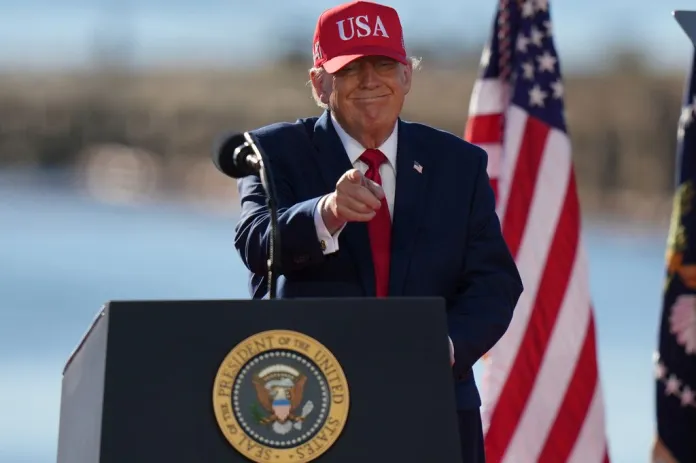
President Donald Trump this afternoon wrote on Truth Social that the U.S. and Iran are having productive discussions, adding that the U.S. will not attack Iran at any point before the midterm elections.
FOURTH GULF LEASE SALE ANNOUNCED: The Trump administration will hold its fourth oil and gas lease sale in the Gulf of Mexico, since renamed the Gulf of America, in March of next year, and we know now how many blocks will be available.
The Marine Minerals Administration announced today that it will be offering 15,104 unleased blocks spanning 80.4 million acres in the Gulf during the auction. This is roughly equivalent to the amount offered during the third sale two months ago.
The fourth sale is one of 30 that are expected to take place through 2040, with two held each year in March and August. These sales were mandated under the One Big Beautiful Bill Act signed into law last summer.
The last sale’s results: The third mandated sale held in August saw weaker bidding compared to the first held last year. Just 16 companies participated in the auction, submitting a total of 69 bids on 59 tracts spanning 330,000 acres – less than 1% of what was offered.
Pushback: Conservation groups continue to slam the administration for holding the regular lease sales, with Oceana’s Joseph Gordon saying: “A lease sale is the first step toward an oil spill catastrophe. This latest offshore drilling lease was mandated by Congress in the worst environmental bill in American history, and it will recklessly open millions of acres of our ocean to drilling and spilling. We need to protect our coasts, not destroy them.”
DEFENSE GROUPS WARN THAT US CRITICAL MINERAL STOCKPILE COULD RAISE PRICES: The Aerospace Industries Association said that the U.S. government should “proceed with caution” in creating a critical mineral stockpile to avoid distorting the market.
The group raised concerns about Project Vault “competing” with corporate buyers for critical minerals “amid an already constrained global supply, which could result in increased market prices and volatility for companies,” the Financial Times reported.
The group, which includes Palantir Technologies and BAE Systems, is asking for the project to address its concerns before it makes any purchases and provide more clarity on how the initiative would work.
The Export-Import Bank, which is leading Project Vault, told the Financial Times that the initiative is a “shock absorber for American manufacturers,” adding that the vault is meant to protect from domestic supply chain problems, not compete with the companies it serves.
Some experts have warned that the effort could create distortions.
Dan McGroarty, a critical mineral consultant and member of the Graphite One advisory board, told Maydeen in February that “the vault will one day start to dispose of its materials that it bought, and that’s going to have to be done very carefully or that could upend the market.”
WILDLIFE POPULATIONS HAVE DECLINED STEEPLY: The World Wildlife Fund reports that the average size of monitored wildlife populations has declined by 73% over a 52-year period.
The group monitored a total of 35,803 populations, covering 5,790 different species of mammals, birds, reptiles, amphibians, and fish from 1970 to 2022. It said that the largest declines were in freshwater ecosystems, at 85%.
The group said habitat loss and degradation is the most frequently reported threat affecting the monitored populations, driven by overexploration, climate change, pollution, invasive species, and disease.
Certain species have recovered, the report noted, such as green turtles, tigers, and southern African elephants.
RUNDOWN
Washington Examiner List: Where all the candidates in competitive Senate races stand on data centers
Axios Data centers face a sweeping new power regime
Associated Press PVC pipes swept away by Hurricane Helene flooding still dominate cleanup of North Carolina river
Continue reading...
[ H/T Washington Examiner ]