




WHAT’S HAPPENING TODAY: Good afternoon and happy Wednesday, readers! The annual Mubadala Citi DC Open is being held this week. Some of the top tennis players will be competing, including Jessica Pegula, Naomi Osaka, Ben Shelton, Taylor Fritz, and many more.

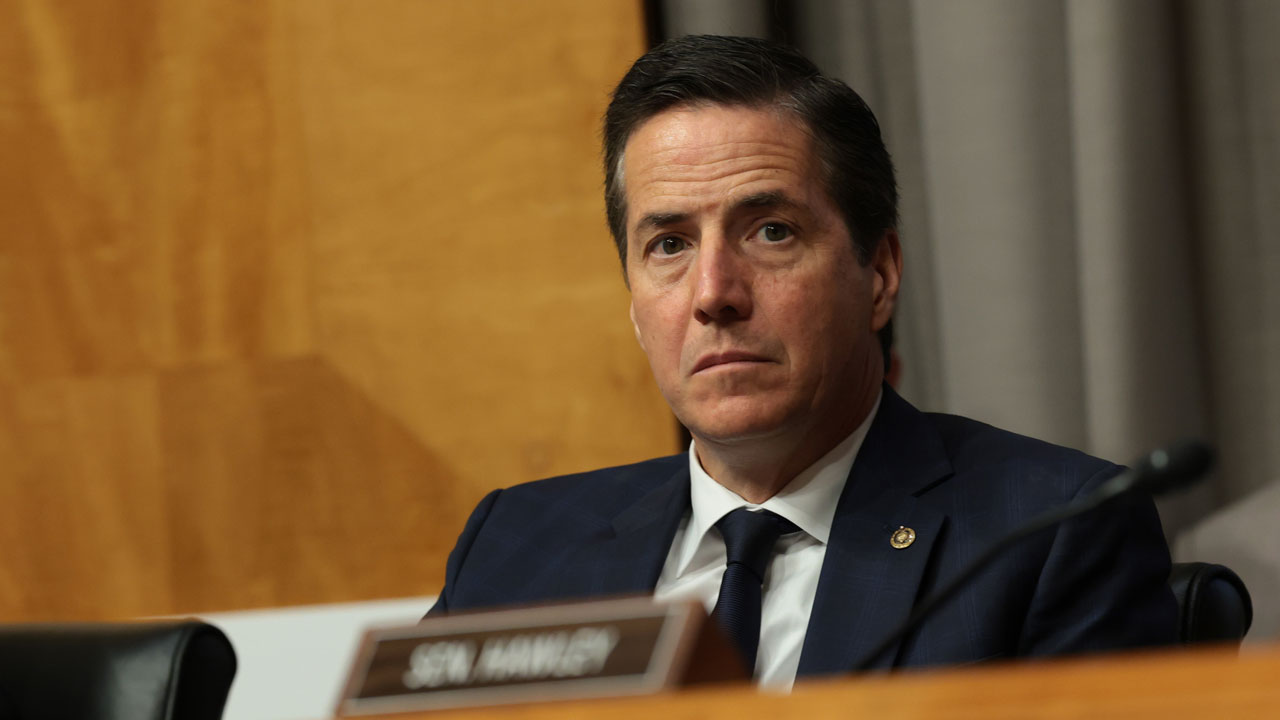
 In today’s newsletter, we take a look at the latest on permitting reform, as Republican Sen. Alan Armstrong of Oklahoma calls for the Senate to take up legislation before the midterm elections.
 Then, former Washington Gov. Jay Inslee spoke with Maydeen about what’s at risk as the Trump administration is being accused of withholding federal assistance for Democrat-led states.
Welcome to Daily on Energy, written by Washington Examiner energy and environment writers Callie Patteson (@CalliePatteson) and Maydeen Merino (@MaydeenMerino). Email cpatteson@washingtonexaminer dot com or mmerino@washingtonexaminer dot com for tips, suggestions, calendar items, and anything else. If a friend sent this to you and you’d like to sign up, click here. If signing up doesn’t work, shoot us an email, and we’ll add you to our list.
SENATE UPS THE STAKES FOR PERMITTING REFORM:
Pressure on Congress to pass meaningful permitting reform before the midterm elections just got a whole lot stronger, as one of the most vocal advocates for getting legislation to the president’s desk has said a bill won’t go anywhere if the House flips in November.
Republican Sen. Alan Armstrong of Oklahoma issued the warning today during the American Council for Capital Formation’s policy forum, saying the Senate has to act now.
“If we don’t get this done before we change Congress, it’s going to be an almost – almost dead issue from my perspective in terms of thinking that the House is going to be able to do something constructive if the House flips,” he said.
The Senate faces an extremely uphill battle to pass legislation that would overhaul and simplify the process for federal agencies to issue permits and approvals for projects such as highways, pipelines, housing, transmission infrastructure, and much more. Not only is there a shrinking number of days the upper chamber will be in session before the elections, key Senate committees on energy and the environment have not yet released any text for a bill.
Top negotiators of both parties, including Republican Sen. Shelley Moore Capito and Democratic Sen. Sheldon Whitehouse, previously indicated that they hoped to release text before the August recess. Past reporting also suggested that if a deal is struck, Senate Majority Leader John Thune will prioritize time on the floor for a vote after the August break.
It’s important to remember that the journey doesn’t stop there, as any package would be sent back to the House – which initially passed a bipartisan permitting reform bill in December of last year.
Analysts have pointed out that the current relationships between committee chairs and ranking members have put negotiations in the best position they have ever been in. Those positions are expected to shake up in the next Congress, and could threaten the progress made across the aisle thus far if hardline Democrats move into various leadership seats.
“The only thing that will happen if we don’t get it this Congress is that we’re going to have higher costs and more pollution. It’s just bad all around,” Xan Fishman, vice president of the Energy Program at the Bipartisan Policy Center, told Daily on Energy. “I really think that the politics don’t get any better if we wait.”
INSLEE CASTIGATES TRUMP OVER DISASTER FUNDS:
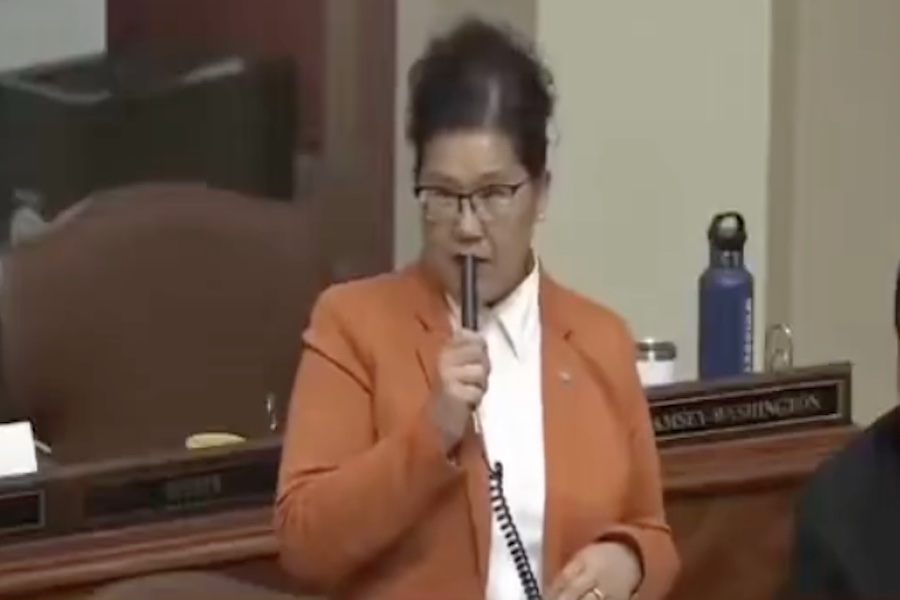
Former Washington Gov. Jay Inslee called the Trump administration’s withholding of disaster preparedness funding “heinous and ugly,” placing communities at greater risk from disasters such as wildfires and floods.
The Trump administration has been accused by states of withholding emergency grants for natural disaster and counterterrorism from Democrat-led states that do not comply with its immigration and election policies.
“It’s a very powerful thing when the national government will help families and communities in crisis, and when it is deprived of them, it is an absolute gut punch,” Inslee told Maydeen.
Inslee served three terms as the governor of Washington from 2013 to 2025. He has also championed clean energy in an effort to reduce greenhouse gas emissions. Inslee currently heads Climate Power’s initiative, called “The Affordability Project.”
States take it to court: A coalition of 25 states last week filed a lawsuit against the Department of Homeland Security and the Federal Emergency Management Agency over the denial of the funds.
The Trump administration has previously withheld federal funding to pressure states to comply with policy priorities. However, courts have found this approach to be unlawful.
“There’s been several rulings against him, but he continues to violate the nature and the spirit and intent of these rulings,” Inslee said, adding that the most recent lawsuit is moving on a more generalized basis so the administration can be held to account on multiple dimensions.
Trump denying federal aid: Politico reported today that the president this month denied disaster aid to New Jersey, Massachusetts, Rhode Island, and New York. The denials were after the regional offices of FEMA and NOAA said the states met the federal guidelines for receiving aid after record-breaking winter storms.
The president has been holding states hostage that “won’t knuckle under his illegal activities,” Inslee said.
“He’s not doing it to senators. He’s doing it to citizens. Those are the people who are really suffering,” Inslee added. “And suffering on a wide scale that he’s depriving people of community benefits.”
All the rest
STRIKES RESUME BETWEEN U.S. AND IRAN: The conflict between the U.S. and Iran has resumed as the Islamic Revolutionary Guard Corps launched a surprise attack on U.S. troops in Jordan yesterday.
The president this morning vowed to retaliate. The military was able to intercept all of the ballistic missiles Iran launched.
“We’re going to beat the f***ing s*** out of them,” President Donald Trump told Fox News this morning. “We’ll be hitting them hard. They’re going to get a beating.”
It’s been several days since the U.S. military carried out attacks, but yesterday the U.S. and Saudi Arabia jointly targeted an Iranian-backed militia in Iraq.
OIL TICKS BACK UP: Oil prices rose swiftly on Trump’s comments this morning, with international and domestic benchmarks increasing by around 7%. The sharp market turn came after prices had steadily dropped over the course of several days, with traders hopeful that further de-escalation was on the horizon.
Once again, that appears to have been a false sense of hope.
“Markets have jumped the gun on hopes of renewed peace, especially considering Iran’s insistence on controlling the Strait under any potential deal,” TD Securities senior commodity strategist Ryan McKay said in a note viewed by CNBC.
Around 2:30 p.m. EDT, Brent crude had jumped 7.87% and was selling at $90.71 a barrel. West Texas Intermediate also soared 6.78%, and was priced at $84.68 a barrel.
OIL STOCKPILES FALL MORE THAN EXPECTED: Commercial crude stockpiles fell significantly more than what was expected this past week, dropping to the lowest level since 2018.
Government data released today revealed that crude inventories – excluding what is stored in the Strategic Petroleum Reserve – dropped by 7.2 million barrels last week to 404.5 million barrels. Analysts surveyed by the Wall Street Journal had estimated that last week there would be a roughly 600,000 barrel drawdown.
Oil market analyst Rory Johnston told the Financial Times that these are “precariously low” levels.
Drawdowns from the Strategic Petroleum Reserve also continued last week, with the emergency stockpile dropping by 3.8 million barrels to 307.7 million barrels last week. The SPR has an operational minimum of around 180 million to 200 million barrels.
A $100 BILLION DATA CENTER CAMPUS IN KENTUCKY: The largest utility company in the U.S. is transforming a closed Cold War uranium-enrichment facility in Kentucky into a massive $100 billion data center campus.
The Department of Energy announced this morning that NextEra Energy is partnering with Brookfield, Big Rivers Electric Power Corporation, Jackson Purchase Energy Cooperative, and Paducah Power System to develop the shuttered nuclear site to build out more artificial intelligence as well as new energy generation.
The project is entirely privately funded, with all $100 billion going to the construction of 2 gigawatts of natural gas-fired generation at or near the new data center campus, upgrading existing transmission infrastructure, and the deployment of up to 2.6 gigawatts of battery energy storage. For comparison, the city of San Francisco is estimated to require around 1 gigawatt of electricity.
Construction of the site is expected to be completed in 2031, and Brookfield will be the primary developer and operator of the data center campus.
The administration has said the deal is an example of Trump’s Ratepayer Protection Pledge in action, as electricity generated on site will be pumped back into the grid and create hundreds of permanent local jobs.
TRILLIONS NEEDED TO TRIPLE GLOBAL NUCLEAR CAPACITY: The U.S., U.K., and European Union broadly have the policy needed in place to support the nuclear energy renaissance. But the industry’s revival is going to need a lot of cash.
In a report released today, the World Nuclear Association said it will take $6 trillion of nuclear investment over the next 25 years to achieve the current ambitions to triple global nuclear capacity by 2050. The group estimated that it would require an average annual investment of around $250 billion – roughly three times the current average of around $75 billion.
“While the strategic case for nuclear is strengthening, mobilizing sufficient capital remains one of the central challenges,” the report reads.
Risk appetite is no longer one of the main hurdles for large investors. Instead, major financiers are facing problems with market readiness and long-term stable policy supporting new nuclear.
In the report, the World Nuclear Association put forth its roadmap for mainstream financing for nuclear energy, offering ways for stakeholders and wary investors to make more predictable and faster financing decisions for new projects.
You can find the complete roadmap and report here.
WILDFIRE THREATS IN EUROPE GO BEYOND SPAIN AND FRANCE: The European Union is warning that Greece, Italy, and Central Europe are facing increased wildfire risk in the coming weeks.
Maria Zuber, the head of the EU’s Emergency Response Coordination Centre, said that other countries should also prepare for disasters amid the ongoing heat wave, Reuters reported.
“The next risk, it’s already moving to Greece and also Central Europe,” Zuber said.
“Greece for the moment was spared, and now we see that it will go to Greece. Italy will face risk at the beginning of August, and we will need to see what will happen with the Iberian Peninsula, because if (it is) there as well, we will have all Europe on fire,” she said.
The warning comes as Spain and France are facing historic wildfires that have forced thousands of people to evacuate. Last year, Europe experienced its worst wildfire season on record, and Zuber warned that it could see another record this year.
RUNDOWN
The Associated Press Wildfires are more extreme in Europe and North America, but global burning is oddly decreasing
Vox We’re running out of ways to get oil out of the Middle East
Reuters After the quake came the blast: Inside Japan’s shopping mall disaster
Austin American-Statesman Austin ordered homeowner to replace trees or pay $8,800. Now TPPF is suing.
Continue reading...
[ H/T Washington Examiner ]