



WHAT’S HAPPENING TODAY: Good afternoon and happy Veterans Day!


 Meanwhile, tiny trucks are making their way into the U.S. auto market. We take a close look at Toyota’s announcement to build tiny trucks in Indiana.
Welcome to Daily on Energy, written by Washington Examiner energy and environment writers Callie Patteson (@CalliePatteson) and Maydeen Merino (@MaydeenMerino). Email cpatteson@washingtonexaminer dot com or mmerino@washingtonexaminer dot com for tips, suggestions, calendar items, and anything else. If a friend sent this to you and you’d like to sign up, click here. If signing up doesn’t work, shoot us an email, and we’ll add you to our list.
TINY TRUCKS ARE COMING TO THE U.S. AUTO MARKET:
Toyota has announced plans to bring its tiny trucks into the U.S. auto market, but with a catch: They won’t go faster than 25 mph.
The Japanese automaker said yesterday the trucks will arrive starting in the second half of 2027. The tiny pickup is inspired by Japanese “kei” trucks produced under the Scion brand, which Toyota discontinued in 2016.
Toyota will be the first to make tiny trucks in the U.S. But it has modified this vehicle to comply with U.S. federal safety standards.
The Scion KEI-01, which has a 660 cc three-cylinder engine and four-wheel drive, will be classified as a low-speed vehicle, with its maximum speed limited to 25 mph. Its speed in Japan is limited to 87 mph.
Toyota said it would assemble these tiny trucks in Indiana, with production expected to begin in the second half of 2027. The $34 million investment is expected to create about 50 jobs. Toyota did not disclose how many it plans to build.
“In the U.S., interest in kei trucks has increased and we see an opportunity to meet diversifying customer needs with a capable, affordable, ultra-compact utility truck. U.S. assembly brings the proven strengths of the kei truck closer to customers while supporting American manufacturing, investment and jobs,” a spokesperson for Toyota told Maydeen.
Toyota has said this small pickup is designed for customers such as small business owners, farmers, and ranchers. The vehicle is just over 11 feet in length and under 5 feet in width.
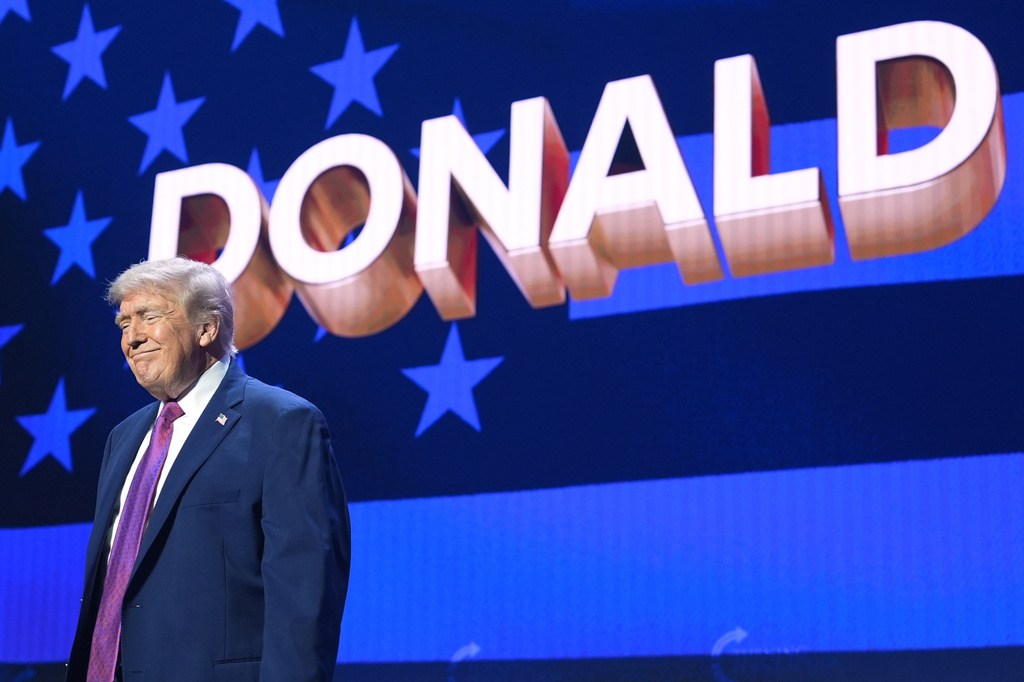
President Donald Trump has asked domestic automakers to consider making tiny cars like those in Asian auto markets as a way to provide consumers with a more affordable and fuel-efficient transportation option.
Last December, the president said, “If you go to Japan, where I just left, if you go to South Korea, Malaysia, and other countries, they have a very small car, sort of like the Beetle used to be with Volkswagen,” calling the cars “really cute.”
“And I said, ‘How would that do in this country?’ Everyone seems to think good, but you’re not allowed to build them,” he continued. “I’ve authorized the secretary to immediately approve the production of those cars.”
However, these tiny cars have struggled to work in the U.S. because of federal safety standards and a lack of demand.
All the rest:
RUSSIAN TANKERS TURNING AWAY FROM THE UNITED STATES: The Russian tanker Agioi Fanendes, carrying nearly 300,000 barrels of diesel, made a U-turn about 400 nautical miles from New York, Bloomberg reported.
Russia last month loaded four tankers with diesel that were headed for the U.S. At least three of those tankers in recent weeks have diverted away from their routes.
Fuel experts have noted that U.S. oil companies may be reluctant to import Russian diesel due to legal risk. Lawmakers last month warned that any company importing Russian diesel could face legal repercussions.
Energy Secretary Chris Wright yesterday said the administration is confident that the first cargo of Russian diesel headed to the U.S. would be sold on the global market. He added that he was not concerned about the ship, Agioi Fanendes, despite its change of course while en route to New York.
“Not at all. No, it’ll go to another port,” Wright told reporters in New Orleans. “We just want that diesel going into the world markets.”
HAWLEY CALLS FOR DATA CENTER MORATORIUM: Josh Hawley has become the first Republican in the Senate to support a moratorium on data center development.
Hawley joins a list of Democrats who have called for a pause, including Rep. Alexandria Ocasio-Cortez of New York, Sen. Bernie Sanders of Vermont (technically an independent), and Rep. Frank Pallone of New Jersey.
Read about Hawley’s announcement and his previous support for regulations on data centers from Maydeen here.
TRUMP’S PLAN TO SELL PUBLIC LANDS: The Trump administration plans to sell federal lands to states, tribes, and local governments as part of its effort to “decrease the size of the federal estate,” according to a new strategic plan released by the Interior Department.
In the 28-page plan released this week, Interior said the sales will allow the agency to “focus its resources on primary federal responsibility and nationally significant federal lands.”
It does not offer any details on what lands would be sold, how large the scope of such sales could be, or when they will take place.
The plan also reveals that Interior will pursue land exchanges, direct transfers of lands, and strategic rights-of-way agreements to “support reliable energy production” in the U.S., as well as mineral development, timber production, and other agricultural uses.
Additionally, the plan from Interior indicates its intention to ramp up development of natural resources such as critical minerals to support the build-out of data centers and artificial intelligence.
You can read the full plan here.
Something to keep in mind: It remains to be seen if Interior will be able to pursue this plan without Congress intervening, particularly with Democrats holding both majorities in January. Last year, Republican Sen. Mike Lee of Utah attempted to include public land sales in the One Big Beautiful Bill. However, the proposal was shot down by Republicans and Democrats alike.
PROGRESSIVES UP PRESSURE ON PERMITTING: The Congressional Progressive Caucus formally announced its opposition to BAAJA this week, citing its overhaul of environmental laws such as the National Historic Preservation Act, the National Environmental Policy Act, the Clean Water Act, and the Endangered Species Act.
They said that relevant provisions would limit the public’s opportunity to stop “ICE detention centers, Trump vanity projects, and more.”
They also made it clear they are skeptical Trump would fairly implement permitting reforms for wind and solar, as the president said this week he would not permit any new wind turbines.
A newly proposed amendment: Back in the Senate, 19 Democrats have introduced an amendment that would strike BAAJA’s NHPA provisions. But it’s unlikely that the amendment will be adopted.
“I don’t think we can land the bill with Republicans if we completely strip it out,” Democratic negotiator Sen. Martin Heinrich told Punchbowl.
A White House official told Daily on Energy that the administration does not support removing NHPA provisions from the bill entirely.
“The White House worked through concerns raised by tribal partners during the bipartisan negotiations following the release of the original bill text,” the official said. “Those concerns were addressed in the manager’s amendment, which received praise from tribal organizations.”
PLUS – SOME DETAILS ON TIMING: Don’t expect any additional votes in the Senate on BAAJA this week.
Democratic Sen. Sheldon Whitehouse of Rhode Island told reporters today that he will be attending the United Nations climate conference COP31 in Turkey the rest of the week and does not plan on missing any permitting votes while he is out of town.
This could put any votes, whether for amendments or final passage, no earlier than next Monday.
COP31 WATCH – LEADERS SAY CONFLICT CANNOT DISTRACT FROM TACKLING CLIMATE CHANGE: We’re three days into the UN’s climate conference and many world leaders are in agreement that war and conflict cannot distract nations from climate change mitigation.
“We started talking more about weapons and tariffs than the survival of future generations,” Brazilian President Luiz Inacio Lula da Silva said, according to Reuters. “The planet cannot be at the mercy of hegemonic struggles.”
This sentiment was reiterated by Turkey’s President Recep Tayyip Erdogan, who said, “Wars, crises, migration, famine and poverty increase the need for international solidarity each day.”
During his remarks, Erdogan also labeled the war in Gaza as an “ecocide,” according to the Associated Press. He pointed to the pollution of soil and water in Gaza and the felling of olive trees that are centuries old.
“What has taken place in Gaza is not only a genocide, but it is also an ecocide,” Erdogan said.
ICYMI – REGULATORS ISSUE ANOTHER CONSTRUCTION PERMIT FOR SMALL MODULAR REACTORS: The Nuclear Regulatory Commission issued its third construction permit for a small modular reactor this week, allowing Amazon-backed X-energy to begin construction on advanced nuclear reactors in Texas.
The approval marks the first time the NRC issued a construction permit for a high-temperature gas-cooled reactor in nearly 60 years.
X-energy will be building four of its Xe-100 reactors at the Long Mott Generating Station in Calhoun County, Texas. These advanced reactors will primarily generate electricity for industrial use nearby, but excess will be pumped into the grid. The SMRs will generate about 80 megawatts of electricity each, and are cooled with helium instead of water.
Federal regulators said the approval was completed one month ahead of schedule, as part of the agency’s new 18-month licensing timeline set early last year by Trump.
NRC Chairman Ho K. Nieh said the approval proves the agency “can do rigorous safety reviews on predictable timelines that move advanced nuclear technology from design to construction.”
RUNDOWN
Volts The federal permitting bill has been updated. What changed?
Vox Could this bacteria save coral reefs from the heat?
Washington Post These are some of the most wild places left on the planet
Wired Michigan Residents Voted to Get Corporate Money Out of Politics. Now Utilities Are Suing
Continue reading...
[ H/T Washington Examiner ]