


The Facilitating Useful Loss Limitations to Help Our Unique Service Economy, or FULL HOUSE Act, a bill that would correct an inequitable new gambling provision, has swiftly moved through the House Ways and Means Committee with bipartisan support.
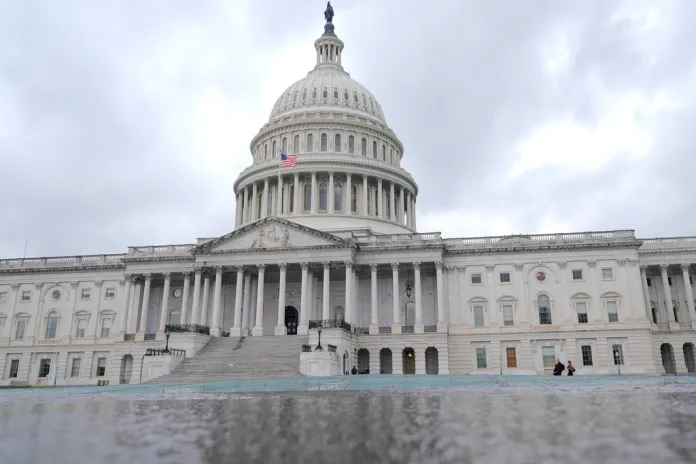
The legislation is designed to restore fair tax deductions of 100% of gambling losses against winnings. The bipartisan bill was introduced in the House by Reps. Steven Horsford (D-NV) and Max Miller (R-OH), and in the Senate by Sens. Catherine Cortez Masto (D-NV.) and Ted Cruz (R-TX). The legislation passed by a 38-5 vote in the House Ways and Means Committee and now awaits consideration by the full House.
The Act would fix an unfair change to existing gambling law included in the One Big Beautiful Bill Act in 2025 that reduced the amount of gambling losses an itemizing taxpayer could deduct from 100% of gambling winnings to just 90%.
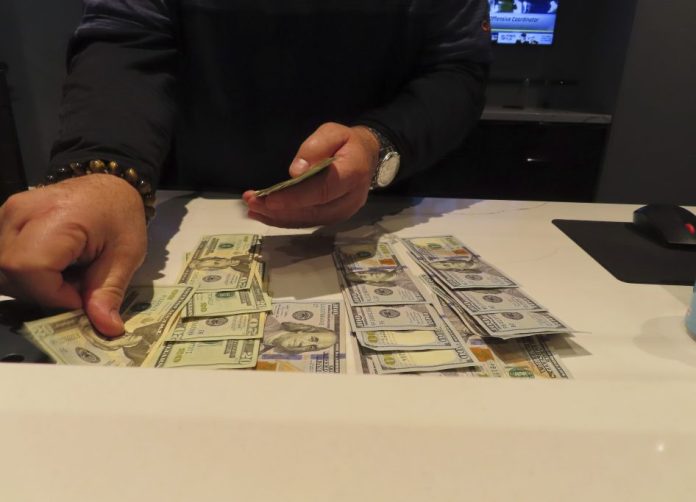
Advocates of the FULL HOUSE Act call the existing gambling statute a “phantom tax” because gamblers who break even on the year would still owe taxes despite not actually winning money. For example, a gambler could get W2-Gs (tax form) from a casino for $100,000 in winnings, with $100,000 in documented losses. Even though they broke even on the year, they would owe taxes on $10,000 in phantom profits since they can only deduct $90,000 in losses under the new law.
“At a time of economic uncertainty, my job is to protect Nevadans and their jobs,” Horsford said in a press release after the vote. “From dealers and housekeepers to restaurant workers and small business owners, families across our state depend on visitors choosing Nevada. This unfair tax puts their livelihoods at risk.”
Cortez Masto, whose district includes gambling mecca Las Vegas, said that “taxing people on money they don’t have will stifle the tourism industry in states like Nevada, push poker tournaments offshore, and drive betting into underground, unregulated markets.”
Other bill sponsors pointed out they are simply fixing a law that is grossly unfair. Cruz called it a matter of “basic fairness and integrity,” while Rosen said, “it’s not just bad math, it’s bad policy.”
The change in the gambling deduction sparked concerns about the effects on the gambling industry, which may have already played out this summer at the World Series of Poker in Las Vegas, which saw drops in attendance in some of the bigger buy-in events such as the $10,000 Main Event.
Professional poker player Erik Seidel told CNBC in April that he chose to semi-retire this year due to the new gambling law.
“The margins are really, really thin,” Seidel said. “If you’re a professional poker player, you’re not even guaranteed to have a profit at the end of the year. This just creates a situation where it’s really untenable. Even the elite players, they can’t overcome it.”
The Joint Committee on Taxation estimated that the change in the deduction to 90% would generate $1.1 billion in tax revenue over eight years, but the Tax Foundation issued a report suggesting the figure could be much lower.
“Behavioral responses and tax avoidance could quickly reverse that effect,” the Tax Foundation said. “If only a fraction of professional gamers take their bets outside of legal U.S. markets, the effect will be a net loss to tax collections and an increase in illegal activity.”
Noted gambling-focused accountant Russ Fox said he told his clients to run their tax numbers from 2025 but limit their gambling losses to 90% to see what the impact would be. “And a few have been very surprised. Not in a positive manner,” he said.
I DEFENDED SYDNEY SWEENEY’S LAST AD. I WON’T DEFEND THIS ONE
Fox said he’s hopeful that the 2026 legislation could be set retroactive to Jan. 1, 2026, if passed. That way, gamblers would not feel the effect of the initial change when filing their taxes in 2027.
The FULL HOUSE Act fixes an egregious anti-gambling change in existing law. Hopefully, Congress moves quickly to pass the bill.
Johnny Kampis writes for the Taxpayers Protection Alliance.
Continue reading...
[ H/T Washington Examiner ]