




Brent Tops $112 As Tanker Attacks And Saudi Strikes Fuel Escalation Fears
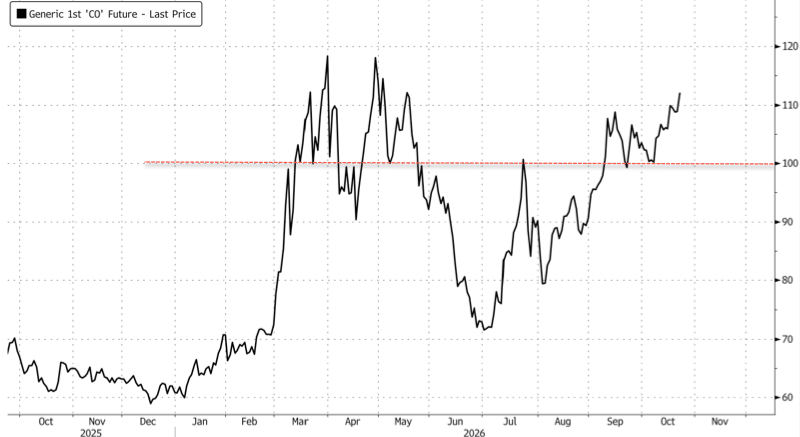
Despite our overnight note titled "More Oil Is Leaving The Gulf Than Before The War": And Here Comes The Shocking Freight Bill, Brent crude futures topped $112 a barrel early Thursday as fears of escalation in the Gulf area mounted and chaos and turmoil continued.
There's a bunch of overnight news pushing Brent prices higher.
Let's begin with news that the Iranian military claims it hit four "violating" oil tankers with projectiles while they were transporting crude in the northern Persian Gulf. The semi-official Fars news agency first published the report, citing an IRGC statement.
A separate report by Bloomberg says a drone strike on Saudi Aramco's Shaybah oil field killed two people but left operations unaffected at the field, which has a production capacity of 1 million barrels a day. The risk is that further drone attacks could disrupt production at the oil field, which produces high-value crude.
There were also reports of a drone attack on King Fahd International Airport in Dammam that killed one person. Other news included a report that the US ordered some embassy personnel and family members to leave Saudi Arabia, further suggesting that security risks have intensified and/or could worsen.
"Continued kinetic activity and the risk of renewed escalation following the midterms are keeping a floor under prices," said Rebecca Babin, a senior energy trader at CIBC Private Wealth Group. "The result is a market struggling to sustain rallies, but with limited conviction behind the selloffs as well."
UBS energy specialist Dominic Ellis briefed clients earlier this morning on the latest developments in the energy sector:
Even with ongoing security threats from Iran and its regional proxies, Middle Eastern oil flows averaged more than 24 million barrels a day in the week through Oct. 18, surpassing prewar levels, as we reported overnight. That recovery is encouraging, but there is a costly catch: tanker freight rates have ballooned as tankers navigate the critical waterway. The rebound in volumes provides only partial relief, with a substantial war premium still embedded in the cost of getting those barrels out to the international market, nevertheless, an ongoing global refining crisis.
Tyler Durden Thu, 10/22/2026 - 07:45
Continue reading...
[ H/T ZeroHedge ]
Despite our overnight note titled "More Oil Is Leaving The Gulf Than Before The War": And Here Comes The Shocking Freight Bill, Brent crude futures topped $112 a barrel early Thursday as fears of escalation in the Gulf area mounted and chaos and turmoil continued.
There's a bunch of overnight news pushing Brent prices higher.
Let's begin with news that the Iranian military claims it hit four "violating" oil tankers with projectiles while they were transporting crude in the northern Persian Gulf. The semi-official Fars news agency first published the report, citing an IRGC statement.
IRGC CLAIMS 7 TANKERS HIT IN 24 HOURS NEAR STRAIT OF HORMUZ Iran’s IRGC Navy says seven oil tankers were hit or damaged in the past 24 hours: • Four vessels involved in ship-to-ship oil transfers were targeted and caught fire. • Three others reportedly struck naval mines west of the Strait of Hormuz. Separately, maritime authorities confirmed a tanker was struck by an unknown projectile near Oman, sparking a fire. All crew were reported safe. The IRGC has not identified the seven vessels, and its claims have not been independently verified.
— Mossad Commentary (@MOSSADil) October 22, 2026
A separate report by Bloomberg says a drone strike on Saudi Aramco's Shaybah oil field killed two people but left operations unaffected at the field, which has a production capacity of 1 million barrels a day. The risk is that further drone attacks could disrupt production at the oil field, which produces high-value crude.
There were also reports of a drone attack on King Fahd International Airport in Dammam that killed one person. Other news included a report that the US ordered some embassy personnel and family members to leave Saudi Arabia, further suggesting that security risks have intensified and/or could worsen.
"Continued kinetic activity and the risk of renewed escalation following the midterms are keeping a floor under prices," said Rebecca Babin, a senior energy trader at CIBC Private Wealth Group. "The result is a market struggling to sustain rallies, but with limited conviction behind the selloffs as well."
UBS energy specialist Dominic Ellis briefed clients earlier this morning on the latest developments in the energy sector:
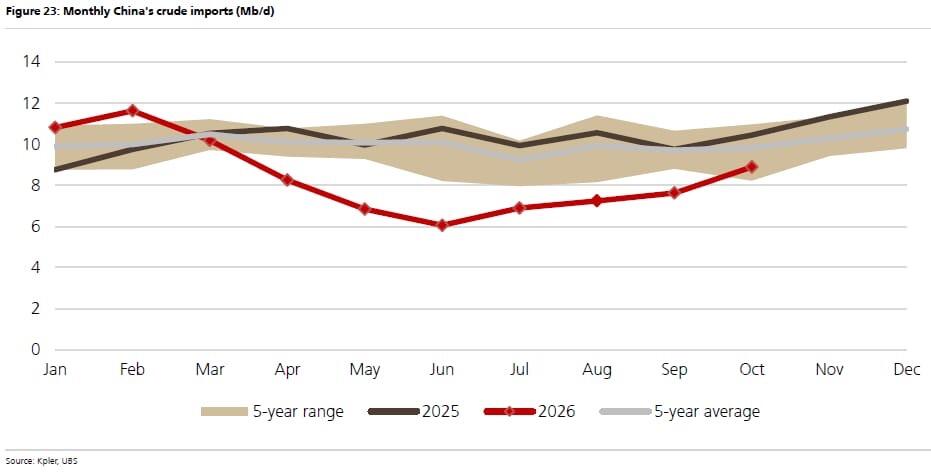
Even with ongoing security threats from Iran and its regional proxies, Middle Eastern oil flows averaged more than 24 million barrels a day in the week through Oct. 18, surpassing prewar levels, as we reported overnight. That recovery is encouraging, but there is a costly catch: tanker freight rates have ballooned as tankers navigate the critical waterway. The rebound in volumes provides only partial relief, with a substantial war premium still embedded in the cost of getting those barrels out to the international market, nevertheless, an ongoing global refining crisis.
Tyler Durden Thu, 10/22/2026 - 07:45
Continue reading...
[ H/T ZeroHedge ]

