


Wall Street expert Michael Burry on Monday suggested that leading technology leaders have ulterior motives for their recent deluge of warnings about artificial intelligence, arguing they are simply looking to boost profit margins.
The prominent investor weighed in on the AI debate that sparked last week, when Anthropic researcher Jacob Coxon left the company with a highly publicized resignation, warning that “AI could kill us all by the end of the decade.” Coxon’s move triggered a stream of major Big Tech leaders, including Anthropic CEO Dario Amodei and OpenAI CEO Sam Altman, to issue statements calling for extensive guardrails over the technology and a global slowdown of development, warning the industry had “lied” to the public about AI safety risks and expressing concern that “we could lose control of the future to AI.”
Similar to Vice President JD Vance, Burry cast doubt on the sincerity of motives behind such statements this week, arguing that “self-serving” AI leaders are seeking to twist the moment “to increase the perception of their power before their IPOs.” Burry is the investor who used his analysis of the housing market in the early 2000s to profit from the 2008 Great Recession, personally raking in around $100 million on his prediction of the crisis and inspiring the hit film The Big Short, starring Christian Bale.
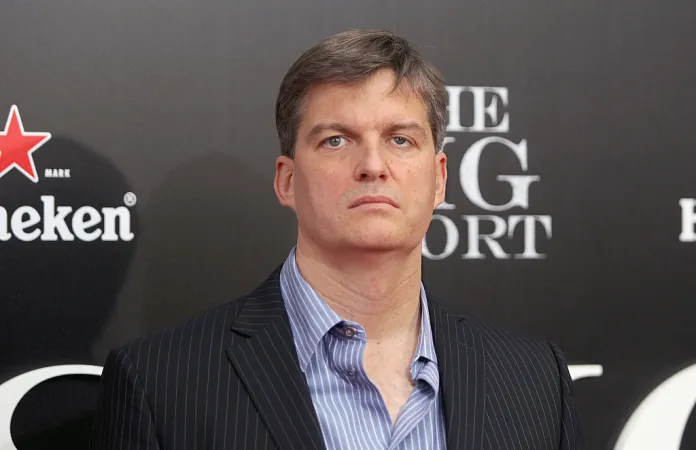
FILE – Michael Burry attends the “The Big Short” New York premiere at Ziegfeld Theater on November 23, 2015 in New York City. (Photo by Jim Spellman/WireImage)
" data-large-file="https://www.washingtonexaminer.com/wp-content/uploads/2026/09/GettyImages-498562218.jpg?w=696" src="https://www.washingtonexaminer.com/wp-content/uploads/2026/09/GettyImages-498562218.jpg?w=696" alt="Michael Burry attends the "The Big Short" New York premiere at Ziegfeld Theater on November 23, 2015 in New York City." class="wp-image-4726313" srcset="https://www.washingtonexaminer.com/wp-content/uploads/2026/09/GettyImages-498562218.jpg 1024w, https://www.washingtonexaminer.com/...6/09/GettyImages-498562218.jpg?resize=300,194 300w, https://www.washingtonexaminer.com/...6/09/GettyImages-498562218.jpg?resize=768,497 768w, https://www.washingtonexaminer.com/...26/09/GettyImages-498562218.jpg?resize=150,97 150w, https://www.washingtonexaminer.com/...6/09/GettyImages-498562218.jpg?resize=696,451 696w" sizes="(max-width: 1024px) 100vw, 1024px">
Michael Burry attends The Big Short’s New York premiere on Nov. 23, 2015. (Photo by Jim Spellman/WireImage)
“Let’s all take a moment to understand how self-serving it is for OpenAI, Anthropic and other execs of big hyperscalers to talk of slowing things down,” Burry said in a post to X, outlining four points he suggested indicated their calls are mere rhetoric.
“1. LLMs are not AI and won’t be AGI. There is nothing AI to slow down. 2. Competition is coming up fast, slowing benefits incumbents. 3. IPOs need hype & puffery; ‘we are so awesome it could become dangerous’ is hype & puffery 4. Cover for real uncontrollable slowing growth as IPOs look to be pushed out,” he wrote.
Is the AI reform push really about targeting open source models?
Meta’s former chief AI scientist, Yann LeCun, on Sunday offered a similar view to Burry’s first point that large language models such as OpenAI’s ChatGPT are not a threat to humans. LeCun has long argued that major critics touting the argument that AI could pose an existential threat to humanity, such as OpenAI, are merely looking to kill their competition by choking off open-source AI models through more government regulation.
OpenAI’s ChatGPT and Anthropic’s Claude run on closed models, which means that the underlying “weights” are closed to consumers and unavailable for download and customization. Meta’s Mark Zuckerberg, Nvidia, and major Chinese AI companies are among those pushing open-source models, which allow users to download and customize them for their personal preferences or businesses. Critics of Anthropic believe Amodei and tech moguls espousing similar viewpoints are using the existential-AI narrative to hound their competitors out of business.
“Translation: Our gross margins are getting competed down to 0 by open source models, and our capex burn rate is too high. Let’s maintain our margins with regulatory capture, ban open source models, and slow down the capex arms race. All with a virtue signaling cherry on top,” tech expert Grant Hummer wrote in a post to X.
Economics commentator and author Arnaud Bertrand added of Amodei’s proposal for AI reform: “This very much sounds like a West-only AI cartel proposal and, in fact, if you read Dario’s essay – under the very telling ‘within democracies’ chapter – he specifically says he’d need the US government to issue an ‘antitrust waiver’ for this. The plan transparently looks like this: agree among themselves not to compete too hard, get an antitrust waiver to make it legal, and while they’re at it, get Washington – under the veneer of ‘safety’ – to kneecap Chinese competitors because only ‘democratic’ models can be in this ‘safe pacing’ club.”
LeCun, the former Meta AI chief, argued in 2024 that regulators should regulate applications, “not technology.”
“Regulating basic technology will put an end to innovation,” he warned. “Making technology developers liable for bad uses of products built from their technology will simply stop technology development. It will certainly stop the distribution of open-source AI platforms, which will kill the entire AI ecosystem, not just startups, but also academic research. The strangest aspect of all this is that all of these regulations are based on [a] completely hypothetical science fiction scenario that very, very few people in the field are plausible.”
Likely 2028 presidential contenders weigh in
LeCun and Burry aren’t the only prominent figures questioning the motives behind major tech leaders’ recent calls for more government oversight.
Vance said Monday that it seemed like a “Trojan horse” scenario for “so many frontier AI tech companies kind of coming to the government and begging the government to regulate them.” David Sacks, who co-chairs President Donald Trump’s Council of Advisors on Science and Technology, added that tech leaders should “stop pretending the motivation to slow down [AI] is purely altruistic.”
Others took to social media to raise concerns that Big Tech leaders are trying to create a “self-serving cartel” or lay the foundations for a government bailout if AI companies formed an alliance with the government. Brownstone Institute President Jeffrey Tucker said the call for more regulation from Anthropic, OpenAI, and others follows a “conventional cartelization scheme and the dominant economic form of the last 150 years.”
CHIP ROY SUGGESTS FEDERAL INTERVENTION WARRENTED ON AI DESPITE BEING ‘LIMITED GOVERNMENT GUY’
“This is a play to be Too Big to Fail. Would lead to bailout 2.0,” Gov. Ron DeSantis (R-FL) warned, pointing to Anthropic saying it could be open to handing over its technology to Washington.
Continue reading...
[ H/T Washington Examiner ]