





An Interesting Divergence Is Emerging Between The Fed And Other Central Banks
By Benjamin Picton, senior market strategist at Rabobank
Active Brent crude futures fell by almost 5% yesterday as the US extended its pause on striking Iran. Donald Trump had indicated that the lull was underway to give diplomacy another chance, claiming that the US was in “very deep talks” with Iran but that his patience for progress was short, saying “either it goes fast or not at all.”
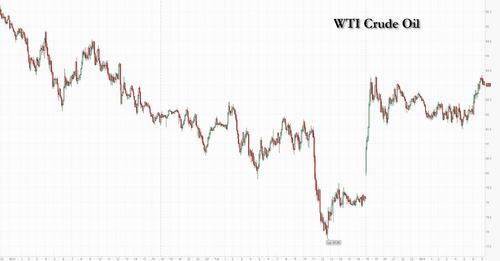
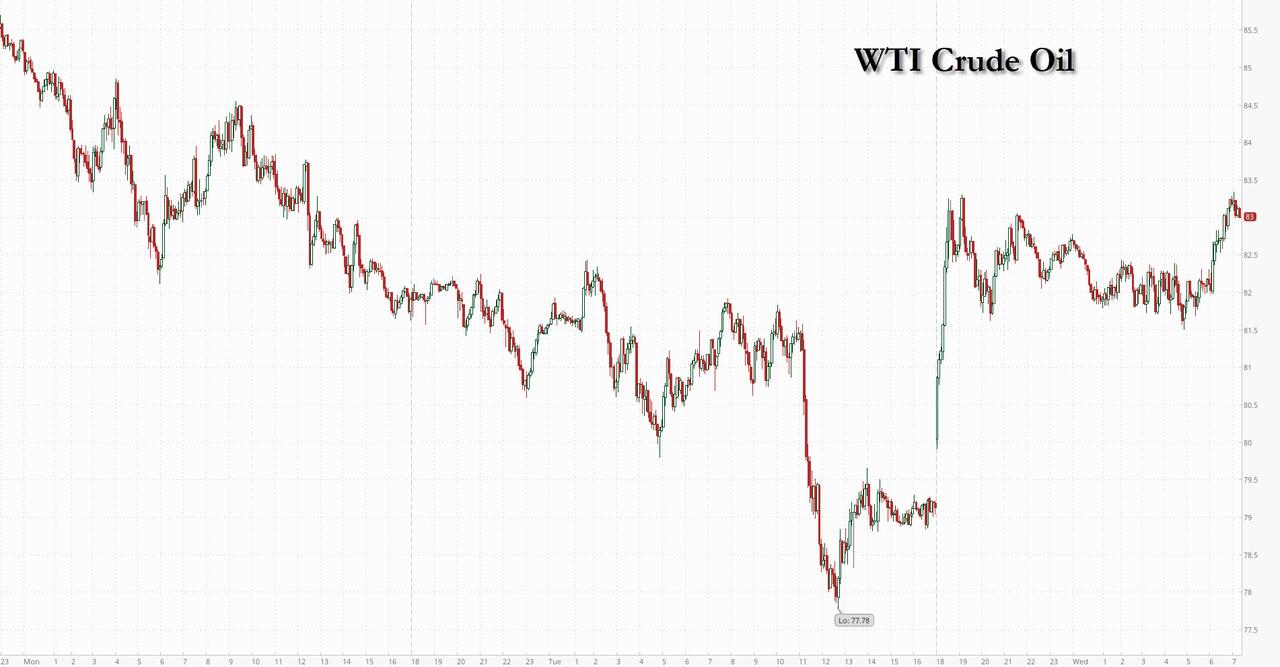
Brent has opened more than 3% higher this morning to follow overnight gains in WTI prices following Iranian missile strikes on a US base in Jordan – the first Iranian attacks since the recent ‘pause’ began – and joint strikes by the US and Saudi Arabia on Iran-backed militants in Iraq. Those Saudi-US came in retaliation for strikes on Saudi oil infrastructure. Israeli Prime Minister Netanyahu met with President Trump at the White House yesterday where the potential normalization of relations between Israel and Saudi Arabia was reportedly discussed.
Equity markets saw divergence yesterday between semiconductor stocks and value plays. South Korea’s KOSPI closed the day down 10.84% after triggering a market circuit-breaker early in the session, while Taiwan’s TAIEX index fell by 4.65%. Korean tech leaders Samsung and SK Hynix both fell by more than 10% as the latter posted record earnings but fell short of analyst estimates.
The chip selloff extended over to US markets, seeing the NASDAQ 100 fall by almost 1% to be off by close to 10% since the June highs. Sandisk, Seagate and Micron technologies were among the worst performers. The explanation offered by various newswires is that investors are becoming anxious about the large CAPEX programs of chip companies, including the ‘circle of life’ series of acquisitions and equity investments across the sector that critics suggest are keeping equity prices inflated beyond reasonable levels and raising the stakes for upcoming earnings reports.
Meanwhile, European stock indices were broadly higher, the S&P500 lifted 0.2% and the Dow Jones closed more than 1% higher. Among Asian indices the Australian ASX200 was a conspicuous outperformer, helped along by a relative paucity of tech names and an 8.6% gain for Viva Energy, who operates one of only two Australian oil refineries and reported an expected doubling of first-half earnings off the back of stronger refining margins. The expected earnings boost comes despite a 2% drop in fuel sales in the June quarter vs the prior corresponding period (June 2025). This was driven by a 4.7% drop in commercial and industrial fuel volumes, which might provide an insight into broader economic activity.
While geopolitical concerns simmer away, market attention will turn today to the FOMC, who meet to decide on the appropriate level of the Fed Funds rate. The overnight index swaps market currency has a touch over 8bps worth of rate hike priced-in for this meeting. The September meeting is now fully-priced for a 25bp hike, with another hike in the curve for March next year. In reality, few expect the Fed to raise rates at this meeting (we certainly do not), though we may see some FOMC members dissent in favour of lifting rates.
An interesting divergence is now emerging between the Fed under Kevin Warsh and other central banks. Warsh’s predilection for the Fed to “say less” contrasts with the approach of the RBA, who are busily implementing review findings encouraging better communication. The RBA recently published results of a survey it conducted which made the groundbreaking discovery that households’ primary economic concern is the rising cost of living (inflation) and that many individuals don’t have a firm grasp on the esoterics of monetary policy.
Given that the effectiveness of monetary policy transmission is related to the credibility of the central bank, the RBA views this as a problem for it to solve by communicating more effectively. Might we expect set-piece speeches like Governor Bullock’s appearance in support of the Anika Foundation yesterday to give way to TikToks?
Warsh, on the other hand, seems to take the view that the wizard retains more power if he remains behind the curtain. Saying less would neatly resolve the risk central bankers face of painting themselves into a corner when goaded into issuing forward guidance by enthusiastic journalists.
Bullock spent much of her speech yesterday rehashing the theme of repeated international shocks buffeting the supply side of the economy. Though Australia carried plenty of inflation momentum into the current oil shock, a tightening of global energy supplies has certainly exacerbated the problem and would have figured in the RBA’s decisions to raise the policy rate in March and May. There was some good news on the inflation front today though, with headline CPI in the year to June printing two ticks below market expectations at 3.8% and the core reading printing one tick lower than expected at 3.6%. The AUD and short sovereign yields are down substantially on the news.
Ultimately the great hope for overcoming the deleterious effects of geopolitical shocks on living standards is through strong productivity growth at home. AI holds the prospect of being something of a white knight on that score, but outside the US productivity growth remains anaemic and the link between huge AI CAPEX and improved productivity outcomes does not seem to be established in the top level data just yet.
While the promise is certainly there, the investment needs to result in inputs being converted to outputs more efficiently, and the physical materials needed for the fixed capital need to actually be available. In an age where semiconductor supply chains are being disrupted by energy and trade shocks, and important base materials like aluminium, copper, helium and nickel are physically constrained in the Strait of Hormuz shock (to say nothing of ongoing labour constraints!), converting those ‘circle of life’ CAPEX numbers into actual production might be easier said than done.
Tyler Durden Wed, 07/29/2026 - 10:30
Continue reading...
[ H/T ZeroHedge ]
By Benjamin Picton, senior market strategist at Rabobank
Circle Of Life
Active Brent crude futures fell by almost 5% yesterday as the US extended its pause on striking Iran. Donald Trump had indicated that the lull was underway to give diplomacy another chance, claiming that the US was in “very deep talks” with Iran but that his patience for progress was short, saying “either it goes fast or not at all.”
Brent has opened more than 3% higher this morning to follow overnight gains in WTI prices following Iranian missile strikes on a US base in Jordan – the first Iranian attacks since the recent ‘pause’ began – and joint strikes by the US and Saudi Arabia on Iran-backed militants in Iraq. Those Saudi-US came in retaliation for strikes on Saudi oil infrastructure. Israeli Prime Minister Netanyahu met with President Trump at the White House yesterday where the potential normalization of relations between Israel and Saudi Arabia was reportedly discussed.
Equity markets saw divergence yesterday between semiconductor stocks and value plays. South Korea’s KOSPI closed the day down 10.84% after triggering a market circuit-breaker early in the session, while Taiwan’s TAIEX index fell by 4.65%. Korean tech leaders Samsung and SK Hynix both fell by more than 10% as the latter posted record earnings but fell short of analyst estimates.
The chip selloff extended over to US markets, seeing the NASDAQ 100 fall by almost 1% to be off by close to 10% since the June highs. Sandisk, Seagate and Micron technologies were among the worst performers. The explanation offered by various newswires is that investors are becoming anxious about the large CAPEX programs of chip companies, including the ‘circle of life’ series of acquisitions and equity investments across the sector that critics suggest are keeping equity prices inflated beyond reasonable levels and raising the stakes for upcoming earnings reports.
Meanwhile, European stock indices were broadly higher, the S&P500 lifted 0.2% and the Dow Jones closed more than 1% higher. Among Asian indices the Australian ASX200 was a conspicuous outperformer, helped along by a relative paucity of tech names and an 8.6% gain for Viva Energy, who operates one of only two Australian oil refineries and reported an expected doubling of first-half earnings off the back of stronger refining margins. The expected earnings boost comes despite a 2% drop in fuel sales in the June quarter vs the prior corresponding period (June 2025). This was driven by a 4.7% drop in commercial and industrial fuel volumes, which might provide an insight into broader economic activity.
While geopolitical concerns simmer away, market attention will turn today to the FOMC, who meet to decide on the appropriate level of the Fed Funds rate. The overnight index swaps market currency has a touch over 8bps worth of rate hike priced-in for this meeting. The September meeting is now fully-priced for a 25bp hike, with another hike in the curve for March next year. In reality, few expect the Fed to raise rates at this meeting (we certainly do not), though we may see some FOMC members dissent in favour of lifting rates.
An interesting divergence is now emerging between the Fed under Kevin Warsh and other central banks. Warsh’s predilection for the Fed to “say less” contrasts with the approach of the RBA, who are busily implementing review findings encouraging better communication. The RBA recently published results of a survey it conducted which made the groundbreaking discovery that households’ primary economic concern is the rising cost of living (inflation) and that many individuals don’t have a firm grasp on the esoterics of monetary policy.
Given that the effectiveness of monetary policy transmission is related to the credibility of the central bank, the RBA views this as a problem for it to solve by communicating more effectively. Might we expect set-piece speeches like Governor Bullock’s appearance in support of the Anika Foundation yesterday to give way to TikToks?
Warsh, on the other hand, seems to take the view that the wizard retains more power if he remains behind the curtain. Saying less would neatly resolve the risk central bankers face of painting themselves into a corner when goaded into issuing forward guidance by enthusiastic journalists.
Bullock spent much of her speech yesterday rehashing the theme of repeated international shocks buffeting the supply side of the economy. Though Australia carried plenty of inflation momentum into the current oil shock, a tightening of global energy supplies has certainly exacerbated the problem and would have figured in the RBA’s decisions to raise the policy rate in March and May. There was some good news on the inflation front today though, with headline CPI in the year to June printing two ticks below market expectations at 3.8% and the core reading printing one tick lower than expected at 3.6%. The AUD and short sovereign yields are down substantially on the news.
Ultimately the great hope for overcoming the deleterious effects of geopolitical shocks on living standards is through strong productivity growth at home. AI holds the prospect of being something of a white knight on that score, but outside the US productivity growth remains anaemic and the link between huge AI CAPEX and improved productivity outcomes does not seem to be established in the top level data just yet.
While the promise is certainly there, the investment needs to result in inputs being converted to outputs more efficiently, and the physical materials needed for the fixed capital need to actually be available. In an age where semiconductor supply chains are being disrupted by energy and trade shocks, and important base materials like aluminium, copper, helium and nickel are physically constrained in the Strait of Hormuz shock (to say nothing of ongoing labour constraints!), converting those ‘circle of life’ CAPEX numbers into actual production might be easier said than done.
Tyler Durden Wed, 07/29/2026 - 10:30
Continue reading...
[ H/T ZeroHedge ]