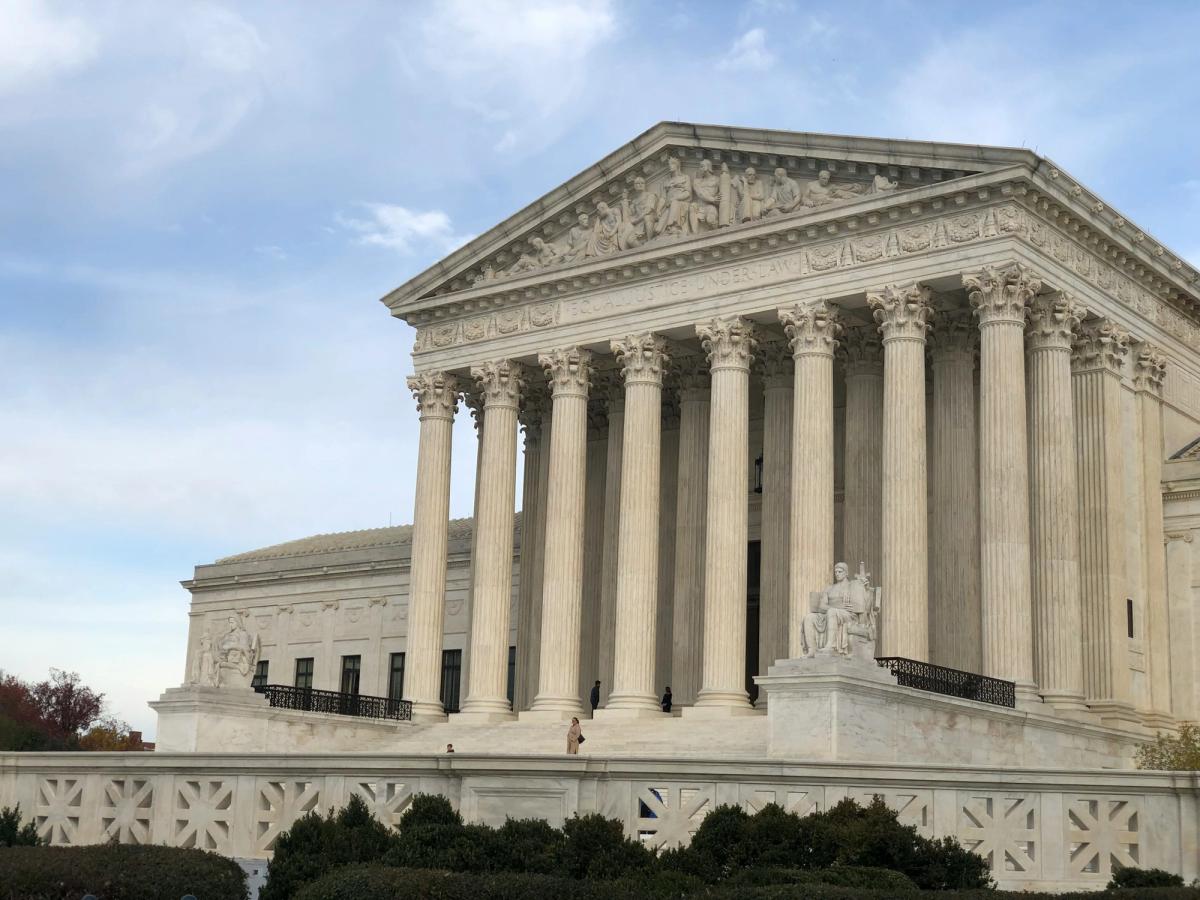











The Supreme Court’s decision last week blocking migrants stopped at the international boundary from applying for asylum turns on the text of federal immigration law. But the majority opinion reveals that the justices don’t understand the border-crossing process that Congress created. Perhaps if they had, the justices in the majority wouldn't have so easily handed border officers the power to seal off access to asylum.
The court’s decision in Mullin v. Al Otro Lado addresses facets of the Immigration and Nationality Act, the federal law governing migration, that apply when a person arrives at a U.S. land border crossing. Government officials staffing the border crossing interview everyone who arrives and, after a brief conversation and search of government databases, allow most people to proceed into the United States.
But when border crossing officers believe that someone lacks a legal basis for staying in the United States, they have multiple options available. Migrants can be detained at the border briefly and then released into the United States using a legal authority called parole. Alternatively, border officers can transfer migrants into the custody of the Immigration and Customs Enforcement agency, which can then release them or transfer them to one of its hundreds of immigration detention facilities. These options have one thing in common: the migrant is in the United States while the immigration legal process, including an opportunity for a hearing before an immigration judge, winds its course. Since 1996, border officers have had a third option available: quickly remove some migrants – except anyone who expresses fear for their safety – from the United States without involving the immigration courts. Anyone removed under the fast-track procedure, called expedited removal, is barred from returning for at least five years.
Writing for his colleagues in Al Otro Lado, Justice Samuel Alito inverted the basic legal structure that governs border-processing decisions. Instead of most people remaining in the United States, either in ICE’s custody or released on parole, while awaiting a court date, Alito suggested, incorrectly, that border officers quickly force most people out of the country. A border officer first decides whether a migrant is barred from entering the United States “on grounds related to, among other things, national security, foreign-policy concerns, and the alien’s health or criminal activity,” Alito explained. Anyone deemed inadmissible “must generally” be removed “without further hearing” through expedited removal, he wrote.
Alito is wrong. Expedited removal does not apply to everyone who is inadmissible. Despite his claim, people who border officers believe to be inadmissible for the reasons he listed are not, in fact, subject to expedited removal. Fast-track removal applies only to people who are excludable from the United States for two reasons: because they misrepresented an important fact to try to get into the United States or because they showed up at the border without a valid passport or visa. Indeed, Congress specified as much in the first half of the sentence that Alito quoted. But by ignoring the half of the sentence that limits expedited removal’s reach, the majority suggests that Congress gave border officers much more power than it did.
Congress did not create a legal system in which immigration judges only hear asylum claims by people who border officers suspect of inadmissibility. Instead, immigration law makes the immigration courts a central stop in the legal process for people who officers believe have violated most provisions of immigration law. There is good reason for this. For all their flaws, immigration judges are expected to act as neutral decision makers. Rather than demand that officials staffing busy border-crossing offices make complicated, high-stakes legal assessments on the spot while a queue forms ahead of them – increasing the risk of error – Congress put immigration judges in that role. As one federal appellate court explained, it’s the job of immigration judges “to fully develop the record.” And if a migrant or the federal government doesn’t like the immigration judge’s decision, they can do what migrants who are quickly expelled can’t: appeal.
“Justice Alito’s statement would take away from people seeking to enter the country — and some people already in it — their only opportunity to have their case heard by a neutral adjudicator,” Jonathan Weinberg, Distinguished Professor of Law at Wayne State University told me. “Instead, it would allow border officials to eject anyone seeking to enter the country, and impose a five-year bar on their returning, on the basis of their own mere say-so untethered in law,” he added.
By suggesting that border officers are empowered to perform quick legal reviews and subject to summary removal people deemed inadmissible for most reasons, the court might lead ordinary people to believe that immigration courts are the exception rather than the rule. It might also entice executive branch officials to push immigration courts to the fringe of legal decision-making. Either should be an unwelcome outcome that the majority can correct by revising its opinion.
Indeed, the majority’s misunderstanding of this basic feature of immigration legal processes may have paved the way for its decision. As described by Alito, border officers are the central figures in border-area legal decisions and immigration judges are only bit players. Handing border officers the authority to stop migrants at the border and, consequently, block them from starting the asylum application process extends the broad power that the majority wrongly thinks they possess. But if the majority had understood border processing correctly, it might have been more reluctant to give border officers the power to make on-the-spot, life-or-death decisions, instead leaving that role to immigration judges who hear from lawyers, review evidence, and are required to make neutral decisions that can then be appealed.
Continue reading...
[ H/T SCOTUSblog ]