





As the shooting war with Iran enters its sixth month, the United States continues to smash Iran’s military — and lose the information war in Iran, at home, and around the world.
American forces can strike targets across Iran and hit Tehran’s regional allies, especially the Houthis in Yemen. By every conventional military measure, Iran is taking severe losses. Yet a growing domestic and international audience believes Tehran is fighting the United States to a standstill.
The Iranian officials would earn an A in my information-warfare seminar. Too many American officials would earn an F
It is not. But Iran is winning the argument over what the war means.
Too many senior American officials still treat television — whether broadcast or streamed — as a record of an event rather than a battlefield in its own right. The War Department approaches global visual media as if it were still 1991 and Desert Storm. That must change.
U.S. military planners still tend to think in Clausewitzian terms: War is politics conducted through the controlled application of violence. That formulation reflected the technology of the early 19th century. It does not account for an information age in which images cross the globe in milliseconds and political effects can precede, outweigh, or even replace battlefield effects.
I call this form of conflict SOFTWAR: the hostile use of global visual media to shape another society’s will by changing its view of reality. Three colleagues and I have taught this form of warfare to generations of students at U.S. war, staff, and intelligence colleges since the early 1990s. Too few American institutions adapted.
Iran did. Its military and intelligence apparatus has embraced the concept since at least 2003 and even adopted the American-coined term in its own publications and influence operations.
That helps explain why the United States has spent billions of dollars over five months while Iranian drone and missile attacks — and Tehran’s televised defiance — continue. Washington is using Cold War systems and industrial-age doctrine against an asymmetric enemy organized for the infosphere.
Iran’s theocratic dictatorship is fighting a four-dimensional guerrilla war across land, sea, air, and information. Its military losses have limited its ability to retaliate directly against U.S. forces. Its remaining attacks are therefore chosen less for battlefield effect than for global media impact.
Oil tankers and cargo ships in the Strait of Hormuz, a desalination plant and power station in Kuwait, Saudi Arabia’s state-owned oil hub, a liquefied natural gas facility in Qatar, a U.S. communications center in Jordan, and American naval facilities in Bahrain all produce frightening images and headlines.
RELATED: The only Iran plan that doesn’t end with a 20-year hangover
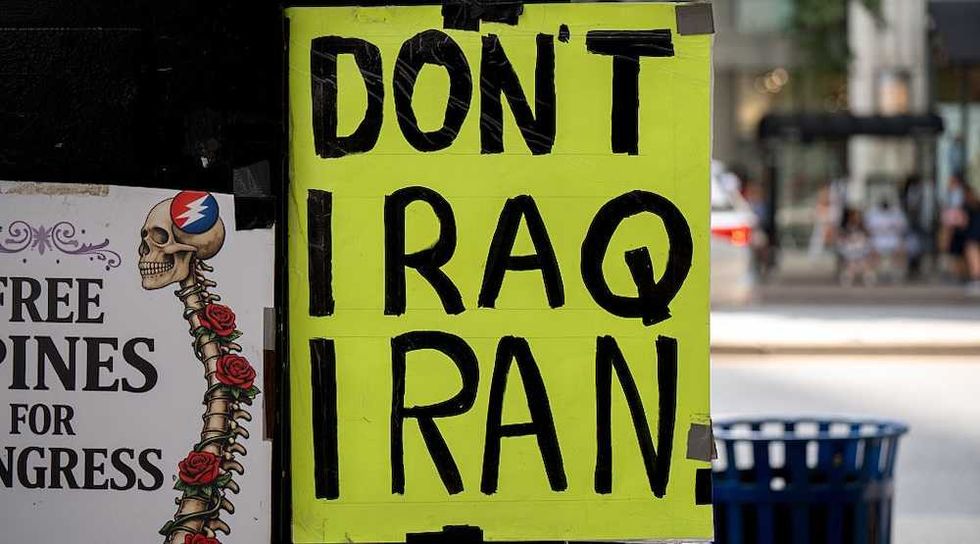
Iran times its scattered counterattacks for its own early-morning hours so the images arrive during the American prime-time news cycle. The objective is not merely to damage a target. It is to shape the story told about the war here, there, and everywhere.
The United States helps Tehran by concentrating almost exclusively on visible military targets while leaving the regime’s domestic television system intact. Islamic Republic of Iran Broadcasting continues to push the mullahs’ account across dozens of television channels and through its official news operation.
Washington destroys weapons and commanders but fails to contest the information environment that gives those losses political meaning. It has not destroyed the transmitters and replaced the regime’s message with one aimed directly at the Iranian people.
Those people are the regime’s real engine: a population that has endured repression and the reported killing of tens of thousands of anti-government demonstrators. Outside the relatively small number of Iranians with access to Starlink, the United States has no coherent way to speak to them at scale.
America does not lack the technology. The military weakened its own capacity. In 2024, it retired the EC-130J aircraft of the 193rd Special Operations Wing, the only U.S. airborne radio and television broadcast platform. The aircraft were judged too vulnerable for modern combat, but no announced drone replacement has taken over the mission.
The result is overwhelming kinetic power without a direct means of reaching the Iranian public. It is the doctrine of a mechanic who responds to an engine-warning light by cutting the wire to the bulb. The warning disappears. The engine keeps failing.
Meanwhile, Iranian propagandists study the American audience, especially younger people hostile to the Trump administration, and target them with AI-generated Lego-character videos. The goal is to unite disparate factions, erode domestic support for the war, and influence the midterm elections.
America needs a genuinely four-dimensional military capable of operating on land, at sea, in the air, and throughout the infosphere. Information warfare should organize and direct the campaign, with kinetic operations supporting strategic influence objectives — not the other way around. Iran already understands the hierarchy.
RELATED: Memo to Hegseth: Military education needs a strategic makeover
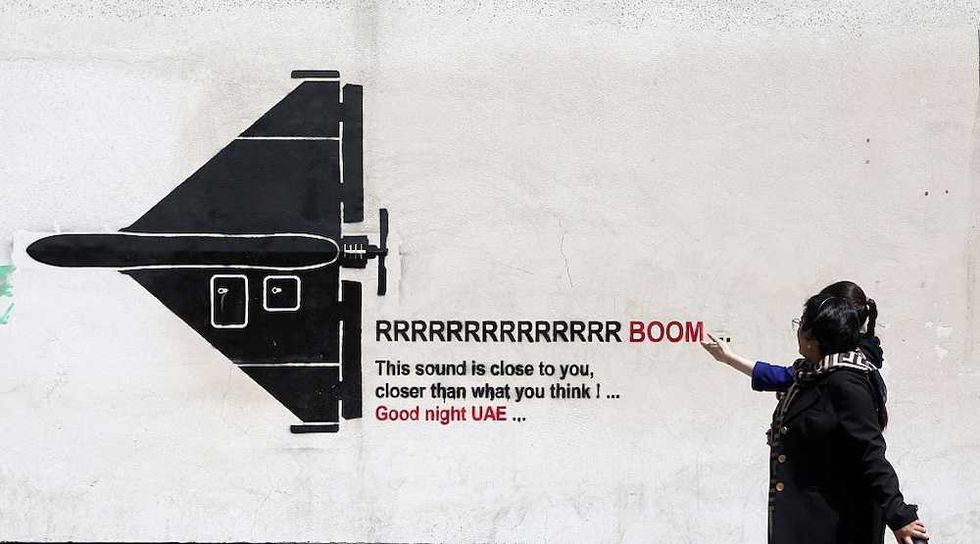
Its officials also understand presentation.
When Iranian military figures such as Brigadier General Ebrahim Zolfaghari or Islamic Revolutionary Guard Corps spokesman Abolfazl Shekarchi address the public, they are usually seated behind a desk with the Iranian flag visible. Their uniforms are immaculate, their beards trimmed, and their faces dramatically lit. Most important, they look through the camera lens directly at the audience. This is television 101.
Viewers who speak no Farsi still receive the intended message: discipline, seriousness, and defiance.
American military spokesmen too often squander the same opportunity. They ignore, disdain, or have never learned the skills needed to communicate effectively on television.
General Dan Caine, chairman of the Joint Chiefs of Staff, is informed and capable. But at his Pentagon press conferences, his televised manner resembles a squadron commander consulting his notes while briefing the weather to the first three rows.
He should address the millions watching beyond the room. Put the camera a few feet away, frame him from mid-bicep to just above the head, and have him look through the lens to establish direct eye contact with the intended audience. Reporters can sit to either side. The difference would be immediate.
Admiral Brad Cooper, commander of U.S. Central Command, makes a similar mistake. He often appears in green camouflage designed to defeat electro-optical observation — including television — rather than the Navy service uniform designed to convey authority, experience, and command. He also stands too far from the camera for viewers to read his face.
His folksy Ozzie Nelson manner may work before Congress or the Navy League. It does not put an enemy on his heels.
RELATED: The future of warfare is not what you think
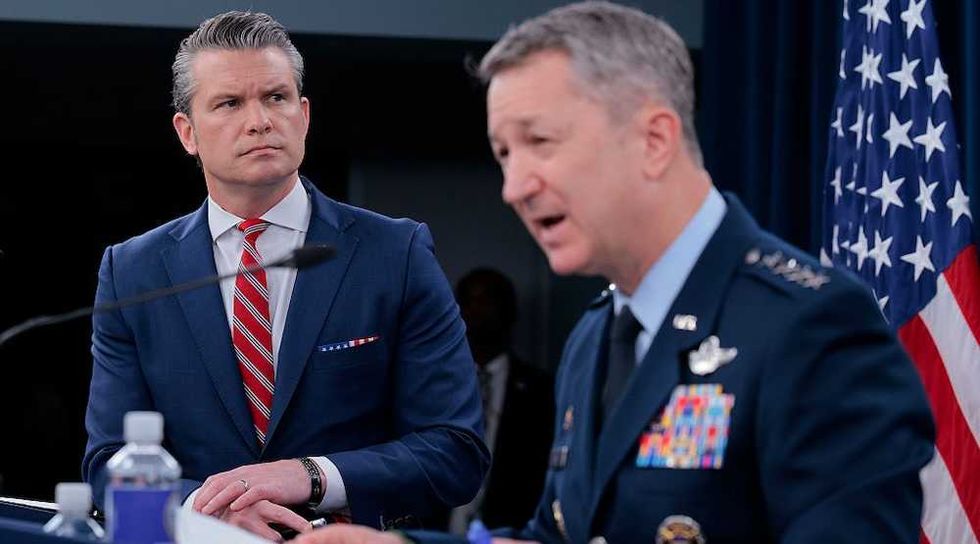
Secretary of War Pete Hegseth should know better. The former Fox News host needs a tighter camera shot and a visual style designed for wartime communication rather than his old television demographic.
His current presentation is crowded with distractions: a tight European-cut suit, patterned tie, clashing flag pocket square, and hair product that makes his scalp glisten under studio lights. His deep-set eyes require careful lighting. Without it, viewers may read strain or evasiveness where none exists.
Alfred Hitchcock understood the rule: Dress the leading man simply and light him properly so the audience watches the man rather than the costume. Cary Grant in “North by Northwest” remains the model.
The Iranian officials would earn an A in my information-warfare seminar. Too many American officials would earn an F — and three hours of detention.
That needs to change right now.
The United States is not losing the military contest with Iran. It is losing the contest over what the world believes the military contest means.
A nation can destroy every designated target and still lose the war if its enemy controls the images, timing, and story. Information warfare is not an elective. It is the core course.
America, so far, is failing.
Continue reading...
[H/T Blaze Media]


