






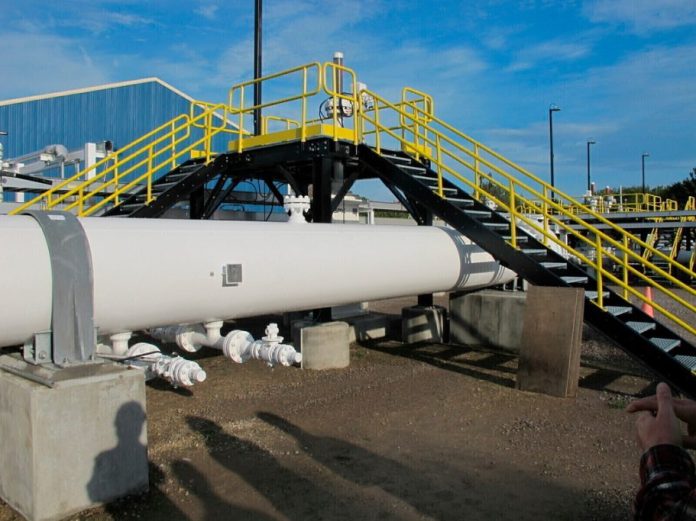
America does not have an energy shortage. We have an infrastructure problem. The United States is the world’s largest producer of natural gas, with abundant reserves, American workers ready to build, and the technology to power our homes, businesses, and industries for generations. But producing energy does little good if we cannot build the infrastructure necessary to move it where it is needed. Increasingly, the obstacle is a legal system that can turn federal approval into the beginning of years of litigation.
When the Federal Energy Regulatory Commission issues a certificate of public convenience and necessity for an interstate natural-gas pipeline, the project has already undergone extensive federal review, environmental analysis, public comment, and expert agency consideration. Judicial review should remain available to people genuinely harmed by an agency decision. But it should not become a mechanism for opponents to delay an approved project until it becomes too expensive to build.
The Mountain Valley Pipeline demonstrates the consequences. The project was originally expected to enter service in 2018 at an estimated cost of $3.5 billion. After years of litigation, regulatory setbacks, and construction delays, its cost reached approximately $7.85 billion. Congress ultimately had to intervene in 2023 to expedite completion of a project that had already received federal approval.
Other projects never made it that far. The roughly $8 billion Atlantic Coast Pipeline was canceled even after its developers prevailed in a 7-2 Supreme Court decision in a major permitting dispute. Dominion Energy cited growing costs and an increasingly uncertain permitting and litigation environment, while Duke Energy was left with more than $1.6 billion in costs associated with the canceled project. The Constitution Pipeline was similarly abandoned after years of regulatory and legal battles when its developers concluded that the project was no longer economically viable.
These cases reveal a larger structural problem. Investors considering new infrastructure must account for the possibility that a valid federal authorization will still be followed by years of litigation. That uncertainty raises financing costs, discourages investment, and means some viable projects are never built. A federal permit should not guarantee that a project succeeds, but neither should it become an invitation to another decade of litigation.
People ultimately pay the price when infrastructure fails to keep pace with demand. Winter Storm Fern provided a stark example. During the January 2026 storm, natural-gas supplies tightened across the Northeast, and spot gas prices in New York and New England approached $300 per million BTU, roughly 90 times the national average. New England’s vulnerability did not develop overnight. Pipeline projects intended to expand natural-gas capacity into the region have repeatedly faced regulatory opposition and litigation, leaving consumers more exposed when extreme weather sends demand soaring.
The reliability challenge is becoming more urgent. The North American Electric Reliability Corporation found that 13 of 23 North American assessment areas face resource-adequacy challenges over the next decade. Electricity demand is growing as manufacturing facilities, data centers, and other large loads connect to the grid. Natural gas remains essential to meeting demand when intermittent resources cannot provide sufficient power, but gas-fired generation cannot keep the lights on without pipelines to deliver its fuel.
Meanwhile, China is building. Its pipeline network exceeded 120,000 kilometers in 2025, while its state-owned pipeline operator accelerated construction on nearly 40 major infrastructure projects totaling more than 9,000 kilometers. China invested $500 billion in major energy projects in 2025, while the United States continues debating whether federally approved infrastructure can survive another round of litigation. We should not imitate China’s political system or abandon meaningful environmental review, but we should recognize the strategic consequences when our foremost economic competitor can build critical infrastructure while ours is litigated into paralysis.
That is why I introduced the Unleash American Pipelines Act. The legislation makes three targeted reforms to judicial challenges involving FERC Section 7 pipeline certificates, drawing from provisions that passed the House as part of the One Big Beautiful Bill Act before being removed in the Senate on procedural grounds.
The legislation requires petitioners to demonstrate direct and irreparable economic harm arising from the certificate they are challenging, including requirements for organizational petitioners. It establishes a clear-and-convincing-evidence standard for challenges to FERC’s determination, recognizing the agency’s technical expertise and extensive administrative record. Finally, it consolidates challenges in the U.S. Court of Appeals for the District of Columbia Circuit, creating a single, predictable judicial forum rather than allowing litigation across multiple circuits to multiply uncertainty, delay, and expense.
These reforms do not eliminate judicial review. They ensure those bringing a challenge have a genuine stake in the outcome, courts appropriately recognize the extensive administrative process preceding FERC’s decision, and litigation cannot be used indefinitely to accomplish what opponents could not achieve during the permitting process.
For Florida, the stakes are particularly high. Natural gas generates nearly three-quarters of our electricity, while our state produces very little of the natural gas it consumes. Florida families and businesses depend heavily on interstate pipelines to deliver the fuel that keeps our electric grid running. A system that prevents needed pipeline capacity from being built is not an abstract Washington policy dispute. It directly affects affordability, reliability, and economic growth for the people I represent.
WE HAVE THE ENERGY, WE HAVE THE DEMAND. NOW WE JUST NEED PERMISSION TO BUILD
The same is true for our country. America is entering an era of rapidly growing electricity demand while competing with China for advanced manufacturing, artificial intelligence, and the industries that will define the next century. We cannot pursue American energy dominance, reshore manufacturing, build new data centers, and strengthen our electric grid while maintaining a legal framework that allows essential infrastructure to spend years trapped between a federal permit and a courtroom.
America has built the interstate highway system, the transcontinental railroad, and pipelines across some of the most difficult terrain on the continent. We remain capable of building great things. Our laws should ensure rigorous review and protect Americans genuinely harmed by government decisions, but they should not allow delay itself to become the objective. America has the energy, workers, and technology to meet the next generation of demand. We need a legal system that allows us to build.
Laurel Lee is a member of the U.S. House of Representatives, serving the people of Florida’s 15th Congressional District.
Continue reading...
[ H/T Washington Examiner ]