




Summary
- Conservatives are regrouping after midterm setbacks and already planning their 2028 comeback.
- Kevin Roberts says affordability and the war were major factors in Republicans’ losses.
- The Forum, taking place Nov. 10-12, will unite conservative leaders around a strategy for the future.
Conservatives are wasting no time regrouping after this year’s midterm election setbacks. Next week, hundreds of movement leaders will gather in a Washington, D.C., suburb to plot their comeback in 2028.
The inaugural event, called The Forum, will bring together disparate segments of the conservative movement for an honest reckoning about Tuesday’s results.
Policymakers will also debate solutions to some of America’s most vexing challenges, including affordability, China, Islamification, and socialism, with an eye toward shaping public opinion and countering an emboldened Left.
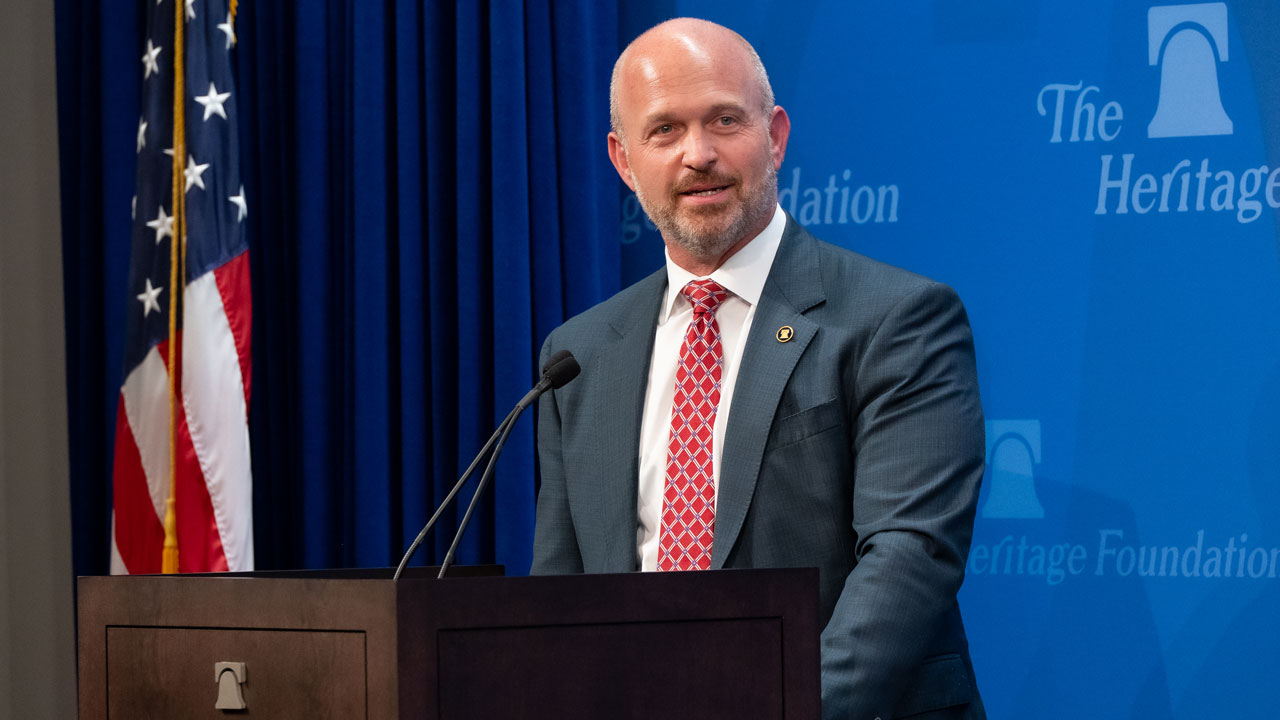
Kevin Roberts, president of The Heritage Foundation and Heritage Action, joined the final episode of the Daily Signal’s “Midterm Report” to share his aspirations for the event. He also diagnosed what went wrong for Republicans and explained why conservatives shouldn’t despair.
What Went Wrong
In the days following Republicans’ electoral drubbing, pollsters and pundits have analyzed exit polls for clues about voters’ dissatisfaction.
Roberts attributed the losses primarily to the war and lingering concerns about affordability.
“The Trump-Vance coalition was put together on a lot of issues, but two of the most central ones were that there would be no new wars and that prices would go down,” Roberts said. “This is just Politics 101 in any representative government.”
Roberts said he still defends Trump’s decision to go to war with Iran but believes “the war went on too long,” particularly given its economic consequences.
Trump returned to the White House last year after mounting one of the greatest political comebacks in American history. He did so by assembling a diverse coalition of voters who hadn’t traditionally supported the GOP.
Many of those voters were disillusioned by President Joe Biden and Vice President Kamala Harris’ policies, which contributed to inflation not seen in 40 years.
Trump benefited from Americans’ frustration with the high cost of living two years ago when he defeated Harris. Despite inheriting an economic mess, Trump quickly went to work addressing affordability through executive orders and the One Big Beautiful Bill, also known as the Working Families Tax Cut.
Americans responded favorably. By early February, more than a year into Trump’s presidency, 32% of voters said their finances were getting better, compared with 30% who said they were getting worse.
Pollster Scott Rasmussen, who has consistently asked voters about their personal finances in his RMG Research surveys, said those were the best numbers he had seen in five years.
Then the U.S. attacked Iran at the end of February. The numbers have only grown worse since then.
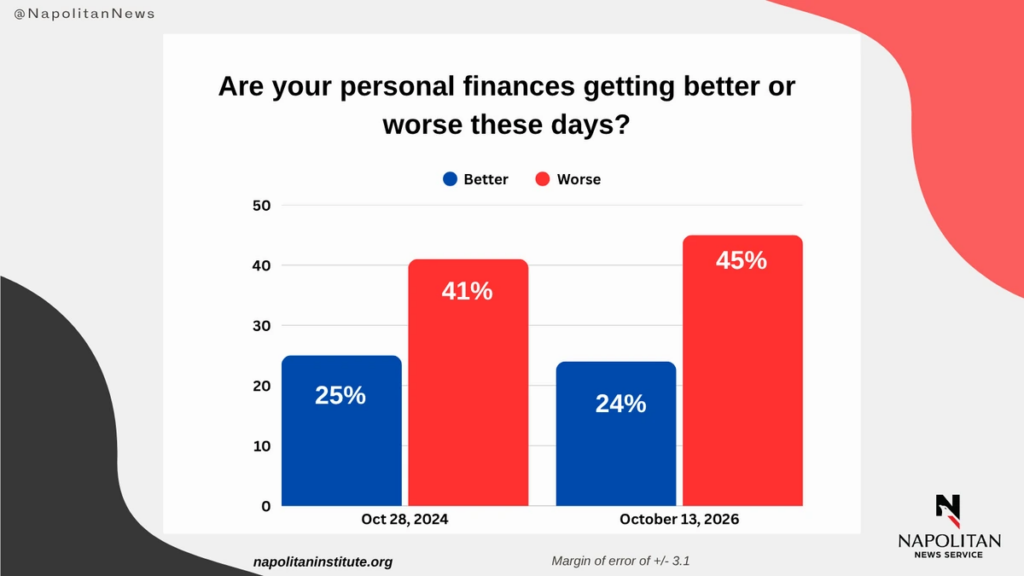
It’s why Roberts said affordability must be an important focus for conservatives over the next two years.
“I think the 2028 presidential election will largely be determined by which side addresses these affordability concerns the most,” Roberts said.
He outlined several steps conservatives could take, beginning with restraining federal spending and continuing the Trump administration’s deregulatory agenda.
“We have to stop spending money we don’t have in Washington,” Roberts said, arguing that excessive federal spending has “cascading economic and fiscal consequences all the way down to the kitchen table.”
He also cited housing as an area ripe for action, pointing to regulations that restrict new construction and the large share of homes owned by corporations in some metropolitan areas.
Why Conservatives Shouldn’t Despair
Roberts, a historian, reflected on other moments in American history when presidents suffered midterm defeats, only to continue wielding great influence over the country’s direction.
He pointed to 1894, when President Grover Cleveland’s unpopularity helped Republicans pick up 130 House seats, as well as midterm setbacks suffered by Presidents Franklin Roosevelt, Harry Truman, Ronald Reagan, Bill Clinton, and Barack Obama.
“Some of our most high-profile presidents—FDR, Truman, Reagan, Clinton, Obama—have suffered these kinds of defeats,” Roberts said. “And it’s not as if their respective political movements cease to exist.”
More importantly, Roberts rejected the notion that Tuesday’s results represented an ideological rejection of the conservative movement.
“This is not a repudiation of conservatism or America First,” Roberts said. “In fact, the Left very successfully co-opted the messaging and some of the policies of America First, especially economic populism.”
The lesson, Roberts argued, isn’t for conservatives to abandon their principles but to make a stronger case for them.
“We need to talk about what we stand for,” he said. “We need to talk about affordability. We need to hammer that freedom is more important than socialism.”
The Forum
That effort will begin almost immediately at The Forum from Nov. 10-12 in National Harbor, Maryland.
Roberts said Heritage began planning the gathering a year ago, long before anyone knew what the 2026 midterms would bring. The question guiding those conversations was bigger than a single election: Where is the conservative movement going?
“One of the great attributes of the Heritage enterprise is we have the power to convene people,” Roberts said. “The purpose of The Forum is to have this family meeting, if you will, of key conservative leaders.”
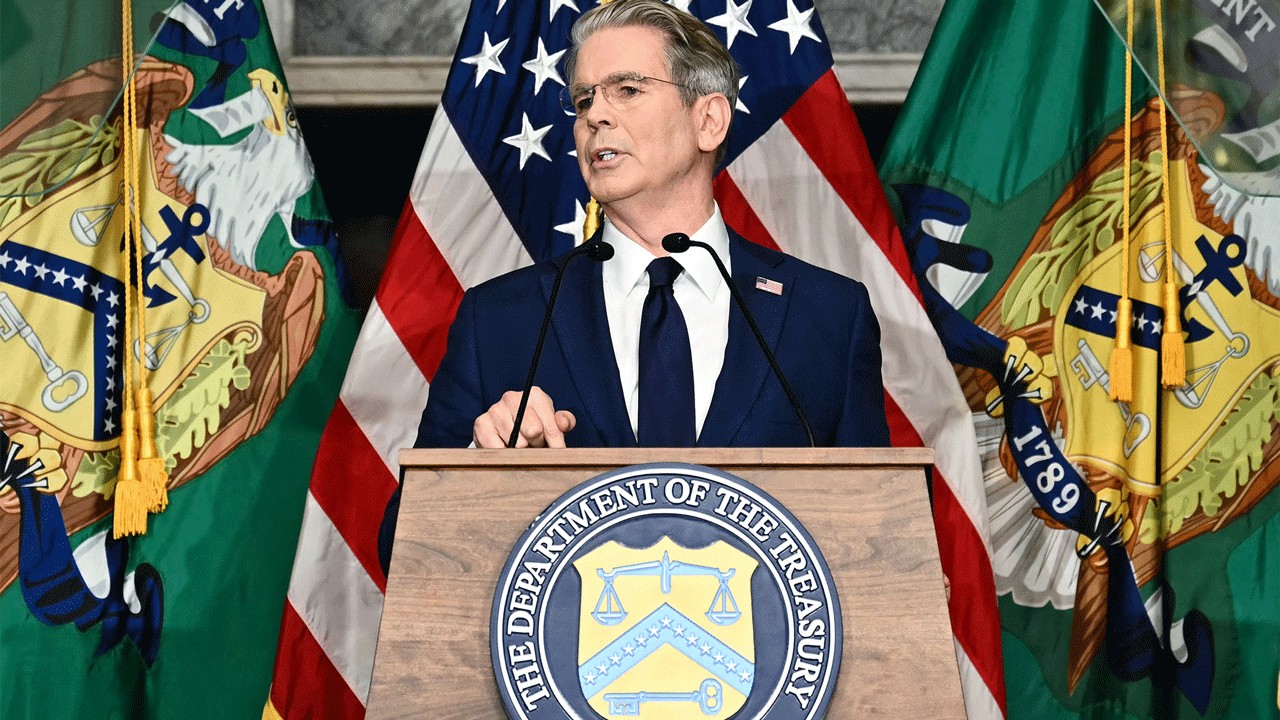
The gathering will feature leaders from government, conservative organizations, media, and business. Roberts cited Treasury Secretary Scott Bessent and commentator Scott Jennings among the headliners, along with entrepreneur Palmer Luckey.
But Roberts stressed that The Forum isn’t intended merely as a post-election discussion.
“The point is not just to sit around and talk, but to really cohere the movement around these big focus areas,” he said.
Those priorities include making life more affordable for everyday Americans, defending freedom against socialism, confronting the Islamification of the United States, and countering China.
And if conservatives need time to process Tuesday’s losses, Roberts wants that period to be brief.
“If there’s any sort of additional emotional therapy that needs to happen as a result of the election,” he said, “that’s done by the end of the week.”
Heritage, he added, isn’t waiting until January to get started.
“Conservatives have their chins up. They have a plan for the future,” Roberts said. “And they are going to be doing a much better job of shaping public opinion about the issues that Americans care about.”
What Americans Can Do
Roberts also had a message for conservatives wondering what they can do after a disappointing election: Get involved locally.
For those looking for an organized way to participate, Roberts recommended becoming a Sentinel, part of Heritage Action’s grassroots activist program.
But political involvement doesn’t have to begin in Washington or with a national organization.
“The best way to kind of get back into the groove politically, or maybe into the groove for the first time, is to go to your local city council or local school board meeting,” Roberts said. “And just sit there. No one expects you to be an expert when you go there.”
What Americans will often discover, he said, is “a lack of transparency and competence and a need for good, virtuous, smart Americans to be involved.”
Roberts also encouraged conservatives interested in campaign politics to begin preparing now for the next election, whether that means organizing, passing out sample ballots, or helping candidates.
“We have to start planning already for 2028,” Roberts said. “It is not too early to be doing that.”
His final piece of advice was perhaps the simplest.
“Find the one thing locally that excites you,” Roberts said, joking that it could even mean running for a homeowners association to defend private property rights. “Just go get involved.”
For conservatives discouraged by Tuesday’s results, Roberts’ message was clear: The next election might be two years away, but the comeback starts now.
Continue reading...
[ H/T The Daily Signal ]