





Guest Post by John Walter
Civilization’s veneer runs thinner than we dare contemplate. Our modern society has constructed an elaborate edifice of dependence upon what we collectively term “the system”—an intricate web of utility services, supply chains, and technological infrastructure that delivers electricity, water, natural gas, and virtually every material necessity to our doorsteps without demanding comprehension or competence from its beneficiaries. This apparatus, for all its magnificent efficiency, masks a precarious fragility that becomes visible only when examined through the lens of historical perspective.
Consider the arithmetic of vulnerability. Three days without electricity transforms a suburban home into an elaborate tomb of useless conveniences. Five days without functioning supply chains reduces cities to hunger and desperation. Two weeks without the invisible infrastructure we mistake for permanence, and the social contract begins to fray into something older and more brutal. We stand atop a pyramid of dependencies so complex that a single rupture could plunge millions into bewildered helplessness, confronted with survival requirements they lack the knowledge to address.
Generational comparison reveals this erosion with painful clarity. In my own middle age—having passed through the decades when boys still learned trade skills from their fathers—I observe with melancholy the striking differences between my generation and that of my children. Normalcy once encompassed wide varieties of practical competence: basic carpentry, fundamental mechanical repair, the cultivation of soil for sustenance rather than ornament. These capacities weren’t considered exceptional; they constituted the baseline of adult self-sufficiency. Yet that baseline has shifted dramatically, and the trend accelerates rather than reverses.
Extrapolation backward illuminates the extent of this loss. My father’s generation possessed knowledge my own has largely abandoned. His parents’ generation maintained connections to agricultural existence that rendered them genuinely self-reliant, capable of meeting fundamental needs without recourse to distant systems or specialized expertise. They embodied skills that modernity has declared obsolete, yet which retain their essential character—capacities that would become immediately vital should the elaborate structures of contemporary life experience significant disruption.
The generations preceding us understood something we have forgotten: competence is the only true insurance against chaos. Knowledge stored in muscle and memory outlasts knowledge stored in digital clouds. They carried within their sinews the memory of harder times, when survival wasn’t guaranteed by distant systems but by the calloused competence of one’s own hands. We have traded that sovereignty for convenience, and the transaction, while comfortable, leaves us spiritually impoverished and practically defenseless.
When systems fail—and history suggests that all systems eventually fail—those who cannot feed themselves, cannot shelter themselves, cannot heal themselves face a brutal calculus: learn rapidly or perish. The learning curve, absent foundational knowledge, proves steep and unforgiving. Better to possess skills unneeded than to need skills unpossessed. Your great-grandparents understood this intuitively. Their grandchildren must learn it deliberately, or risk discovering too late that the inheritance they presumed permanent has already been spent.
What follows is archaeology of the practical—a recovery of ten essential capacities that once defined human adulthood and now threaten to vanish entirely from our collective repertoire. These aren’t nostalgic curiosities but survival architecture, the fundamental competencies that separate autonomy from dependence.
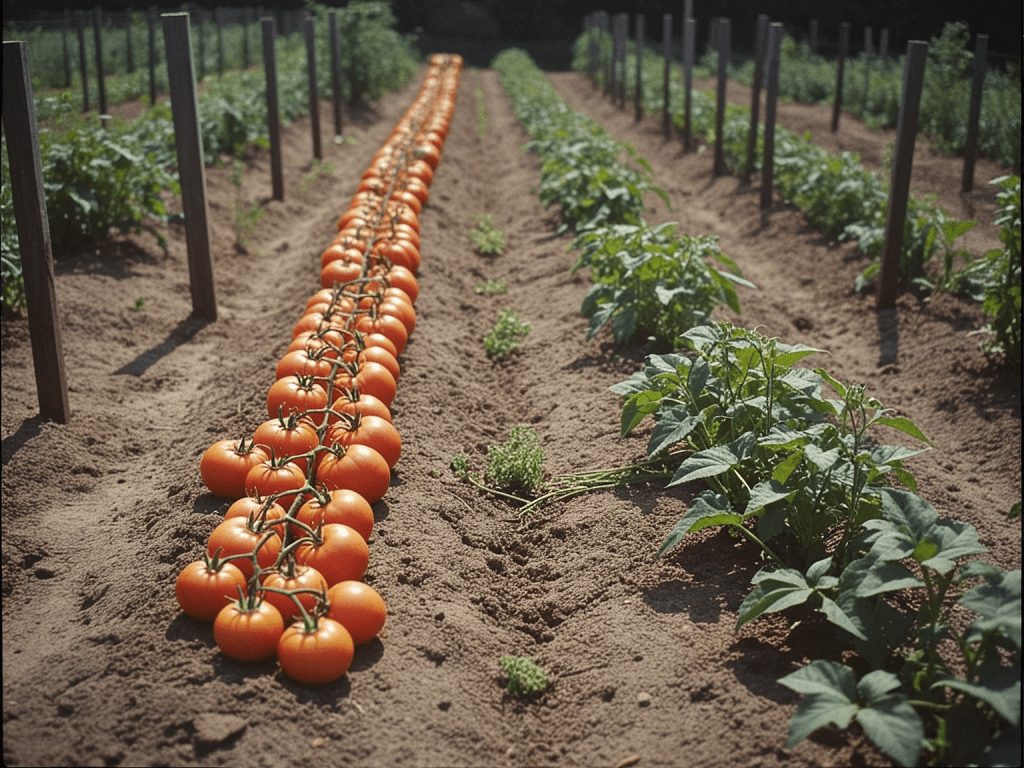
Victory Gardens weren’t merely patriotic gestures during the Second World War; they represented the last gasp of agricultural self-sufficiency in a nation rapidly urbanizing. When government posters urged citizens to plant vegetables, they were appealing to knowledge that had sustained humanity for ten thousand years—the understanding that food originates in soil, not shelves. Your great-grandfather could read the weather in his bones, could amend clay or sand into fertility through compost and patience, could calculate planting dates by moon phases and frost tables that existed only in community memory.
Modern gardening, by contrast, has become ornamental theater. We cultivate flowers for visual pleasure while remaining dependent on industrial agriculture for calories. The distinction matters enormously. A flower garden soothes the eye; a vegetable garden sustains the body. The former requires aesthetics; the latter demands competence. Tomatoes don’t yield to good intentions. They demand knowledge of soil pH, recognition of early blight, the patience to harden off seedlings before transplanting, the wisdom to know when fruit is truly ripe versus merely colored.
Three years of failed harvests taught me these distinctions. My grandfather would have absorbed them before his tenth birthday, standing barefoot in soil his family had cultivated for generations. When the supply chain fails, this knowledge becomes the difference between hunger and sustenance.
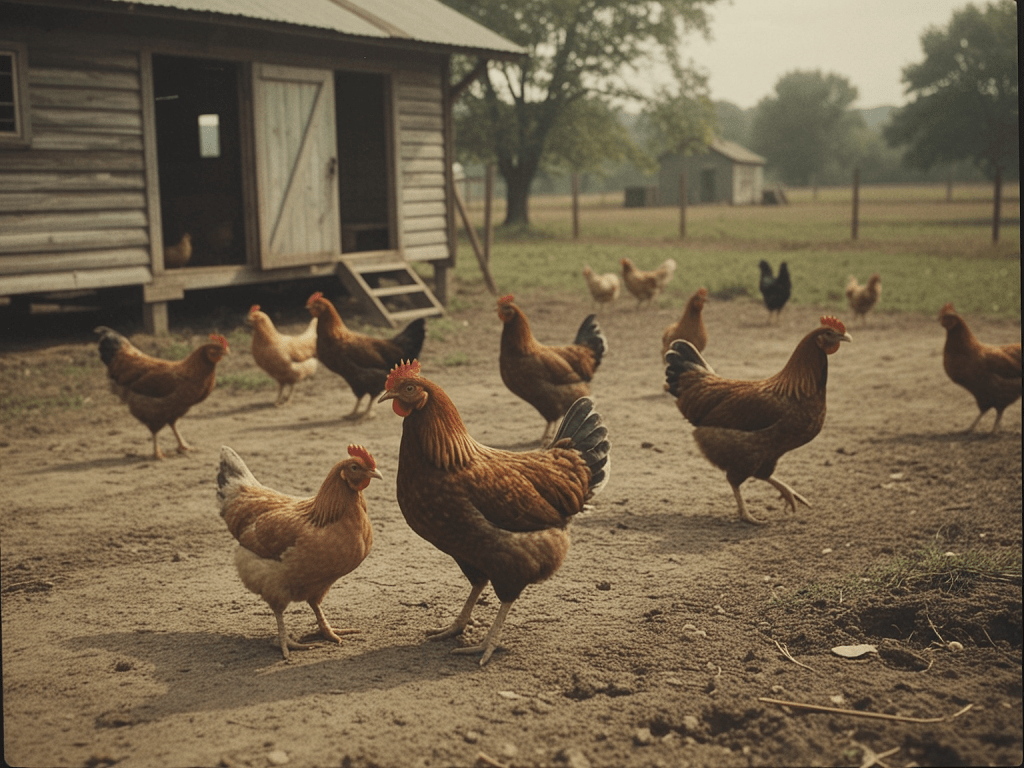
Urban ordinances now prohibit the keeping of livestock within city limits, a prohibition that would have baffled our ancestors. Until remarkably recently, the distinction between “pet” and “livestock” remained fluid, and the keeping of chickens, rabbits, or even goats represented normal household economy rather than agricultural eccentricity. Your great-grandmother could diagnose coccidiosis in a hen by the tint of its comb, could birth a difficult lamb with hands that knew the anatomy of womb and cervix, could dispatch a rabbit for Sunday dinner without sentimentality or waste.
This knowledge extended beyond mechanical competence into a kind of relational intuition—the ability to read animal behavior, to recognize illness before it became crisis, to maintain breeding records without written notation. Modern pet-keeping, by contrast, outsources all medical knowledge to veterinary professionals and all death to distant slaughterhouses. We have become strangely innocent about the creatures we depend upon, unable to comprehend the cycle that transforms living flesh into sustenance.
When the supply chain fails, this ignorance becomes dangerous. Chickens sicken and die from preventable conditions. Meat spoils from improper butchering. The knowledge that once passed naturally from mother to daughter now must be desperately relearned from books and videos, if it is relearned at all.
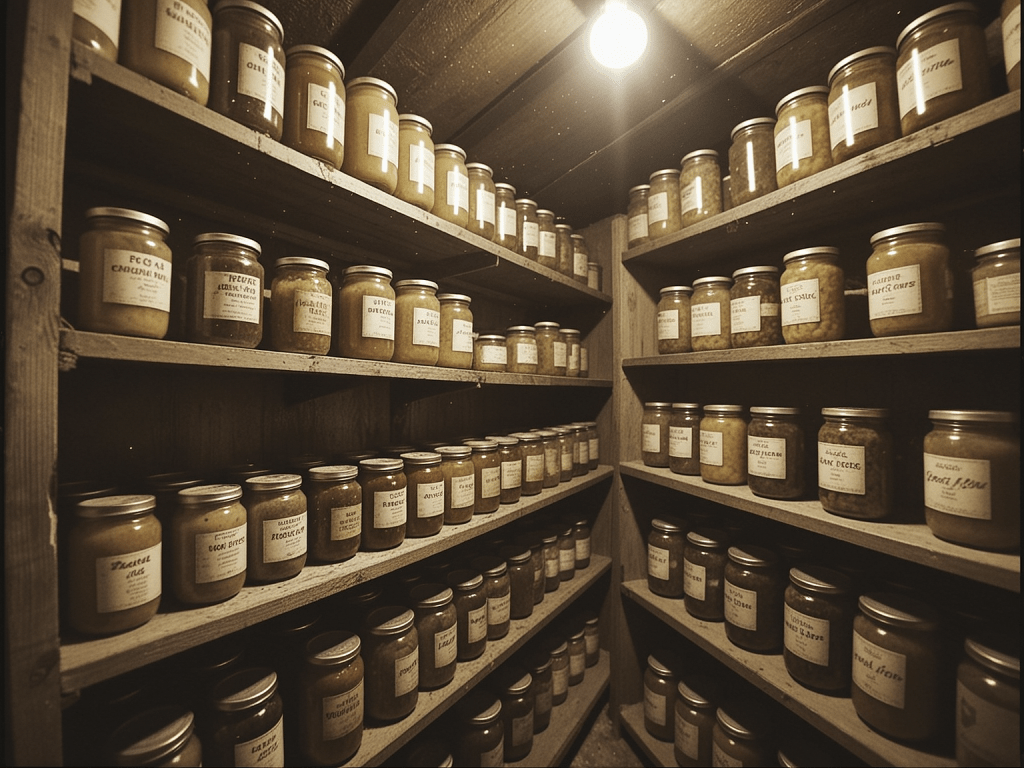
Smokehouses once occupied the yards of virtually every middle-class American home, their walls blackened by decades of hickory and applewood, their interiors hanging with sides of beef and pork that would sustain families through winter’s deprivation. Your great-grandmother’s kitchen contained equipment now found only in museums: pressure canners with weighted gauges, crocks for fermenting cabbage into sauerkraut, stone crocks buried in cool earth for keeping butter and cheese.
She understood the microbial ecology that modern refrigeration has made us forget—the precise temperatures that encourage beneficial fermentation while inhibiting dangerous spoilage, the acidity levels that create safety in preserved foods, the visual and olfactory signs that distinguish edible from deadly. Canning tomatoes requires more than boiling water and jars. It demands knowledge of acidification, of headspace, of processing times that vary with altitude and humidity.
Modern food preservation, practiced at all, has become artisanal affectation rather than survival necessity. The integrated system of preservation that once ensured food security has largely dissolved into dependence on electric refrigeration and just-in-time delivery.
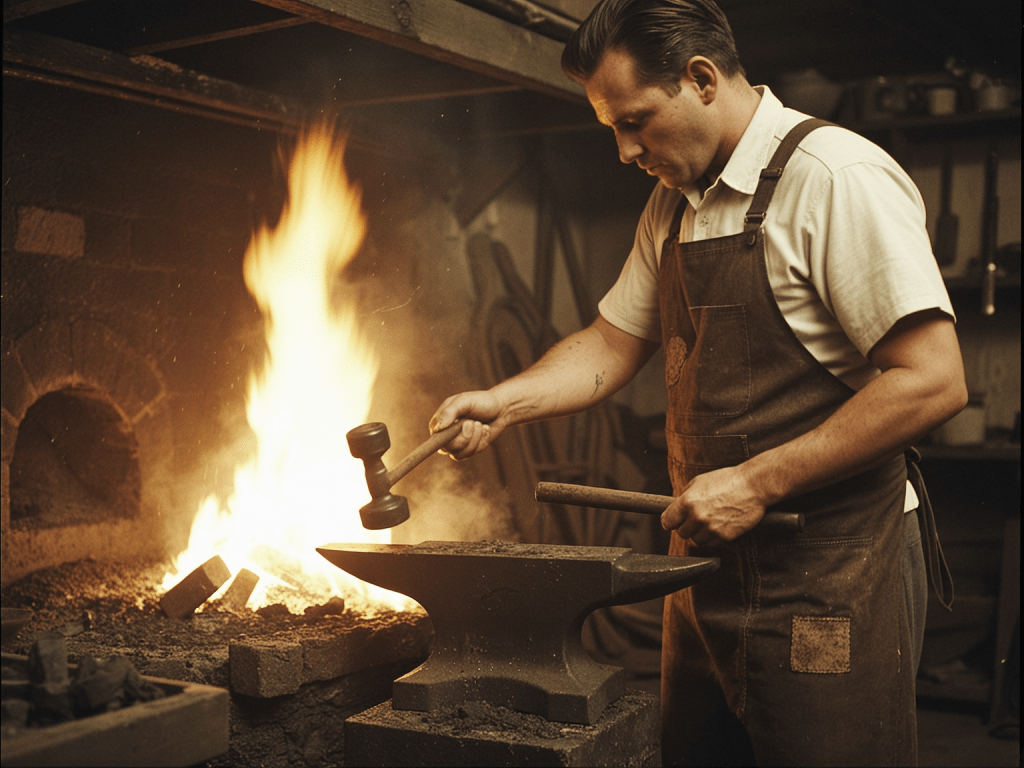
Metalworking persisted far longer than popular imagination suggests. My own father practiced the craft into his later years, though his work tended toward ornamental rather than essential. Yet travel to rural communities worldwide, and you encounter smiths who remain the essential repair infrastructure—craftsmen who can fashion replacement parts from raw stock, tempering metal in charcoal fires, shaping with hammer and anvil until precision emerges from heat and force.
This capacity—to transform metal rather than merely consume it—represents fundamental autonomy that industrial manufacturing has eroded. When factories close, when supply chains fracture, the blacksmith’s knowledge becomes suddenly precious. Tools can be repaired rather than replaced. Implements can be fashioned from scrap. The material world becomes malleable rather than final.
Your great-grandfather likely knew at least the rudiments of this craft, enough to sharpen plows and mend gates, enough to understand that metal has memory and grain and specific temperaments that must be respected. We have lost this intimacy with material, this capacity to coax rather than command.
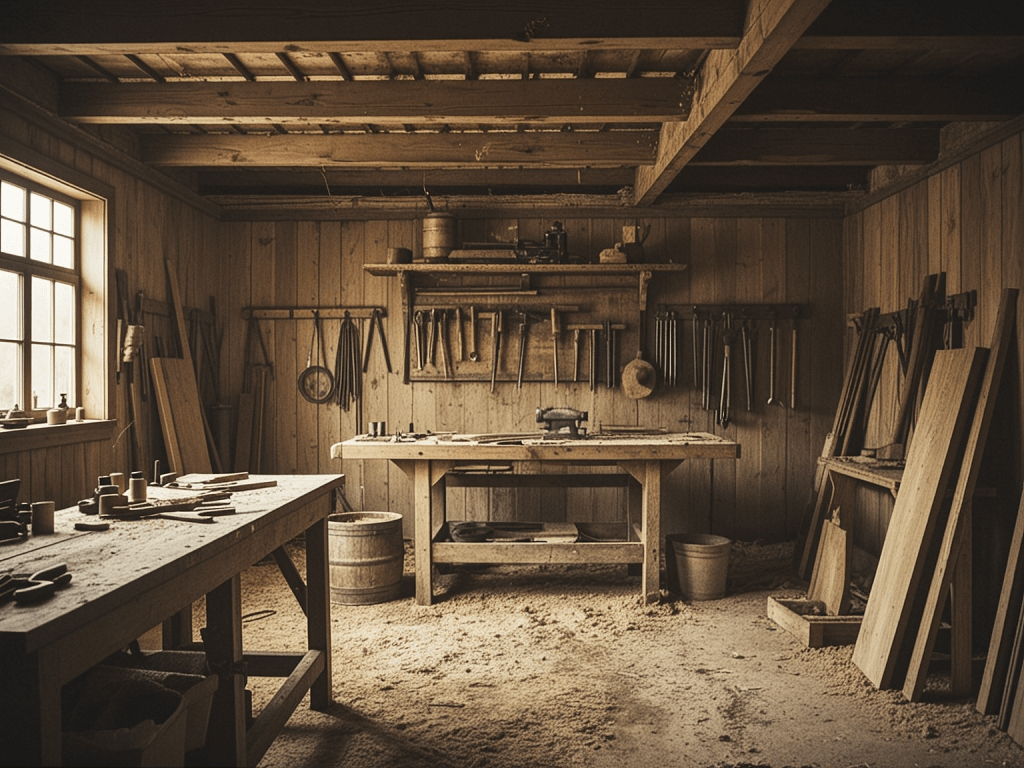
A home that cannot be repaired is merely a container, vulnerable to every wind and weather. Your great-grandfather understood the structural logic of his dwelling—the way weight distributed through beams, the function of king posts and trusses, the seasonal expansion and contraction of wood that required specific clearances and fasteners. He could replace a rotted sill, sister a damaged joist, fashion shingles from split cedar when manufactured roofing failed.
Modern construction has become so specialized that homeowners confront even minor repairs with helplessness. We call contractors for tasks our ancestors would have considered routine maintenance. The satisfaction of self-built shelter, the security of understanding one’s walls and roof at the level of their essential structure, has been traded for the convenience of finished basements and professional warranties. When disaster strikes, this dependence becomes vulnerability.
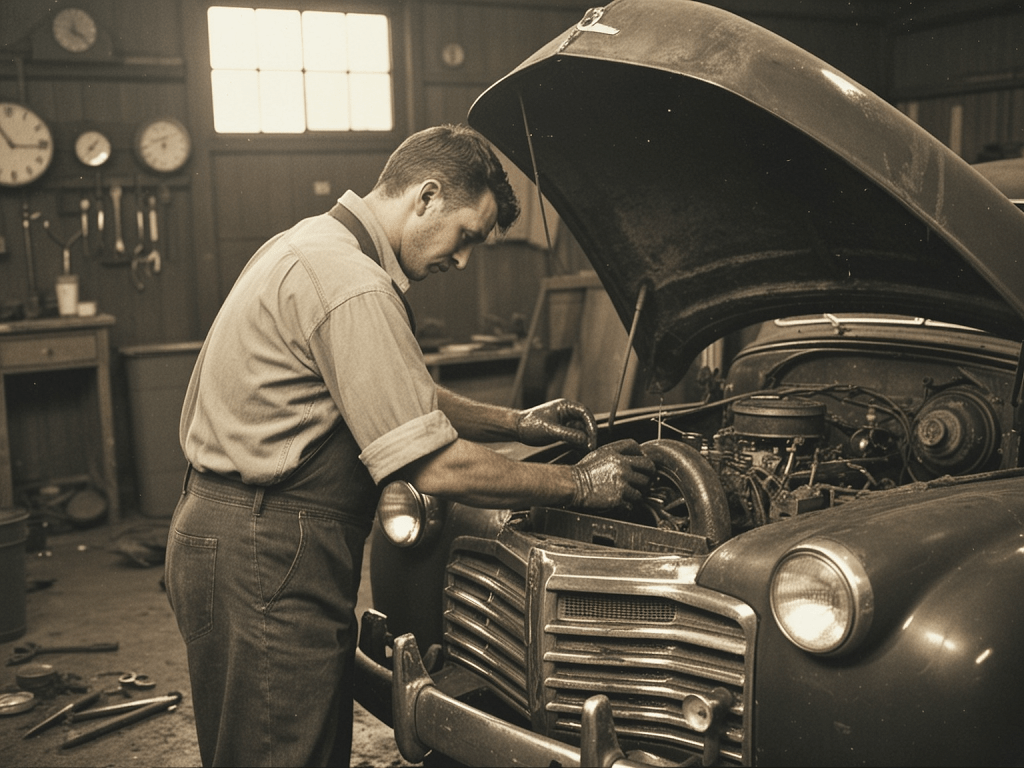
The internal combustion engine, for all its complexity, operates on principles comprehensible to any motivated intelligence. Your great-grandfather could diagnose ignition timing by ear, could adjust carburetors with screwdriver and intuition, could keep machinery functioning long past its manufactured lifespan through understanding rather than replacement. This mechanical sympathy—this capacity to sense when metal is running hot or bearings are wearing thin—represented a kind of literacy now largely lost.
Contemporary vehicles have become sealed black boxes, their diagnostic ports requiring proprietary computers. Yet the survival scenarios where mechanical competence proves essential haven’t disappeared. The chain saw that must function to cut winter firewood. The generator that must run to keep insulin cold. The vehicle that must transport the injured when ambulances cannot reach. Your great-grandfather maintained these possibilities through knowledge we have surrendered.

Before the pharmaceutical industry concentrated healing into pills and patents, medicine grew in gardens and woodlots, knowledge transmitted through generations of women who served as their families’ physicians. Your great-grandmother could identify forty plants with medicinal properties within walking distance of her door. She understood preparation—decoctions versus tinctures, the difference between leaves harvested in spring and roots gathered in autumn.
Modern medicine, for all its genuine miracles, has created a dangerous dependency. When pharmacies close, when supply chains fail, when antibiotics run out, we face bacterial infections with helplessness that would have shamed our ancestors. The grandmother who could treat her family’s ailments without recourse to professional medicine represented a kind of medical autonomy that has been delegitimized and forgotten.
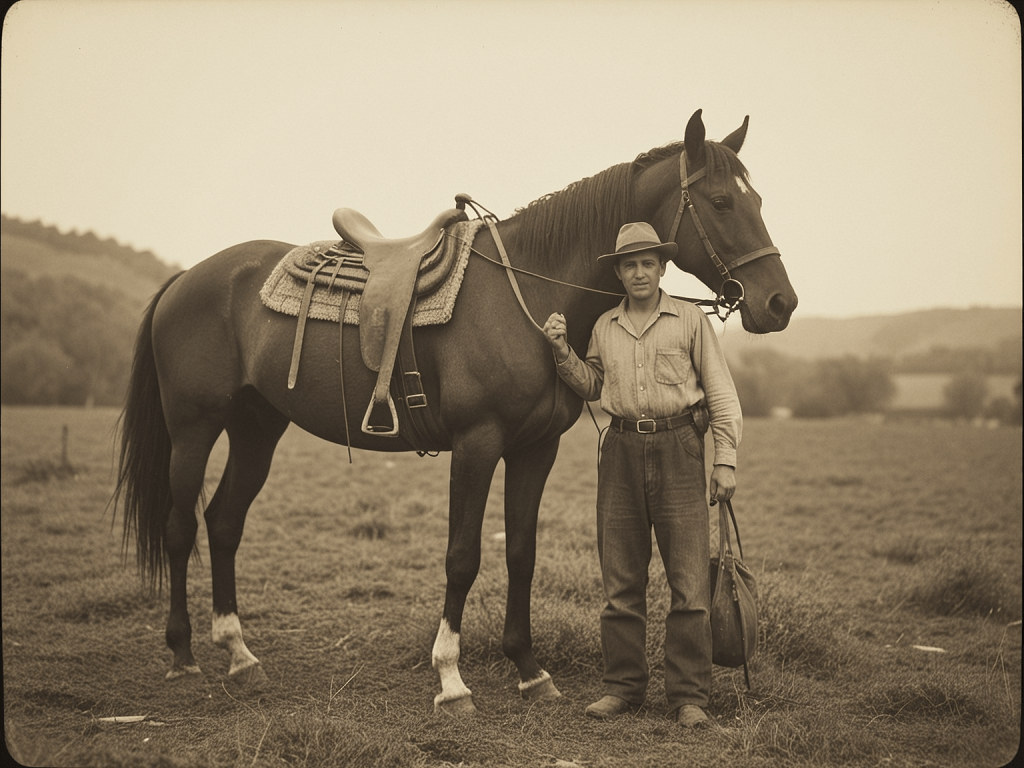
In the American West, horse theft constituted a capital offense because the horse represented survival itself. Stranded without transportation in that vast landscape meant death from exposure, starvation, or thirst. Your great-grandfather’s relationship with horses extended far beyond recreational riding into genuine partnership. He could evaluate conformation, recognize founder before it became crippling, doctor wounds that would become fatal if neglected.
Beyond individual riding, he knew teamster skills now vanished from common knowledge—the complex harnessing of multiple animals, the verbal commands that directed their coordinated effort. When fuel becomes unavailable, when roads become impassable to wheeled vehicles, these skills would suddenly become essential again. Yet few living humans know how to properly saddle a horse, fewer still could manage a team.
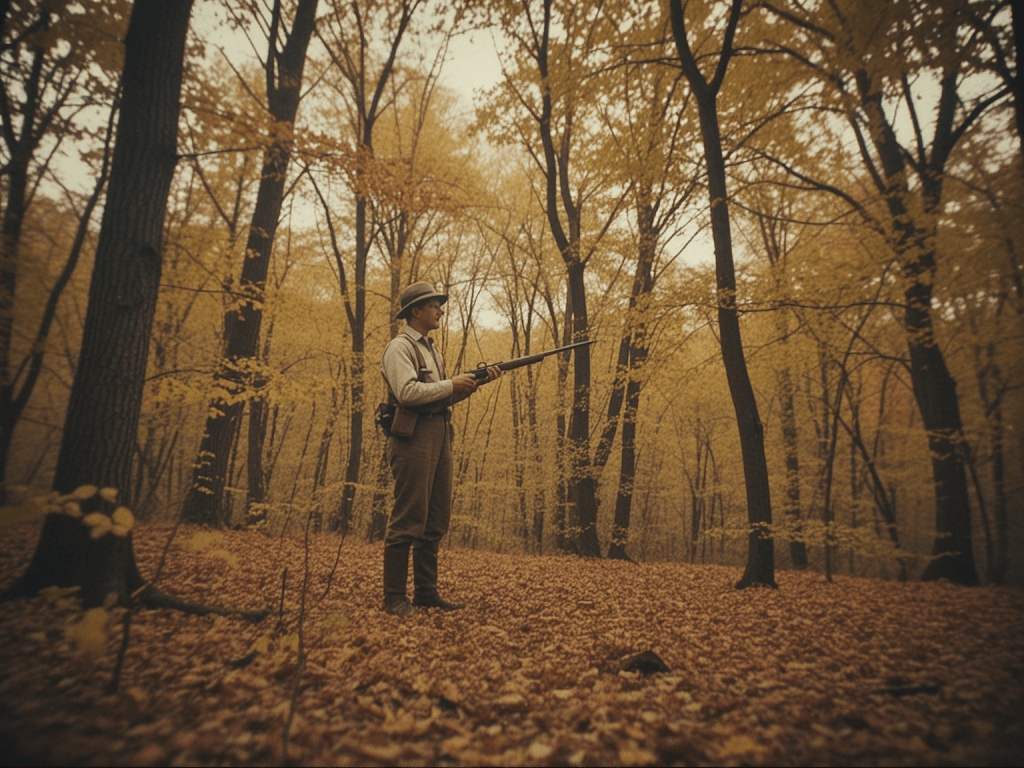
Modern hunting, for many practitioners, has become technologically assisted harvesting—bait stations and trail cameras, heated blinds and long-range optics, reducing the ancient pursuit to something approaching guaranteed success. Your great-grandfather would have recognized this as barely hunting at all. True hunting required intimate knowledge of animal behavior—reading sign, understanding seasonal patterns, recognizing wind direction and its effect on scent.
Stalking deer through forest or prairie demanded skills developed over years: the ability to move silently through dry leaves, to freeze when the animal looked up, to read body language that indicated alarm versus mere curiosity. Shot placement had to be perfect because wounded animals escaped to suffer, and suffering represented moral failure as well as wasted resource. The hunter who depended on the grocery store for failure had not yet learned the stakes of subsistence hunting, where a missed shot meant hunger.
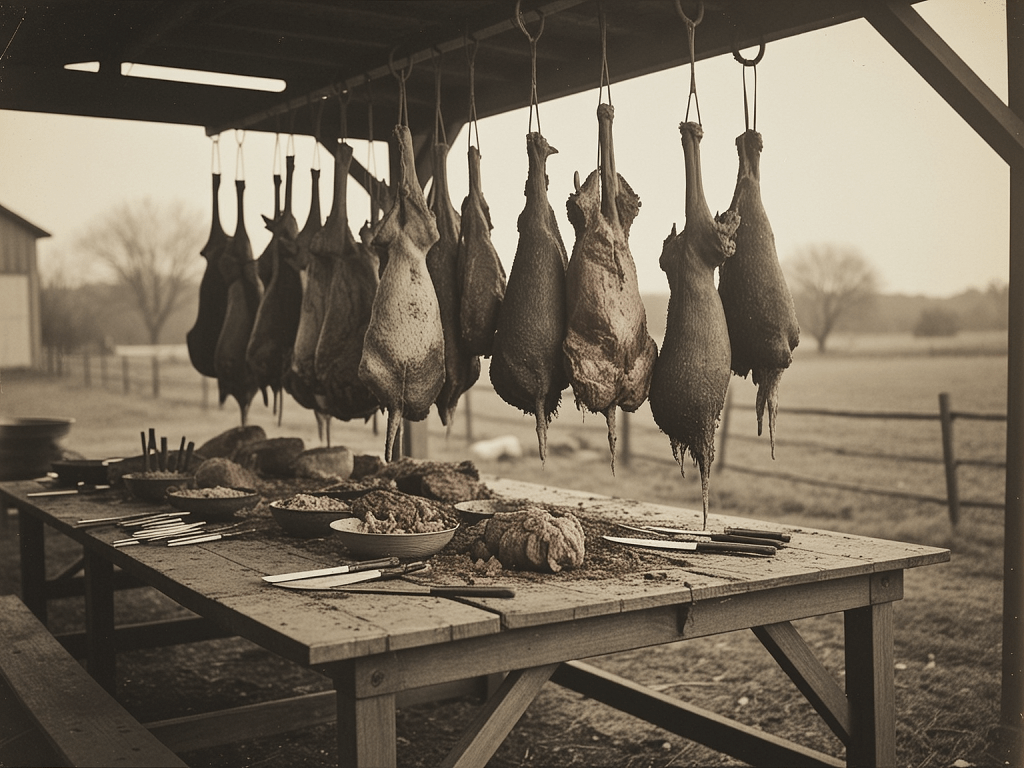
Raising livestock terminates inevitably in death, and death requires processing. Your great-grandmother could transform a living creature into meat with efficiency that minimized waste and maximized preservation. She knew the precise placement of the killing stroke, the sequence of bleeding and skinning and evisceration, the cooling requirements that prevented spoilage, the cuts that separated muscle groups for different culinary purposes.
Most contemporary hunters, by contrast, deliver their kill to commercial butchers, outsourcing the transformation from animal to food to professionals with stainless steel equipment. The knowledge of anatomy, of knife skills, of sanitation practices that prevent contamination while maximizing yield, has been concentrated in an industry that may not always function. A deer improperly field-dressed becomes waste rather than sustenance. A hog improperly slaughtered spreads disease.
These ten capacities represent not mere hobbies but the fundamental architecture of human self-sufficiency. Your great-grandparents carried them as naturally as language, deployed them as unconsciously as breathing. We have exchanged this competence for convenience, this autonomy for abstraction, and the exchange has left us vulnerable in ways we rarely contemplate.
Recovery of these skills need not represent regression to some imagined past. Rather, it constitutes insurance against an uncertain future, a diversification of competence that parallels the diversification of financial portfolios. The individual who can grow food, preserve harvests, maintain shelter, heal illness, and procure protein possesses a resilience that no amount of digital wealth can replicate.
The choice remains ours, for now. The window, however, narrows daily. Your great-grandparents understood that competence is the only true insurance against chaos. Their grandchildren must learn it deliberately, or risk discovering too late that the inheritance they presumed permanent has already been spent.
Better to possess skills unneeded than to need skills unpossessed. The body remembers what the mind has forgotten. The hands, given opportunity, relearn what centuries encoded into muscle and nerve. The future remains unwritten, and our systems may prove more resilient than pessimists suggest. But when systems fail—and history suggests that all systems eventually fail—those who cannot feed themselves, cannot shelter themselves, cannot heal themselves face a brutal calculus: learn rapidly or perish.
The knowledge persists, waiting in books and in the memories of the elderly, in the few remaining practitioners who have refused to forget. Seek them out. Learn while learning remains possible. The competence you acquire may never be tested by catastrophe—but if it is, you will be grateful for every hour spent acquiring it.
Tweet
Continue reading...
[ H/T The Burning Platform ]
Civilization’s veneer runs thinner than we dare contemplate. Our modern society has constructed an elaborate edifice of dependence upon what we collectively term “the system”—an intricate web of utility services, supply chains, and technological infrastructure that delivers electricity, water, natural gas, and virtually every material necessity to our doorsteps without demanding comprehension or competence from its beneficiaries. This apparatus, for all its magnificent efficiency, masks a precarious fragility that becomes visible only when examined through the lens of historical perspective.
Consider the arithmetic of vulnerability. Three days without electricity transforms a suburban home into an elaborate tomb of useless conveniences. Five days without functioning supply chains reduces cities to hunger and desperation. Two weeks without the invisible infrastructure we mistake for permanence, and the social contract begins to fray into something older and more brutal. We stand atop a pyramid of dependencies so complex that a single rupture could plunge millions into bewildered helplessness, confronted with survival requirements they lack the knowledge to address.
Generational comparison reveals this erosion with painful clarity. In my own middle age—having passed through the decades when boys still learned trade skills from their fathers—I observe with melancholy the striking differences between my generation and that of my children. Normalcy once encompassed wide varieties of practical competence: basic carpentry, fundamental mechanical repair, the cultivation of soil for sustenance rather than ornament. These capacities weren’t considered exceptional; they constituted the baseline of adult self-sufficiency. Yet that baseline has shifted dramatically, and the trend accelerates rather than reverses.
Extrapolation backward illuminates the extent of this loss. My father’s generation possessed knowledge my own has largely abandoned. His parents’ generation maintained connections to agricultural existence that rendered them genuinely self-reliant, capable of meeting fundamental needs without recourse to distant systems or specialized expertise. They embodied skills that modernity has declared obsolete, yet which retain their essential character—capacities that would become immediately vital should the elaborate structures of contemporary life experience significant disruption.
The generations preceding us understood something we have forgotten: competence is the only true insurance against chaos. Knowledge stored in muscle and memory outlasts knowledge stored in digital clouds. They carried within their sinews the memory of harder times, when survival wasn’t guaranteed by distant systems but by the calloused competence of one’s own hands. We have traded that sovereignty for convenience, and the transaction, while comfortable, leaves us spiritually impoverished and practically defenseless.
When systems fail—and history suggests that all systems eventually fail—those who cannot feed themselves, cannot shelter themselves, cannot heal themselves face a brutal calculus: learn rapidly or perish. The learning curve, absent foundational knowledge, proves steep and unforgiving. Better to possess skills unneeded than to need skills unpossessed. Your great-grandparents understood this intuitively. Their grandchildren must learn it deliberately, or risk discovering too late that the inheritance they presumed permanent has already been spent.
What follows is archaeology of the practical—a recovery of ten essential capacities that once defined human adulthood and now threaten to vanish entirely from our collective repertoire. These aren’t nostalgic curiosities but survival architecture, the fundamental competencies that separate autonomy from dependence.
THE TEN ESSENTIAL SKILLS THAT FOLLOW..
1. Gardening for Food
Victory Gardens weren’t merely patriotic gestures during the Second World War; they represented the last gasp of agricultural self-sufficiency in a nation rapidly urbanizing. When government posters urged citizens to plant vegetables, they were appealing to knowledge that had sustained humanity for ten thousand years—the understanding that food originates in soil, not shelves. Your great-grandfather could read the weather in his bones, could amend clay or sand into fertility through compost and patience, could calculate planting dates by moon phases and frost tables that existed only in community memory.
Modern gardening, by contrast, has become ornamental theater. We cultivate flowers for visual pleasure while remaining dependent on industrial agriculture for calories. The distinction matters enormously. A flower garden soothes the eye; a vegetable garden sustains the body. The former requires aesthetics; the latter demands competence. Tomatoes don’t yield to good intentions. They demand knowledge of soil pH, recognition of early blight, the patience to harden off seedlings before transplanting, the wisdom to know when fruit is truly ripe versus merely colored.
Three years of failed harvests taught me these distinctions. My grandfather would have absorbed them before his tenth birthday, standing barefoot in soil his family had cultivated for generations. When the supply chain fails, this knowledge becomes the difference between hunger and sustenance.
2. Animal Husbandry
Urban ordinances now prohibit the keeping of livestock within city limits, a prohibition that would have baffled our ancestors. Until remarkably recently, the distinction between “pet” and “livestock” remained fluid, and the keeping of chickens, rabbits, or even goats represented normal household economy rather than agricultural eccentricity. Your great-grandmother could diagnose coccidiosis in a hen by the tint of its comb, could birth a difficult lamb with hands that knew the anatomy of womb and cervix, could dispatch a rabbit for Sunday dinner without sentimentality or waste.
This knowledge extended beyond mechanical competence into a kind of relational intuition—the ability to read animal behavior, to recognize illness before it became crisis, to maintain breeding records without written notation. Modern pet-keeping, by contrast, outsources all medical knowledge to veterinary professionals and all death to distant slaughterhouses. We have become strangely innocent about the creatures we depend upon, unable to comprehend the cycle that transforms living flesh into sustenance.
When the supply chain fails, this ignorance becomes dangerous. Chickens sicken and die from preventable conditions. Meat spoils from improper butchering. The knowledge that once passed naturally from mother to daughter now must be desperately relearned from books and videos, if it is relearned at all.
3. Food Preservation
Smokehouses once occupied the yards of virtually every middle-class American home, their walls blackened by decades of hickory and applewood, their interiors hanging with sides of beef and pork that would sustain families through winter’s deprivation. Your great-grandmother’s kitchen contained equipment now found only in museums: pressure canners with weighted gauges, crocks for fermenting cabbage into sauerkraut, stone crocks buried in cool earth for keeping butter and cheese.
She understood the microbial ecology that modern refrigeration has made us forget—the precise temperatures that encourage beneficial fermentation while inhibiting dangerous spoilage, the acidity levels that create safety in preserved foods, the visual and olfactory signs that distinguish edible from deadly. Canning tomatoes requires more than boiling water and jars. It demands knowledge of acidification, of headspace, of processing times that vary with altitude and humidity.
Modern food preservation, practiced at all, has become artisanal affectation rather than survival necessity. The integrated system of preservation that once ensured food security has largely dissolved into dependence on electric refrigeration and just-in-time delivery.
4. Blacksmithing
Metalworking persisted far longer than popular imagination suggests. My own father practiced the craft into his later years, though his work tended toward ornamental rather than essential. Yet travel to rural communities worldwide, and you encounter smiths who remain the essential repair infrastructure—craftsmen who can fashion replacement parts from raw stock, tempering metal in charcoal fires, shaping with hammer and anvil until precision emerges from heat and force.
This capacity—to transform metal rather than merely consume it—represents fundamental autonomy that industrial manufacturing has eroded. When factories close, when supply chains fracture, the blacksmith’s knowledge becomes suddenly precious. Tools can be repaired rather than replaced. Implements can be fashioned from scrap. The material world becomes malleable rather than final.
Your great-grandfather likely knew at least the rudiments of this craft, enough to sharpen plows and mend gates, enough to understand that metal has memory and grain and specific temperaments that must be respected. We have lost this intimacy with material, this capacity to coax rather than command.
5. Basic Carpentry
A home that cannot be repaired is merely a container, vulnerable to every wind and weather. Your great-grandfather understood the structural logic of his dwelling—the way weight distributed through beams, the function of king posts and trusses, the seasonal expansion and contraction of wood that required specific clearances and fasteners. He could replace a rotted sill, sister a damaged joist, fashion shingles from split cedar when manufactured roofing failed.
Modern construction has become so specialized that homeowners confront even minor repairs with helplessness. We call contractors for tasks our ancestors would have considered routine maintenance. The satisfaction of self-built shelter, the security of understanding one’s walls and roof at the level of their essential structure, has been traded for the convenience of finished basements and professional warranties. When disaster strikes, this dependence becomes vulnerability.
6. Basic Mechanical Repair
The internal combustion engine, for all its complexity, operates on principles comprehensible to any motivated intelligence. Your great-grandfather could diagnose ignition timing by ear, could adjust carburetors with screwdriver and intuition, could keep machinery functioning long past its manufactured lifespan through understanding rather than replacement. This mechanical sympathy—this capacity to sense when metal is running hot or bearings are wearing thin—represented a kind of literacy now largely lost.
Contemporary vehicles have become sealed black boxes, their diagnostic ports requiring proprietary computers. Yet the survival scenarios where mechanical competence proves essential haven’t disappeared. The chain saw that must function to cut winter firewood. The generator that must run to keep insulin cold. The vehicle that must transport the injured when ambulances cannot reach. Your great-grandfather maintained these possibilities through knowledge we have surrendered.
7. Herbal Medicine
Before the pharmaceutical industry concentrated healing into pills and patents, medicine grew in gardens and woodlots, knowledge transmitted through generations of women who served as their families’ physicians. Your great-grandmother could identify forty plants with medicinal properties within walking distance of her door. She understood preparation—decoctions versus tinctures, the difference between leaves harvested in spring and roots gathered in autumn.
Modern medicine, for all its genuine miracles, has created a dangerous dependency. When pharmacies close, when supply chains fail, when antibiotics run out, we face bacterial infections with helplessness that would have shamed our ancestors. The grandmother who could treat her family’s ailments without recourse to professional medicine represented a kind of medical autonomy that has been delegitimized and forgotten.
8. Horseback Riding
In the American West, horse theft constituted a capital offense because the horse represented survival itself. Stranded without transportation in that vast landscape meant death from exposure, starvation, or thirst. Your great-grandfather’s relationship with horses extended far beyond recreational riding into genuine partnership. He could evaluate conformation, recognize founder before it became crippling, doctor wounds that would become fatal if neglected.
Beyond individual riding, he knew teamster skills now vanished from common knowledge—the complex harnessing of multiple animals, the verbal commands that directed their coordinated effort. When fuel becomes unavailable, when roads become impassable to wheeled vehicles, these skills would suddenly become essential again. Yet few living humans know how to properly saddle a horse, fewer still could manage a team.
9. Hunting
Modern hunting, for many practitioners, has become technologically assisted harvesting—bait stations and trail cameras, heated blinds and long-range optics, reducing the ancient pursuit to something approaching guaranteed success. Your great-grandfather would have recognized this as barely hunting at all. True hunting required intimate knowledge of animal behavior—reading sign, understanding seasonal patterns, recognizing wind direction and its effect on scent.
Stalking deer through forest or prairie demanded skills developed over years: the ability to move silently through dry leaves, to freeze when the animal looked up, to read body language that indicated alarm versus mere curiosity. Shot placement had to be perfect because wounded animals escaped to suffer, and suffering represented moral failure as well as wasted resource. The hunter who depended on the grocery store for failure had not yet learned the stakes of subsistence hunting, where a missed shot meant hunger.
10. Butchering an Animal
Raising livestock terminates inevitably in death, and death requires processing. Your great-grandmother could transform a living creature into meat with efficiency that minimized waste and maximized preservation. She knew the precise placement of the killing stroke, the sequence of bleeding and skinning and evisceration, the cooling requirements that prevented spoilage, the cuts that separated muscle groups for different culinary purposes.
Most contemporary hunters, by contrast, deliver their kill to commercial butchers, outsourcing the transformation from animal to food to professionals with stainless steel equipment. The knowledge of anatomy, of knife skills, of sanitation practices that prevent contamination while maximizing yield, has been concentrated in an industry that may not always function. A deer improperly field-dressed becomes waste rather than sustenance. A hog improperly slaughtered spreads disease.
Final: The Inheritance We Must Reclaim
These ten capacities represent not mere hobbies but the fundamental architecture of human self-sufficiency. Your great-grandparents carried them as naturally as language, deployed them as unconsciously as breathing. We have exchanged this competence for convenience, this autonomy for abstraction, and the exchange has left us vulnerable in ways we rarely contemplate.
Recovery of these skills need not represent regression to some imagined past. Rather, it constitutes insurance against an uncertain future, a diversification of competence that parallels the diversification of financial portfolios. The individual who can grow food, preserve harvests, maintain shelter, heal illness, and procure protein possesses a resilience that no amount of digital wealth can replicate.
The choice remains ours, for now. The window, however, narrows daily. Your great-grandparents understood that competence is the only true insurance against chaos. Their grandchildren must learn it deliberately, or risk discovering too late that the inheritance they presumed permanent has already been spent.
Better to possess skills unneeded than to need skills unpossessed. The body remembers what the mind has forgotten. The hands, given opportunity, relearn what centuries encoded into muscle and nerve. The future remains unwritten, and our systems may prove more resilient than pessimists suggest. But when systems fail—and history suggests that all systems eventually fail—those who cannot feed themselves, cannot shelter themselves, cannot heal themselves face a brutal calculus: learn rapidly or perish.
The knowledge persists, waiting in books and in the memories of the elderly, in the few remaining practitioners who have refused to forget. Seek them out. Learn while learning remains possible. The competence you acquire may never be tested by catastrophe—but if it is, you will be grateful for every hour spent acquiring it.
Tweet
Continue reading...
[ H/T The Burning Platform ]