






Only in the United States can a company founded just six years ago become central to the efforts to maintain superiority over China or any other country in the broad spectrum of artificial intelligence. Moreover, only in the U.S. do the deep pools of risk capital exist that enable a new company to reach a valuation of around $1.5 trillion in just a few years.
Toward the end of 2020, a few senior employees at OpenAI — another uniquely American venture capital success story — resigned and formed what is today called Anthropic. These dissidents were unhappy about OpenAI’s failure to address ethics and safety issues. Today, Anthropic is on the verge of becoming a publicly traded company. The company plans to raise about $90 billion through its initial public offering and through a private share offering to several of America’s most successful AI companies, including Nvidia, Google, and Microsoft. With the IPO and private offering, Anthropic is expected to have a value of $1.5 to $1.7 trillion.
The lead investment bankers on the deal, Goldman Sachs and Morgan Stanley, intend to price the transaction on Nov. 18, with public trading to begin on Nov.19. The buzz about the IPO is very positive. On the Hyperliquid trading platform, Anthropic is trading with a suggested value of between $1.7 and $1.84 trillion. That value would represent a 20% to 37% premium over Anthropic’s proposed IPO range of $70 to $78 per share. The trading volume for Anthropic on the Hyperliquid platform exceeds $311 million. Because of this significant premarket interest, the lead bankers will probably raise the IPO price for Anthropic.
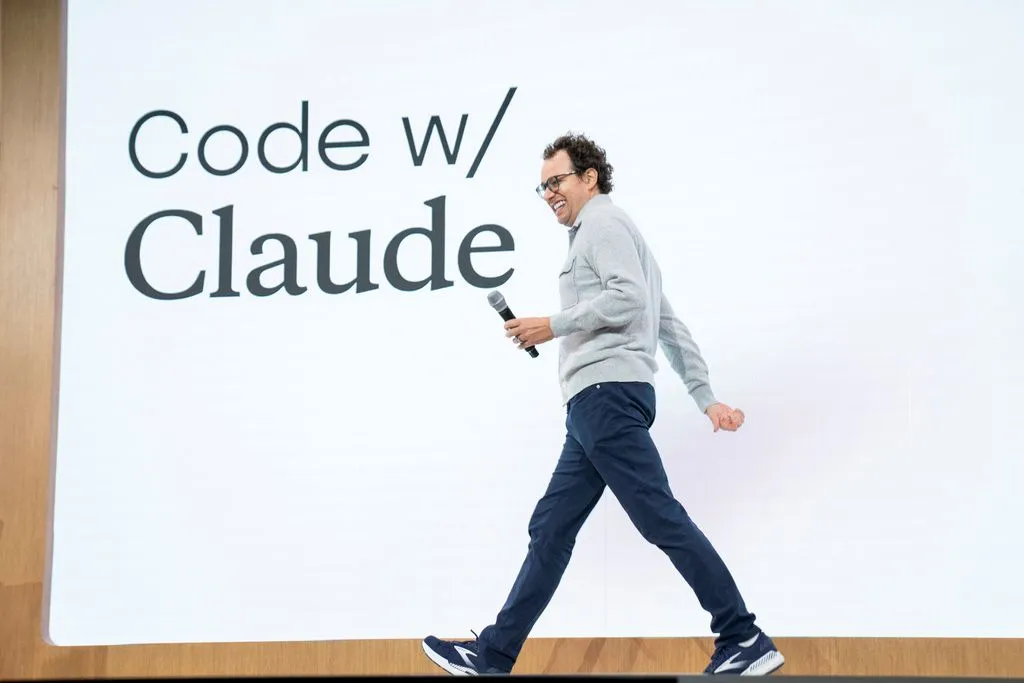
Anthropic became central to the AI revolution with its flagship Claude chatbot. Following the introduction of the chatbot, Anthropic introduced Claude Code, an AI system designed for business users. Both the Claude chatbot and Claude Code achieved very rapid success. Today, Anthropic also offers AI services to the legal, financial, and cybersecurity industries.
The economic value of Anthropic’s capabilities is demonstrated by its parabolic revenue growth rate. Anthropic’s annualized revenue run rate is now about $90 billion, contrasted with a run rate of just $9 billion at the end of 2025. Anthropic’s third quarter 2026 revenue reached $17 billion, a 47% quarter-on-quarter increase. The company’s top-line growth is heavily anchored by high-value enterprise accounts. The company is extraordinarily productive. Its 12-month trailing revenue per employee scaled from $1.4 million a year ago to $6.6 million earlier this calendar quarter.
Still, there are clear operational risks to the Anthropic story.
Foremost among them are the company’s large future capital commitments. Before the end of 2030, Anthropic has long-term purchase and lease commitments for semiconductors and compute capacity totaling about $450 billion. Can the company grow its revenue, become profitable, meet those enormous capital requirements, and remain a leader in developing frontier AI models all at the same time?
THE VOTERS HAVE SPOKEN. BUT WHAT DID THEY SAY?
Anthropic faces formidable competitors such as Google, Microsoft, and Meta. Moreover, in the near future, Anthropic will face competition from open-source AI models developed by Nvidia and numerous Chinese companies.
At the moment, the Anthropic IPO appears poised to be a major success, with the shares trading well above the indicated initial offering price. But over the coming months, it remains an open question where the stock will trade. Just look at the trading history of SpaceX, the most recent trillion-dollar IPO. As always, when considering an investment in a new company, caveat emptor is prudent advice.
The writer owns shares in Nvidia, Google and SpaceX.
James Rogan is a former U.S. diplomat who later worked in law and finance for over 30 years. He writes a subscription-based daily note on markets, economics, politics, and social issues. His email is roganjames8202@gmail.com.
Continue reading...
[ H/T Washington Examiner ]