




Why Were Americans Funding Jobs For Transgender Workers In Nepal?
Authored by David Manney via PJ Media,
Former HIV outreach worker and biological male Rubi Lama lost a job he'd held for nine years when U.S. funding vanished from a health program in Nepal. He tested people, counseled those at risk, and helped sex workers avoid infection.
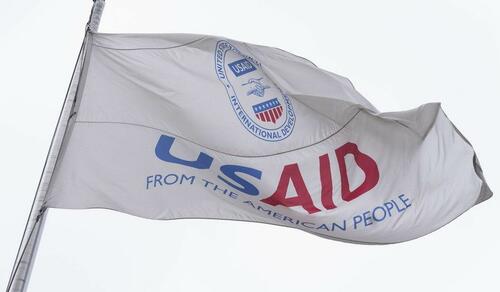
AP Photo/Manuel Balce Ceneta
Months later, unable to find other work, he joined them along a highway outside Hetauda.
Fox News:
His story is painful on a human scale; it also raises a question many Americans are asking: why was the United States expected to keep paying his salary?
Lama worked for Friends Hetauda, part of a network connected to the Blue Diamond Society. The society received 85% of its funding from USAID, operated 20 clinics, and employed 350 people.
Associated Press:
When the money stopped, 262 employees lost their jobs, and the organization says 35% to 45% of those former workers later entered sex work.
The clinics provided HIV tests, condoms, counseling, antiretroviral drugs, and PrEP. More than 1,200 clients reportedly lost access to PrEP after the shutdown. Those are real health services, and the people affected aren't punchlines.
The political reaction followed a familiar script: President Donald Trump cut foreign aid, vulnerable workers suffered, and American taxpayers were cast as villains for refusing to continue the arrangement.
Trump's Executive Order:
Critics spoke as though Washington had fired public employees in Ohio rather than ended overseas grants in Nepal.
Foreign aid can serve American interests; HIV prevention can reduce disease, improve stability, and protect people who travel across borders. Compassion also has limits when one country becomes the permanent source of salaries and program funding for organizations half a world away.
Nepal has a national government; it has health agencies, wealthy residents, international charities, and neighboring countries with their own interest in regional health.
Fox News:
Where were they when an organization depended on Washington for 85% of its budget?
President Trump ordered a review of foreign assistance on Jan. 20, 2025, requiring programs to prove they were efficient and aligned with U.S. foreign policy.
The order didn't ban all aid; it required justification before the money kept flowing.
The old system trained foreign groups to build programs around American checks, and when the checks stopped, the collapse was immediate. A model that leaves hundreds of employees with no local funding, no transition plan, and no replacement support was never sustainable.
American families face medical bills, housing costs, layoffs, and taxes of their own. They can care about Rubi Lama without accepting lifelong responsibility for his paycheck. They can support targeted HIV treatment without giving every foreign NGO a permanent claim on the U.S. Treasury.
The outrage over Nepal makes President Trump's case for him. Foreign aid should have a clear purpose, measurable results, shared costs, and an exit plan.
Sympathy can't replace accountability.
Tyler Durden Fri, 07/24/2026 - 17:40
Continue reading...
[ H/T ZeroHedge ]
Authored by David Manney via PJ Media,
Former HIV outreach worker and biological male Rubi Lama lost a job he'd held for nine years when U.S. funding vanished from a health program in Nepal. He tested people, counseled those at risk, and helped sex workers avoid infection.
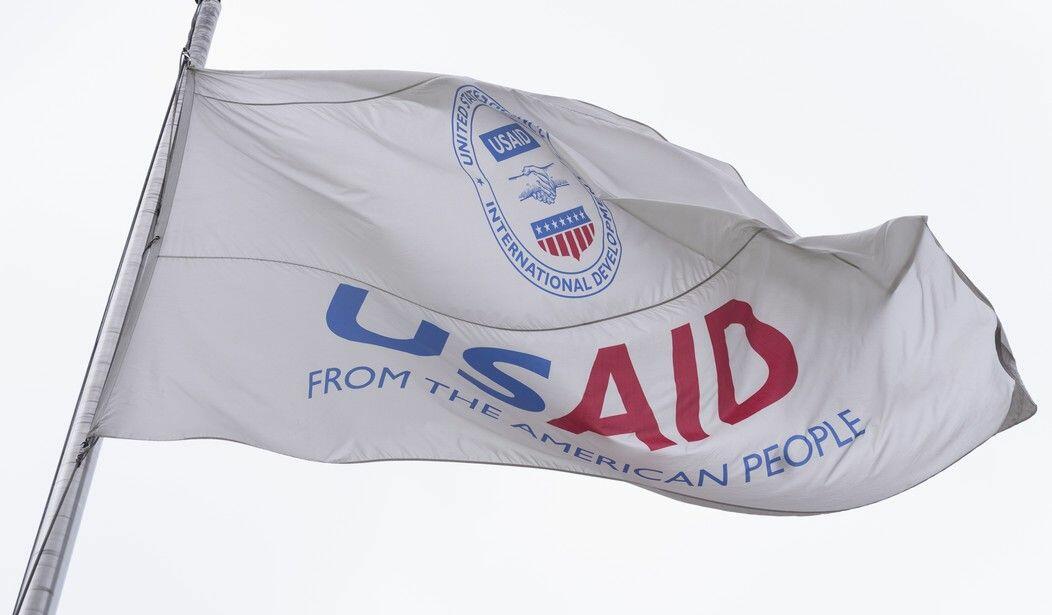
AP Photo/Manuel Balce Ceneta
Months later, unable to find other work, he joined them along a highway outside Hetauda.
Fox News:
His story is painful on a human scale; it also raises a question many Americans are asking: why was the United States expected to keep paying his salary?
Lama worked for Friends Hetauda, part of a network connected to the Blue Diamond Society. The society received 85% of its funding from USAID, operated 20 clinics, and employed 350 people.
Associated Press:
When the money stopped, 262 employees lost their jobs, and the organization says 35% to 45% of those former workers later entered sex work.
The clinics provided HIV tests, condoms, counseling, antiretroviral drugs, and PrEP. More than 1,200 clients reportedly lost access to PrEP after the shutdown. Those are real health services, and the people affected aren't punchlines.
The political reaction followed a familiar script: President Donald Trump cut foreign aid, vulnerable workers suffered, and American taxpayers were cast as villains for refusing to continue the arrangement.
Trump's Executive Order:
Critics spoke as though Washington had fired public employees in Ohio rather than ended overseas grants in Nepal.
Foreign aid can serve American interests; HIV prevention can reduce disease, improve stability, and protect people who travel across borders. Compassion also has limits when one country becomes the permanent source of salaries and program funding for organizations half a world away.
Nepal has a national government; it has health agencies, wealthy residents, international charities, and neighboring countries with their own interest in regional health.
Fox News:
Where were they when an organization depended on Washington for 85% of its budget?
President Trump ordered a review of foreign assistance on Jan. 20, 2025, requiring programs to prove they were efficient and aligned with U.S. foreign policy.
The order didn't ban all aid; it required justification before the money kept flowing.
The old system trained foreign groups to build programs around American checks, and when the checks stopped, the collapse was immediate. A model that leaves hundreds of employees with no local funding, no transition plan, and no replacement support was never sustainable.
American families face medical bills, housing costs, layoffs, and taxes of their own. They can care about Rubi Lama without accepting lifelong responsibility for his paycheck. They can support targeted HIV treatment without giving every foreign NGO a permanent claim on the U.S. Treasury.
The outrage over Nepal makes President Trump's case for him. Foreign aid should have a clear purpose, measurable results, shared costs, and an exit plan.
Sympathy can't replace accountability.
Tyler Durden Fri, 07/24/2026 - 17:40
Continue reading...
[ H/T ZeroHedge ]