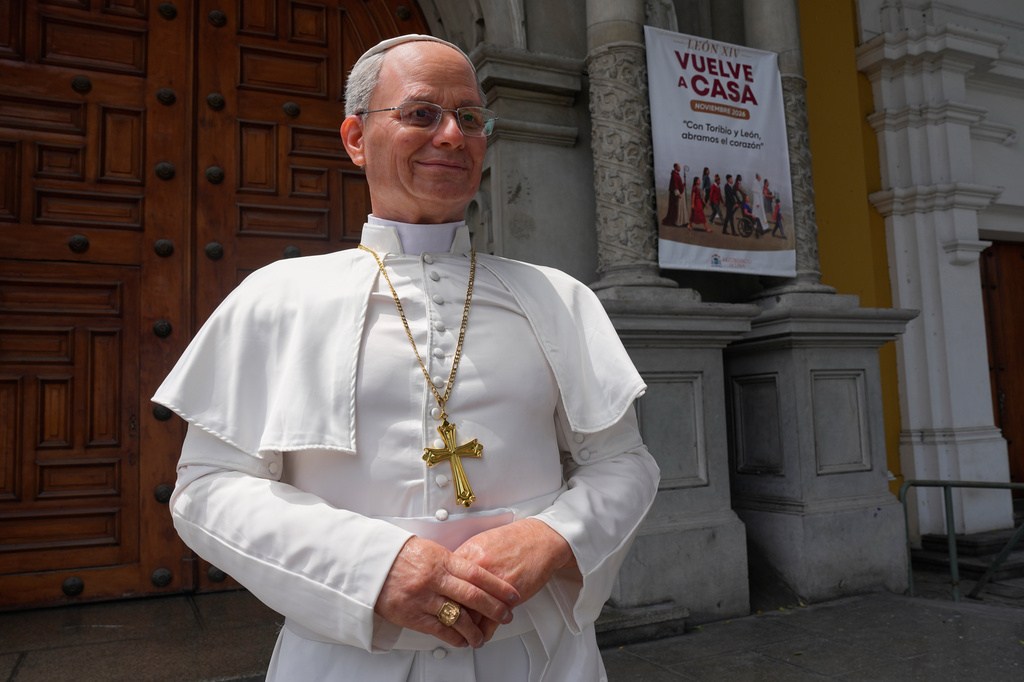
Within six months, the world’s two best-known moral authorities found themselves in public exchanges with the president of the United States. In April, Pope Leo XIV, answering a harsh attack from President Donald Trump, said he had “no fear” of the Trump administration. On Friday, hours after winning the 2026 Nobel Peace Prize, the South African jurist Navi Pillay told an applauding audience, “If you clap a little bit more, I may share this prize with Trump.”
One was a reply under attack; the other was an unprovoked joke. The moments differ, but they reveal the same forgotten truth. Institutions whose only power is moral authority spend it every time they step into a political fight. Stalin reportedly asked how many divisions the Pope had. The answer is none, and the Nobel committee has no army either. Their power rests on trust that they speak for something above the quarrels of the day. That trust took generations to build. It can be drawn down in an afternoon. Like many people of every faith and none, I grew up regarding both with near reverence, not because I agreed with every word, but because I trusted that they spoke for everyone. In science, too, a referee who mocks one author loses the standing to judge the next paper.
Different roles, different standards
Fairness requires saying that Trump struck first, calling the Pope “WEAK on Crime, and terrible for Foreign Policy.” That was uncivil, and Vice President JD Vance went too far in implying that the Pope should stick to morality, since war is a moral matter. But Trump is a politician, loved by half the country and opposed by the other half, and fighting is his trade. The Pope’s role is the opposite: to speak to all 8 billion people and belong to no faction. When Leo called Trump’s threat against Iran’s “whole civilization” “truly unacceptable,” he was defending civilians, which is his job. Defending the innocent is a principle. When he urged Americans to lobby Congress about a specific war and traded words with the White House, he crossed from conscience into campaign. His prayers for drowned migrants on Lampedusa were moving to witness, but holding them on the Fourth of July read in Washington as a pointed message. To his credit, he has also challenged France’s president over assisted dying, so the problem is not whom he criticizes but how.
The committee’s version
The Nobel committee has made a parallel error for decades. In 1994, it honored Yasser Arafat, and one member resigned in protest. In 2009, it honored Barack Obama for hope, less than nine months into his presidency, and its longtime secretary later conceded the prize fell short. This year, it chose Pillay, who chaired the U.N. commission that concluded Israel committed genocide in Gaza, a finding Israel rejects. The prize will be read as a verdict on that war, and her quip, delivered in Nuremberg, where impartial international justice was born, was the mistake in miniature. Such wagers often age badly: Ethiopia’s Abiy Ahmed won in 2019, and within a year, his government was at war in Tigray.
THE ‘FRENEMY’ REALITY: WHY AMERICA IS MISCALCULATING ITS GREATEST ECONOMIC CHALLENGE
What both forgot
The cost falls on the young Catholic who now hears the Pope as a partisan, and on the Israeli family that reads the peace prize as an accusation. Each loses a voice to trust across the divide. My argument is not for silence. It is for the difference between a principle and a punchline. A politician can afford to win 51% and lose 49%. A Pope and a peace prize cannot afford to lose the 49. The remedy is not silence but discipline: speak in principles that judge every side alike, and decline every invitation to spar, and reward what has proven durable rather than what is fashionable. Nelson Mandela, whom Pillay once defended, showed how, in 1993, when he shared the prize with F.W. de Klerk, leader of the government that had jailed him, he did so without a word of mockery. The Pope has no divisions, and the Nobel committee has no army. Their only weapon is trust, and spending it in a political quarrel is the one loss neither can afford. That is what both forgot.
Meda Parameswara Reddy, Ph.D., is the director of the Reddy Center for Critical and Integrated Thinking. A former R&D executive holding 30 U.S. patents, he specializes in interdisciplinary research and public policy analysis. His writing has appeared in Proc. Natl. Acad. Sci. (PNAS), the RealClear Markets, Science and Defense platforms, Washington Examiner, The Fulcrum, The Humanist, AFRO American, and South Asia Monitor, where he serves on the editorial board. He also hosts the interview show “SAM Dialogues with Dr. M. P. Reddy.”
Continue reading...
[ H/T Washington Examiner ]