




PITTSBURGH — In April 1894, a ragged column of unemployed men attempted to come through Pittsburgh on the way to Washington. They called themselves Coxey’s Army. Led by Jacob Coxey, an Ohio businessman, the jobless workers were marching on the capital. The country was in the second year of a four-year depression, the worst in its history up to that time, and the city, still scarred by the violence and deaths of the Homestead Strike, did not allow them to enter its limits, so they marched on along the Monongahela River.
Seven months later, the country did something the marchers might not have predicted. It voted overwhelmingly for the party of the steel tariff. Democrats lost 125 House seats, still the largest swing in the chamber’s history. In Pennsylvania, they kept two of 30. In Pittsburgh, Republican John Dalzell won with more than three-quarters of the vote.
Pittsburgh hadn’t swung. It had spent two decades becoming the model of the new industrial economy, and the rest of the country was catching up. Between 1870 and 1890, the city’s population nearly tripled as mills pulled workers off farms and immigrants off ships. Through those same years, control of the House changed six times, with some elections shifting roughly a third of its seats between parties, as a country caught between farm and factory lurched from one party to the other with every crash.
It is worth remembering this now because it is happening again.
The House changed hands in 2006, 2010, 2018, and 2022. On Election Day, it may change hands again. If it does, 2026 will be the seventh straight midterm in which one chamber of Congress or the other changed parties. We are inclined to treat this as a symptom of our own era: Cable news, social media, polarization, broken politics. History suggests something else. The country has been here before, and the reasons were less about politics than about the people doing the voting.
That’s why the House is the right place to look. The framers designed it to register the public’s mood. In Federalist No. 52, James Madison wrote that this branch in particular “should have an immediate dependence on, and an intimate sympathy with, the people,” and that “frequent elections are unquestionably the only policy by which this dependence and sympathy can be effectually secured.” Senators serve six years, and until 1913, they weren’t even elected directly by voters. Presidents serve four. House members face us every two years, in districts small enough that a mill closing or a crop failure can change the result.
So when the House swings hard, it’s worth asking what the country is going through. For perspective, consider what Gilded Age voters were telling Washington.
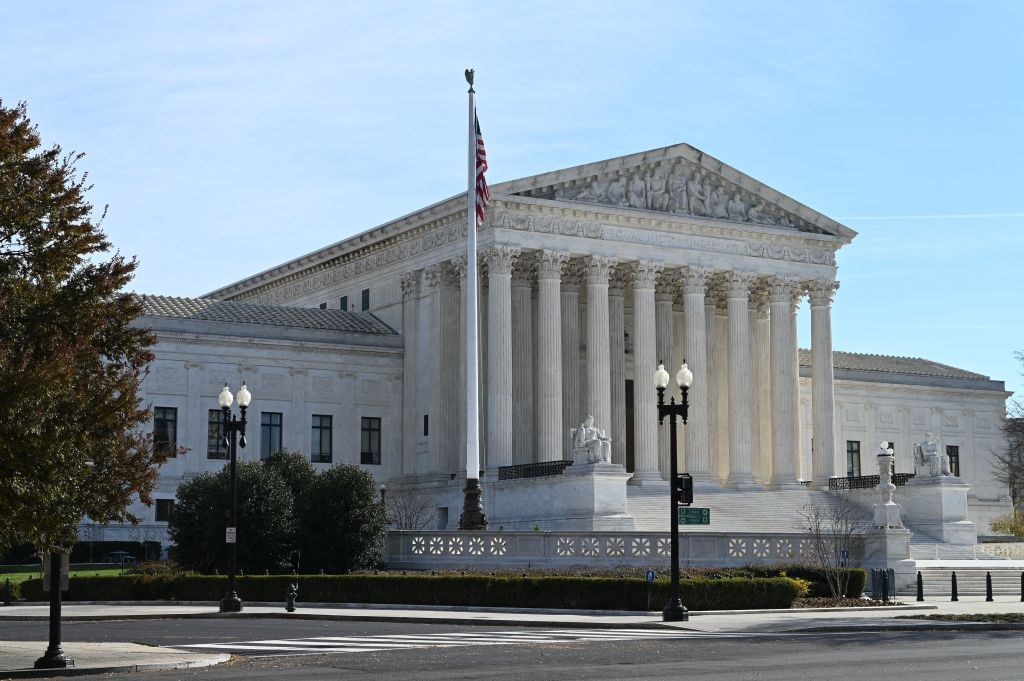
The U.S Capitol photographed, Wednesday, Sept. 2, 2026, in Washington. (AP Photo/Mariam Zuhaib)
" data-image-caption="
The U.S Capitol photographed, Wednesday, Sept. 2, 2026, in Washington. (AP Photo/Mariam Zuhaib)
" data-large-file="https://www.washingtonexaminer.com/wp-content/uploads/2026/09/us-capitol-building.jpg?w=696" src="https://www.washingtonexaminer.com/wp-content/uploads/2026/09/us-capitol-building.jpg?w=696" alt="The U.S. Capitol between leaves on a tree." class="wp-image-4714897" srcset="https://www.washingtonexaminer.com/wp-content/uploads/2026/09/us-capitol-building.jpg 1024w, https://www.washingtonexaminer.com/wp-content/uploads/2026/09/us-capitol-building.jpg?resize=300,200 300w, https://www.washingtonexaminer.com/wp-content/uploads/2026/09/us-capitol-building.jpg?resize=768,512 768w, https://www.washingtonexaminer.com/wp-content/uploads/2026/09/us-capitol-building.jpg?resize=150,100 150w, https://www.washingtonexaminer.com/wp-content/uploads/2026/09/us-capitol-building.jpg?resize=696,464 696w" sizes="(max-width: 1024px) 100vw, 1024px">
The U.S Capitol photographed, Wednesday, Sept. 2, 2026, in Washington. (AP Photo/Mariam Zuhaib)
In the 1870s and 1880s, Americans were living through the largest economic transformation in the country’s history. In 1870, about one American in four lived in a city. By 1890, it was more than a third. Farmers watched corn prices fall from 83 cents a bushel in 1881 to 28 cents in 1890 while they paid tariff-protected prices for everything they bought. Mill towns filled with newcomers. Western Pennsylvania was where much of the future was being built: rails in Johnstown, locomotives in Altoona, coke in Connellsville, oil in Butler County, gas in Murrysville, and George Westinghouse’s alternating current in Pittsburgh.
The economy also kept breaking down. The Panic of 1873 produced the 1874 wave. Voters angry about the 1890 McKinley Tariff cost Republicans their House majority that fall and cost McKinley his own House seat. The Panic of 1893 pushed unemployment above 15%. That spring, Westinghouse lit the Chicago World’s Fair with the electrical technology that would power the next century just as the economy underneath it crashed.
The voters of that era weren’t fickle. Turnout often topped 80%, and they rarely split their tickets. What they were telling Washington, through repeated wave elections, was that economic growth had not brought them economic security, and they kept looking for a party that understood why.
The parallels to today are hard to miss. Western Pennsylvania is again a place where the future is being built. The artificial intelligence boom has roots in a Carnegie Tech program from 1956. Robots are now tested on the old J&L steel site in Hazelwood, and the coal plant at Homer City is being rebuilt to power data centers. And the past 20 years have brought the Great Recession, a pandemic, an inflation surge, and now tariffs and war-driven gas prices.
The anxieties are familiar, too. The boilermakers rebuilding Homer City are glad of the work; however, 68% of Pennsylvanians would oppose a data center in their own community. Both views are reasonable, and many people hold both at once. They want the future built here, and they don’t want to pay for it.
SALENA ZITO: WHILE THE PUBLIC FEARS AI, THESE OHIO AND IOWA BUSINESS OWNERS ARE FINDING RELIEF
The comparison has its limits. Today’s swings are much smaller. In 1894, about a third of House seats changed hands, while the 2010 wave moved about 15%. Fewer than 10% of House races are considered competitive now. Some political scientists would say today’s volatility is a product of a closely divided electorate that votes against the other party more than for its own, and that it says little about our deeper condition. They have a point. But a closely divided country that keeps rejecting whoever is in charge is itself telling us something.
The biggest lesson history offers is the one the winners keep forgetting. A party that wins the House usually believes voters fell in love with its ideas. More often, voters were just angry enough at the other party to hand over the keys.
The Republicans of 1888 are a good example. Benjamin Harrison lost the popular vote that year and won the presidency anyway, and his party took the House with a thin majority.
Emboldened, the Republicans enacted virtually their entire platform. They passed the highest tariff the country had ever had in peacetime, expanded Civil War pensions, bought up silver, and spent through a federal surplus. Critics called it the first peacetime “Billion Dollar Congress.” Speaker Thomas Reed answered, “Well, this is a billion-dollar country.”
Voters disagreed, and in 1890, they cut the Republicans down to 86 seats. The Democrats then made the same mistake. They won the House, the Senate, and the White House in 1892 and lost 125 House seats two years later.
The pattern persists because both parties keep mistaking temporary victories for lasting mandates. Stanford political scientist Morris Fiorina calls our era one of “unstable majorities.” He argues that close competition now drives the parties to “overreach”: “Strike while the iron is hot” rather than seek the safety of the center.
After 2008, Democrats pushed the Affordable Care Act and cap-and-trade climate legislation. Within a year, many voters who thought they had elected a moderate decided they had elected a liberal, and the 2010 wave followed.
George W. Bush made the same mistake on Social Security after 2004. “I may have misread the electoral mandate,” he later admitted.
Fiorina’s judgment is blunt: “The American people rarely give mandates; generally they hire you on probation.”
According to Pew Research, 55% of Republican-leaning independents say harmful Democratic policies are a major reason for their partisan lean, while only 30% cite support for Republican policies. Among those who lean Democratic, 51% point to the harm done by Republicans, and only 34% to anything Democrats have done.
Those are the voters who decide who controls the House, and they lean away from one party more than toward the other.
Yet each new majority behaves as though it has been embraced. It grows the government it promised to restrain, spends money it promised to save, or prioritizes its base’s agenda over the promises it made to swing voters, confident the country is behind it. It isn’t. Those voters were never committed, and they take the keys back as quickly as they handed them over. That is why the next wave tends to come so soon.
SALENA ZITO: MARTHA MACCALLUM AND THE STORIES THAT DEFINE US
That brings us back to what our restlessness says about us. Gilded Age voters were living through a transformation they didn’t fully understand, and they kept firing whoever was in charge because no one had yet shown them that the new economy had a place for them. We are living through another transformation. The future is again being built in Western Pennsylvania, on old mill sites and above old gas fields. Many voters still aren’t sure it’s being built for them.
In three weeks, the House will tell us what we think, as it always has. Whoever wins should remember that the voters handed them the keys. They didn’t hand them their hearts.
Continue reading...
[ H/T Washington Examiner ]