




Much of the Left seems intent on defining “democracy” as bureaucratic administration, but many of the changes to the bureaucracy they condemn actually empower the people.
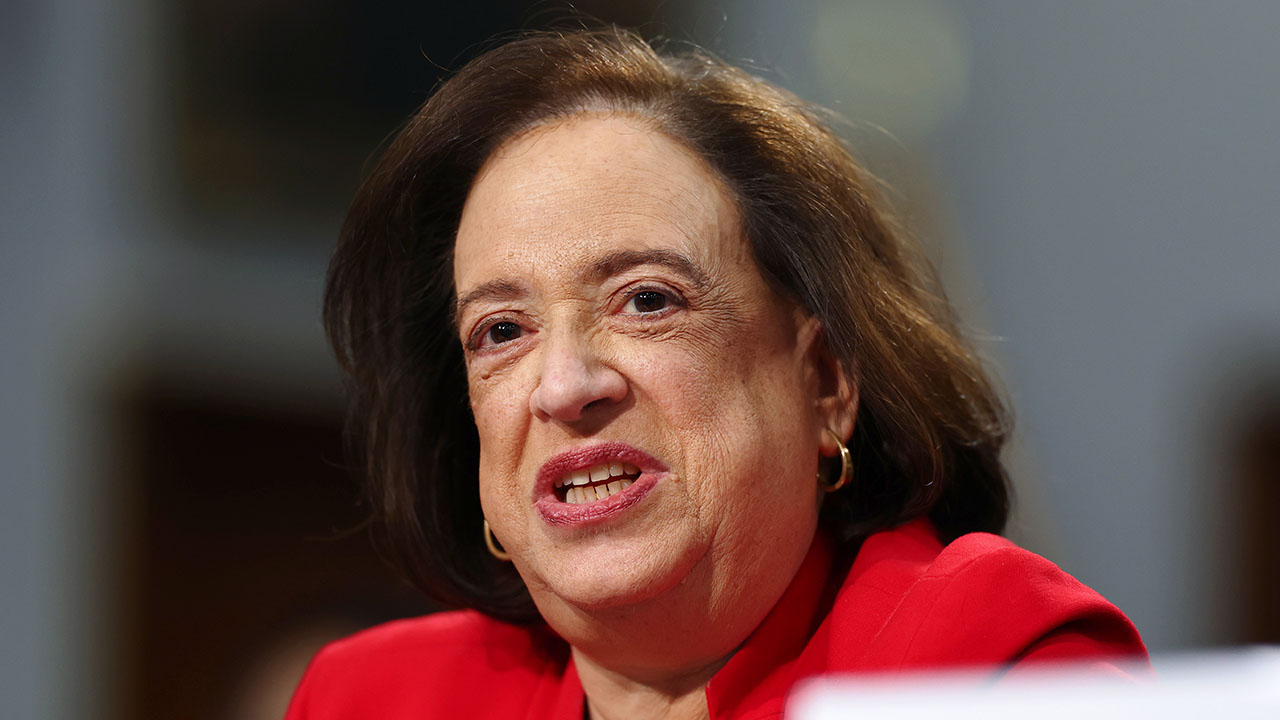
Take Supreme Court Justice Elena Kagan, for instance. She suggested the majority decisions of her conservative colleagues are undermining American democracy, citing cases involving gerrymandering, money in politics, and other decisions that give the president more authority over the administrative state.
“The court has kind of blinded itself to the very deleterious effect of their rulings on how the political system works and has created a democracy that does not work as well as it should,” the justice, nominated by President Barack Obama, said at Catholic University’s law school Tuesday night, Courthouse News reported.
“Over the last couple of years especially, both political parties have been engaged in a race to the bottom in terms of doing these partisan gerrymanders, … making what I think is unfortunately a too polarized country even more so,” she said. “The people of America look around and think that all this money chasing all these political candidates is a nightmare, and they’re right.”
Kagan also reportedly criticized the majority for “clearing the way for President Donald Trump and other presidents to remove the heads of agencies that Congress set up to be independent of the chief executive,” the Washington Post reported.
Yet these decisions arguably return political power to elected officials and voters, restoring accountability and weakening the influence of judges, bureaucrats, and other unelected actors.
Redistricting
While Republicans and Democrats have both sought to redraw congressional maps for partisan advantage, the Founders left the decision of how to allocate districts in the House of Representatives up to the states, not to the Supreme Court.
Kagan was lamenting a series of Supreme Court decisions that culminated in Louisiana v. Calais (2026). Lower courts had interpreted the Voting Rights Act of 1965 as effectively mandating redistricting along racial lines, but in Calais, the Supreme Court ruled that states can redraw their congressional maps so long as they do so for political, not racial, reasons.
Americans understandably dislike partisan gerrymandering, but the Constitution assigns redistricting to the political process for a reason. If the citizens of a state are fed up with partisan redistricting, they can elect candidates based on that issue. That’s a much more democratic solution than turning courts into a national redistricting commission.
Money in Politics
Similarly, Americans are often shocked to learn how much money changes hands in an election. According to the Federal Election Commission, presidential candidates raised $2 billion and spent approximately $1.8 billion in the 2024 election cycle; congressional candidates collected approximately $3.8 billion; and political action committees raised about $15.7 billion.
Critics blame the Supreme Court’s 2010 decision in Citizens United v. FEC, which allowed nonprofit organizations to issue political messages without disclosing their donors.
Again, Kagan has emphasized a process that Americans sense is broken, but that doesn’t mean the court’s decision was wrong. The Supreme Court upheld Americans’ right to contribute money to causes they believe in. The court did not create political activism. The large amounts of money reflect more civic engagement, not less.
Presidential Power
When it comes to presidential power over the administrative state, Trump critics often note that Congress established federal agencies as governing bodies of experts, hoping to create policy engines that would be immune to the normal fluctuations of politics.
The key problem with that argument, however, is that policy is inherently political, and the administrative state developed a political bent of its own. The federal bureaucracy has overwhelmingly supported Democrats and leftist causes, and the organization of public-sector unions like the American Federation of Government Employees only cements this leftist lean.
When President Trump makes personnel changes at federal agencies, he’s actually representing many Americans’ frustration with the stagnant status quo, and with the bureaucrats who arguably abused their power during the COVID-19 pandemic.
Agency independence may insulate policymaking from politics, but it also insulates policymakers from voters.
When the Supreme Court restores the president’s authority to fire heads of executive agencies, it is restoring decisionmaking to a person who is elected by the American people for that purpose; it is taking it away from unelected bureaucrats. This represents a step toward democracy, not away from it.
Justice Kagan may be right to lament the “race to the bottom” in gerrymandering and other aspects of America’s political culture, but the Supreme Court decisions she blames actually represent salutary steps toward fulfilling the Founders’ vision. The truth is more disturbing: if American politics has grown coarser, it is largely because of choices made by voters, politicians, activists, and institutions across the political spectrum.
Blaming six conservative justices may be satisfying, but it does little to address the deeper causes.
Continue reading...
[ H/T The Daily Signal ]